If you have ever wondered why one cruise ship feels like a quiet corner table and another feels like a queue at the airport, the answer almost always comes down to guest count. Ship size is the clearest, most checkable signal of how quiet a cruise will feel, and a look at the numbers behind Australian sailings over the next 12 months shows real choice exists for couples who want fewer crowds and more room to talk.
Across 481 cruises departing Australian ports on the lines we track, 154 sail on ships carrying fewer than 1,000 passengers. Another 44 run on ships holding between 1,000 and 2,500. The remaining 283 – the clear majority – carry more than 2,500 passengers, which makes a small-ship sailing a deliberate choice against the market norm, not the default.
Which ships make the small-ship list
The small-ship fleet calling at Australian ports spans two quite different styles of cruising. On one side sit expedition vessels built for close-in landings – Coral Adventurer, Coral Discoverer, Coral Geographer, True North and True North II. On the other sit premium and luxury ships built around space per passenger rather than activity volume – Azamara Pursuit, Azamara Quest, Le Jacques Cartier, Le Soleal, Regent Seven Seas Explorer, Regent Seven Seas Navigator, Seven Seas Splendor, Silver Cloud, Silver Dawn, Silver Moon, Viking Orion and Viking Venus.
Silversea stands out with three ships in the small-ship band – Silver Cloud, Silver Dawn and Silver Moon – more than any other cruise line we track in that category. Regent runs three as well, with Seven Seas Splendor joining its two Explorer-class sisters at the luxury end, each carrying far fewer passengers than the average Australian departure.
What couples trade for the quiet
The trade-off is straightforward once it is laid out. Choosing a small ship over one in the 1,000-2,500 passenger band generally means fewer restaurants, no large-scale theatre shows and none of the waterparks or multiple pools mass-market ships use to fill their extra deck space. What couples gain instead is a lower ratio of passengers to crew and to deck space, the kind of ratio that tends to mean shorter queues at the buffet, the gangway and the tender platform.
Pace on these sailings runs easygoing rather than packed – fewer organised activities competing for attention, more of the day left open to set your own rhythm ashore and on deck. Ease is a quality of the smaller hull itself: fewer lifts to queue for, shorter lines at embarkation, and tender ports handled with less congestion than a ship carrying several thousand more passengers would create.
Zodiac landings versus a straightforward gangway
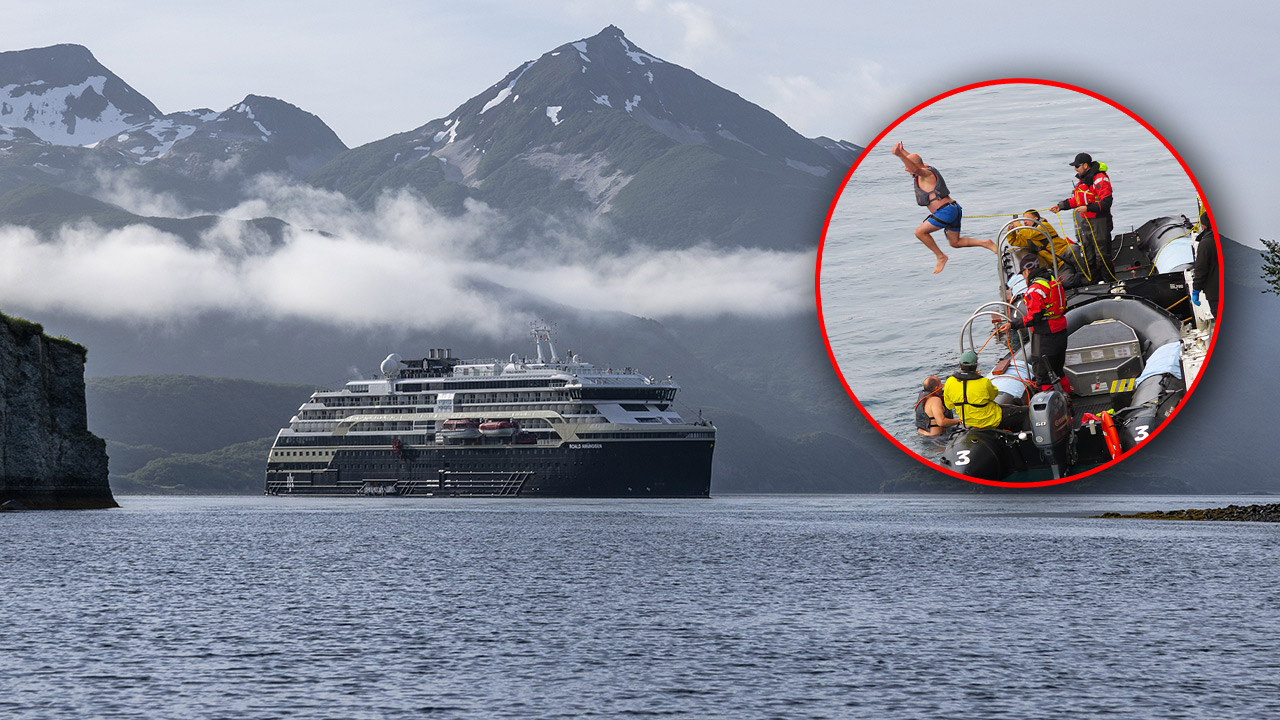
How a small ship gets passengers ashore depends on which of the two styles it belongs to. The expedition ships – Coral Adventurer, Coral Discoverer, Coral Geographer, True North and True North II – favour Zodiac or tender landings at close-in sites rather than berthing alongside a dock, which shapes the pace of a port day around weather and boat rotations. The luxury and premium small ships, Regent, Silversea and Azamara among them, more often dock directly in larger ports, which simplifies getting ashore and leaves more of the day free once you are there.
What to check before you compare the fare
Fewer passengers does not automatically guarantee a quieter atmosphere. Deck plan, cabin location and the specific itinerary all shape how a sailing actually feels, and passenger-count data alone cannot promise that. Inclusions also vary sharply by cruise line. Regent and Silversea generally build gratuities – the daily service charge added to your onboard account –, drinks and some shore excursions into the fare, while other operators in the small-ship band price these separately, so comparing a small ship against a mass-market ship means checking that detail first, not assuming it. Single supplements still apply across every size band, so travelling as a couple does not remove that cost consideration if a cabin mate falls through.
Timing is itinerary-led as much as it is passenger-count led. The expedition ships concentrate their Australian departures in the seasons suited to the Kimberley and similar close-in coastal routes, so confirm departure months with the cruise line or your agent rather than assume year-round availability. Comprehensive travel insurance with cruise-specific cover is worth arranging regardless of ship size, and worth checking against any tender or remote-landing ports if you are booking one of the expedition-style sailings.
What the numbers ultimately confirm is choice. Against 283 Australian sailings on ships carrying more than 2,500 passengers, 154 exist for couples who would rather know the crew by name and finish a sentence at dinner without raising their voice over a show band next door. That is not a smaller holiday. It is simply a quieter one, by design.