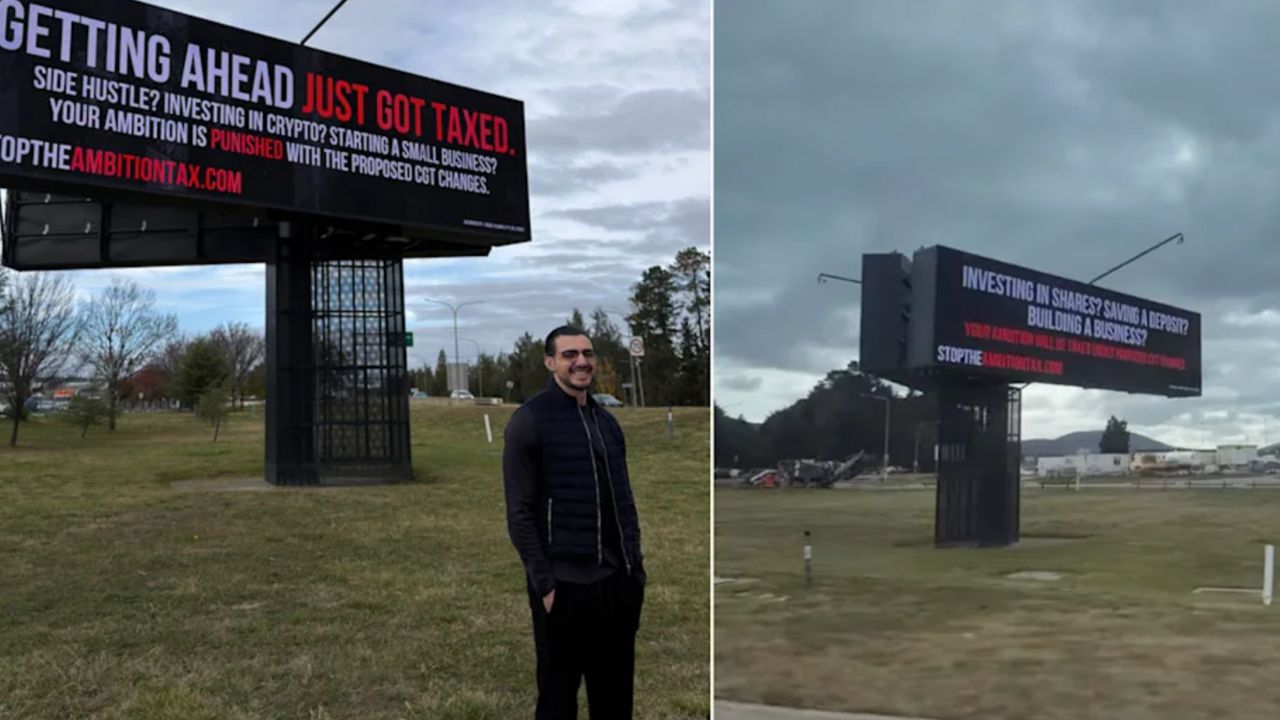
A Sydney mortgage broker has spent $17,500 on billboard advertising near Canberra Airport, using the start of a new parliamentary sitting week to protest proposed changes to capital gains tax in the Federal Budget.
As politicians fly into the nation’s capital, travellers arriving at the airport are being greeted by large signs criticising the proposed reforms, which would affect not only housing investors but also share investors and businesses.
“Investing in shares? Saving a deposit? Building a business? Your ambition will be taxed under proposed CGT changes,” the billboard reads.
The campaign was organised by Joseph Daoud, founder of a mortgage brokerage firm, who said he wanted to force politicians to pay attention to concerns from young Australians, investors and small business owners.
Daoud said the billboards would remain up throughout the parliamentary sitting week.
“After meeting with dozens of small business owners, fielding phone calls from first home buyers and holding roundtables with the Shadow Treasurer … ambitious Australians still aren’t being listened to,” he wrote on LinkedIn.
“So if Canberra wants to live in its own bubble and act like we don’t exist, I’m going to make sure they see each and every one of us.”
“I spent $17,500 on these billboards because I know for a fact that this budget is going to disable hope for all young Australians, anyone looking to start a business, anyone who invests in shares or other markets or anyone that is looking to purchase their first home,” he said.
The debate centres on proposed changes to capital gains tax, with the government facing criticism over plans to move away from the current 50 per cent discount model toward a system more closely tied to inflation.
Critics argue the changes could disproportionately affect younger investors and high-growth businesses.
Richard Holden from the University of New South Wales said the proposed changes could penalise successful businesses when they are sold.
“This is the worst possible plan for a country in need of more jobs, and more economic growth,” he said.
“It’s a productivity tax in the middle of a productivity crisis. Unfortunately, that is the perverse logic of a productivity tax, they punish high productivity businesses for doing well, growing fast, and creating more jobs.”
Former Treasurer Peter Costello also weighed into the debate, arguing younger Australians could face reduced opportunities to build wealth compared with earlier generations.
“The young will have a lifetime of these higher taxes. They will never have the same opportunities their parents had – or indeed that members of the Albanese cabinet had – to save, invest and keep a decent share of the proceeds,” he wrote in The Australian Financial Review.
Independent MP Zali Steggall said she supported the changes only when applied to residential housing investment.
“I don’t support the move beyond property investment,” she said.
Images: LinkedIn