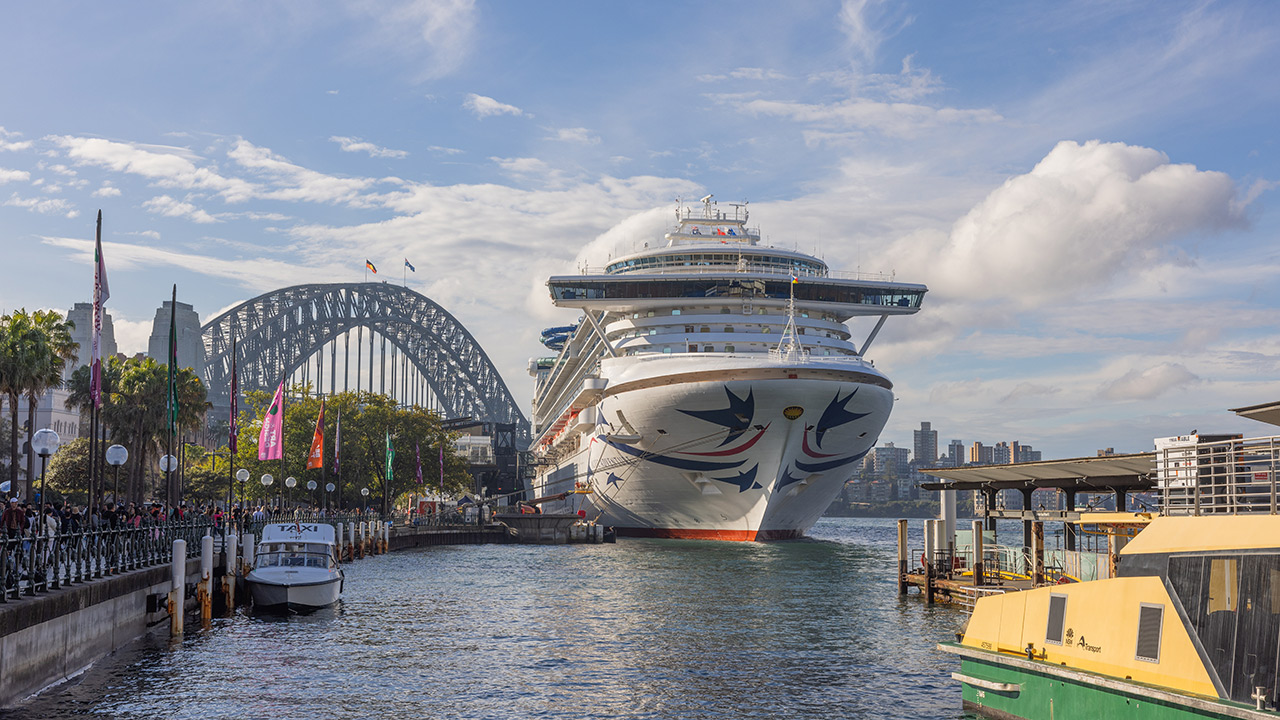
Ask most people to name the port on a New Zealand cruise and they will say Auckland. Yet across the New Zealand sailings leaving Australian ports over the next 12 months, Auckland barely scrapes into the top four. The port that shows up most often is Dunedin, featuring on 45 of the 51 sailings we tracked, well ahead of Auckland’s 27 stops.
That is worth knowing before you book, because it changes what should actually guide your choice of itinerary. Rather than picking a cruise for its headline city, the smarter approach for a New Zealand sailing is to look at the southern ports and the scenic cruising days that turn up again and again – because those, not Auckland, are what most itineraries are really built around.
Seventeen ships, 51 sailings, one clear pattern
The sailings run from 9 to 32 nights across 17 ships, with Princess, Holland America, Celebrity, Norwegian and Viking among the cruise lines operating in the region. Roundtrip departures from Sydney are the most common pattern, alongside one-way sailings between Sydney and Auckland for travellers happy to fly one leg home.
Behind Dunedin, the most-visited ports by stop count are Tauranga on 41 sailings, Christchurch on 33, then Auckland, Bay of Islands and Wellington tied on 27 each, Napier on 26 and Picton on 18. Shorter sailings at the 9 to 14-night end concentrate on these main ports and the Fiordland run, while anything upwards of two weeks tends to fold New Zealand into a broader South Pacific or transpacific itinerary.
Fiordland, not a city, is the scenic drawcard
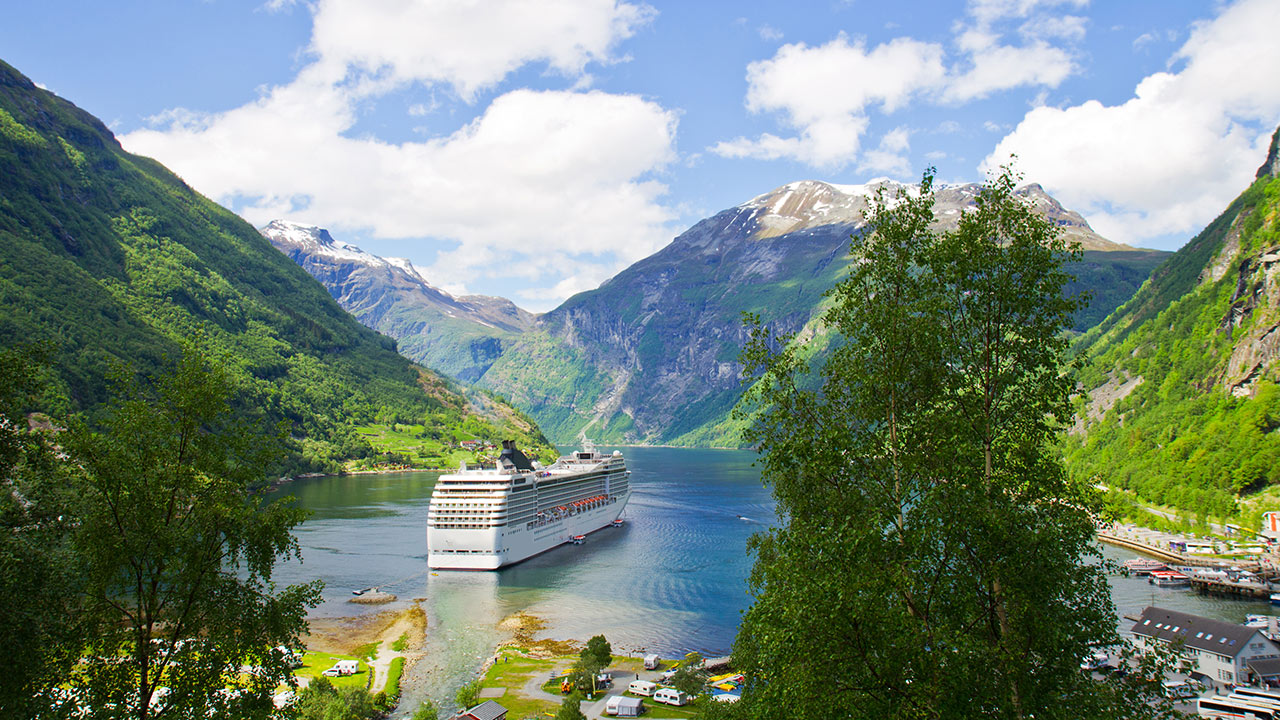
Scenic cruising through Fiordland is a genuine feature rather than an afterthought. Milford Sound appears on 24 sailings, Doubtful Sound on 18 and the wider Fiordland region on another 18, each a non-landing day built into the itinerary rather than a shore excursion you book separately.
One family cruiser who sailed Royal Princess summed up what mattered most when choosing their itinerary: “Our must-haves were a roundtrip cruise from Sydney, stopping in Tauranga – because Hobbiton was an absolute must – and scenic cruising through Fiordland National Park.” That combination of a Lord of the Rings pilgrimage and a fiord day with no landing at all turns up on a good number of the 51 sailings on offer.
What each port offers once you’re off the ship
Dunedin trades on wildlife rather than postcard streetscapes, with one past Dunedin call including an encounter with Nature’s Wonders. Napier offers the opposite experience entirely, its art deco streets a deliberate contrast to Dunedin’s natural history focus, while Christchurch pairs English-style gardens with film-location excursions to Lord of the Rings sites. Viking’s regional itinerary notes frame Dunedin’s Victorian architecture, Christchurch’s gardens and Napier’s art deco streets as the throughline connecting the stops.
Tauranga is the departure point for excursions to Hobbiton, the drawcard that keeps this port high on the list for families and film fans alike. Picton rounds out the mix with a quieter pace, past itineraries pairing a pearl farm visit with a beachcombing cruise.
Why ship size matters more here than on most cruises
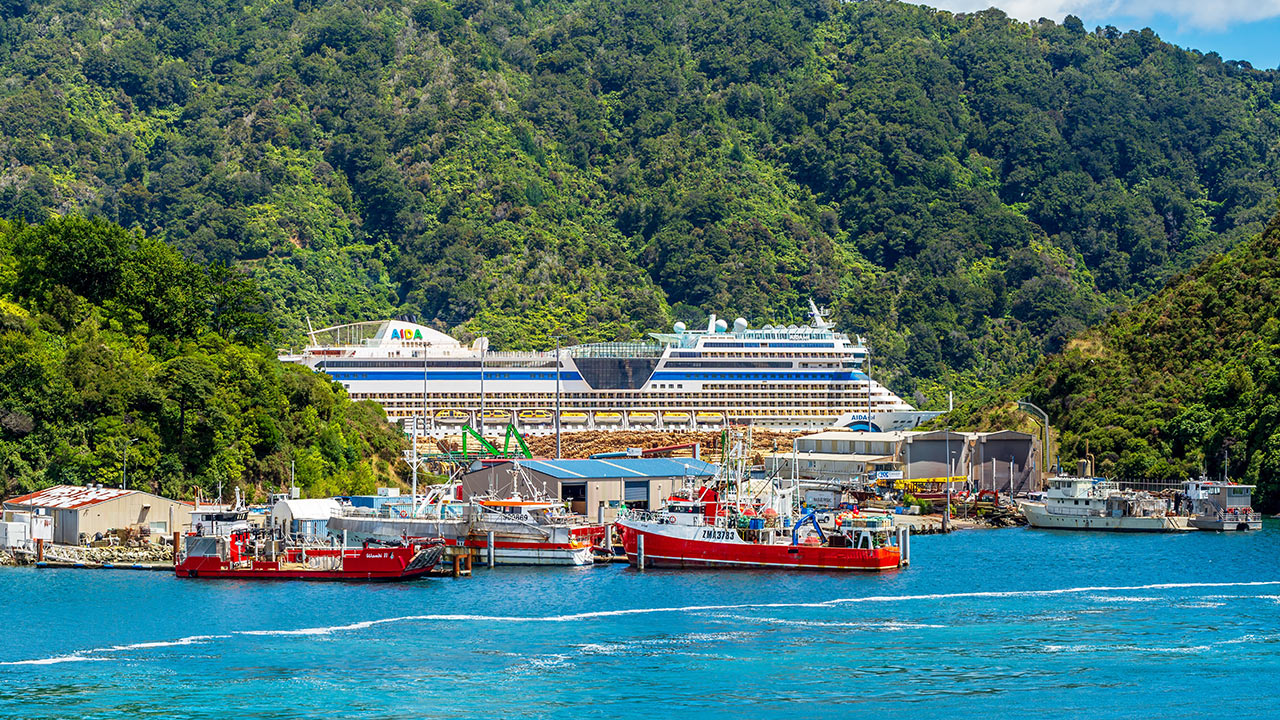
A number of New Zealand ports are working harbours reached by shuttle rather than a walk-off berth, and several itineraries include tender ports where passengers are ferried ashore rather than the ship docking alongside. That is where the size of the ship starts to matter. “With several tender ports on our itinerary, I also preferred a ship of this size over one of the larger mega ships,” the same Royal Princess cruiser said. A mid-sized ship handles tender ports more efficiently than a larger one, which is worth weighing before you book a bigger ship purely for its onboard extras.
What to know before you book
Fares for this region typically exclude gratuities – the daily service charge added to your onboard account – along with drinks packages, wifi and most shore excursions, so confirm with your agent or the cruise line what is bundled before comparing two itineraries of similar length. Shore excursions commonly run $200-300 or more per person per tour, and that adds up quickly across a seven-port sailing if you book an activity at every stop.
Biosecurity rules are strict in both countries. Nothing beyond bottled water can be carried off the ship, and bag checks are routine. New Zealand has no koalas or kangaroos either, so travellers wanting an Australian wildlife encounter need to plan for that on the Australian ports of the same itinerary rather than expecting it on the New Zealand side.
The Tasman Sea crossing on one-way Sydney to Auckland sailings is an open-water stretch with no port call, and some travellers find it rough going, so it is worth checking how many sea days sit either side of that crossing before committing to the shorter end of the 9 to 32-night range. Travel insurance with cruise and cancellation cover is standard for this region, and it should extend across both Australia and New Zealand given the itinerary crosses both jurisdictions. Visa and entry requirements differ between the two countries too, with separate applications and fees, so check both well ahead of departure.
For the family who sailed Royal Princess chasing Hobbiton and a quiet fiord with no landing in sight, the appeal was never the cities at all. It was the stretch of water with no port, the hobbit holes at the end of a shuttle ride, and a ship small enough to slip into the harbours the big ones cannot reach.