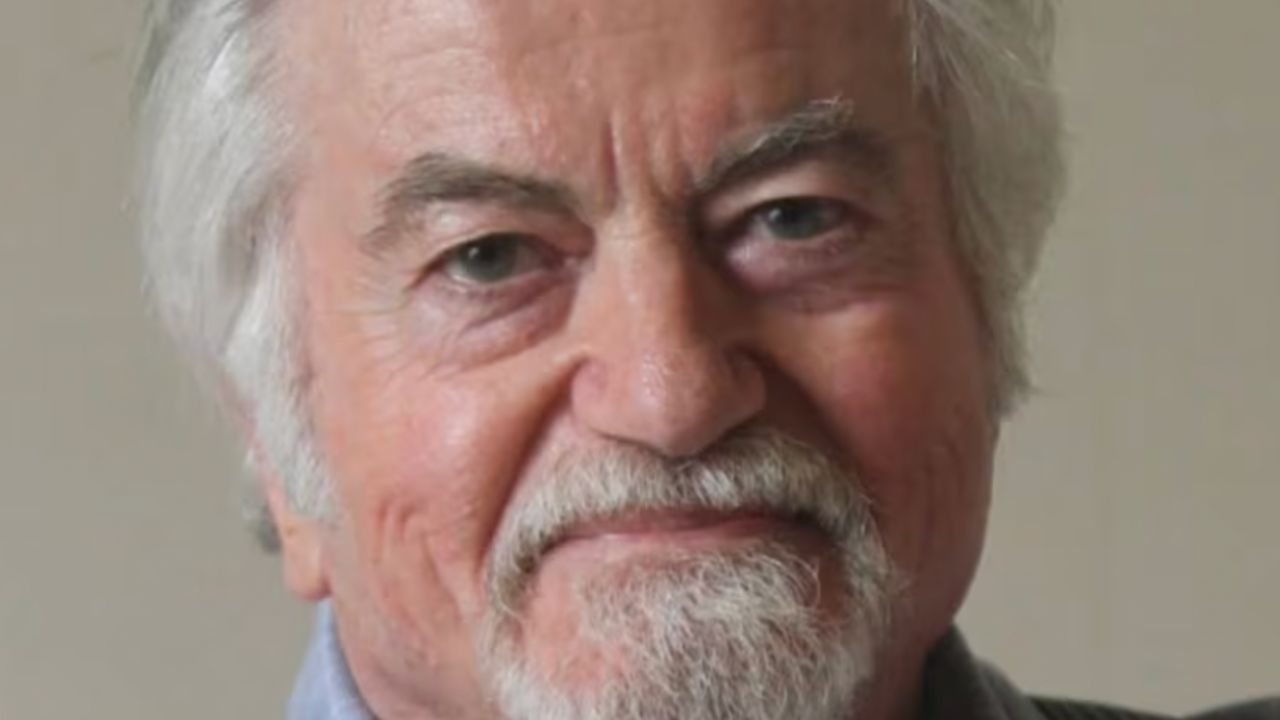
Award-winning investigative journalist Roger Cook, whose fearless reporting helped redefine television journalism, has died aged 83 following a short illness.
Cook’s family confirmed he died peacefully in a statement.
“Alongside a distinguished and award winning career in journalism, Roger was first and foremost a beloved husband and father,” their statement read.
“He will be deeply missed by all of us, and we ask for privacy as we navigate this difficult loss.”
Born in New Zealand and raised in Australia, Cook built a career spanning decades and became one of Britain’s most recognisable investigative journalists after moving to the UK in the late 1960s.
He worked for BBC Radio 4 on programs including The World At One, PM, Checkpoint and The World This Weekend before finding national fame as the host of the long-running TV current affairs program The Cook Report.
The program ran from 1987 to 1999 and attracted audiences of more than 12 million viewers at its peak.
Cook received a BAFTA Special Award in recognition of “25 years of outstanding quality investigative reporting”.
In a statement, ITV, the broadcaster of The Cook Report, praised his impact on journalism.
The broadcaster described Cook’s work as a “groundbreaking approach to investigative journalism” that made him “one of broadcasting’s most trusted and respected figures”.
“His fearless contribution to journalism will long be remembered, and we send our deepest sympathies and condolences to his wife, family and friends at this difficult time.”
Cook became known for pioneering the now-familiar doorstep interview, confronting alleged criminals and wrongdoers face-to-face on camera.
His investigations exposed issues including child abuse, protection rackets in Northern Ireland, baby trading in Brazil, the illegal ivory trade, weapons-grade plutonium trafficking, illegal immigration and war crimes in Bosnia. He also examined terror attacks, including those linked to the September 11 attacks in New York.
The work often came at a personal cost, as Cook was hospitalised around 30 times during his career while pursuing investigations around the world.
In one incident in 1981, he suffered three broken ribs after being attacked with a baseball bat by an alleged car thief. At another point, police reportedly warned him that a hitman had been hired to kill him.
Despite the risks, Cook believed confronting people directly was the best way to seek answers on behalf of victims.
“The Sunday Times did some pretty honourable stuff and some of the earlier World in Actions were pretty good stuff too – but they weren’t confrontational,” he said during an interview on Life Behind the News.
“They didn’t have a reporter with whom people could identify going up front against those people alleged to be responsible for whatever it was.”
He added: “If you were just doing it for a newspaper, you might attempt to get your answers by dint of a telephone call.
“I think the best way to get answers, the way to serve your contributors, the victims of these people best, is to confront the people.
“I don’t mean confrontational in terms of going in, all guns firing. I mean to actually stand in front of the guy and say, ‘This is what you have done to the people in this programme. What do you have to say to them?'”
Away from broadcasting, Cook also wrote several books, including his autobiography, Dangerous Ground.
His distinctive reporting style became so well known that it was frequently parodied by comedians, including Stephen Fry and comedy duo Reeves and Mortimer.
Image: Courtesy of the Cook family