After nearly 90 years of unanswered questions, an ambitious expedition to solve the disappearance of legendary aviator Amelia Earhart has finally delivered a definitive answer.
Just not the one anyone was hoping for.
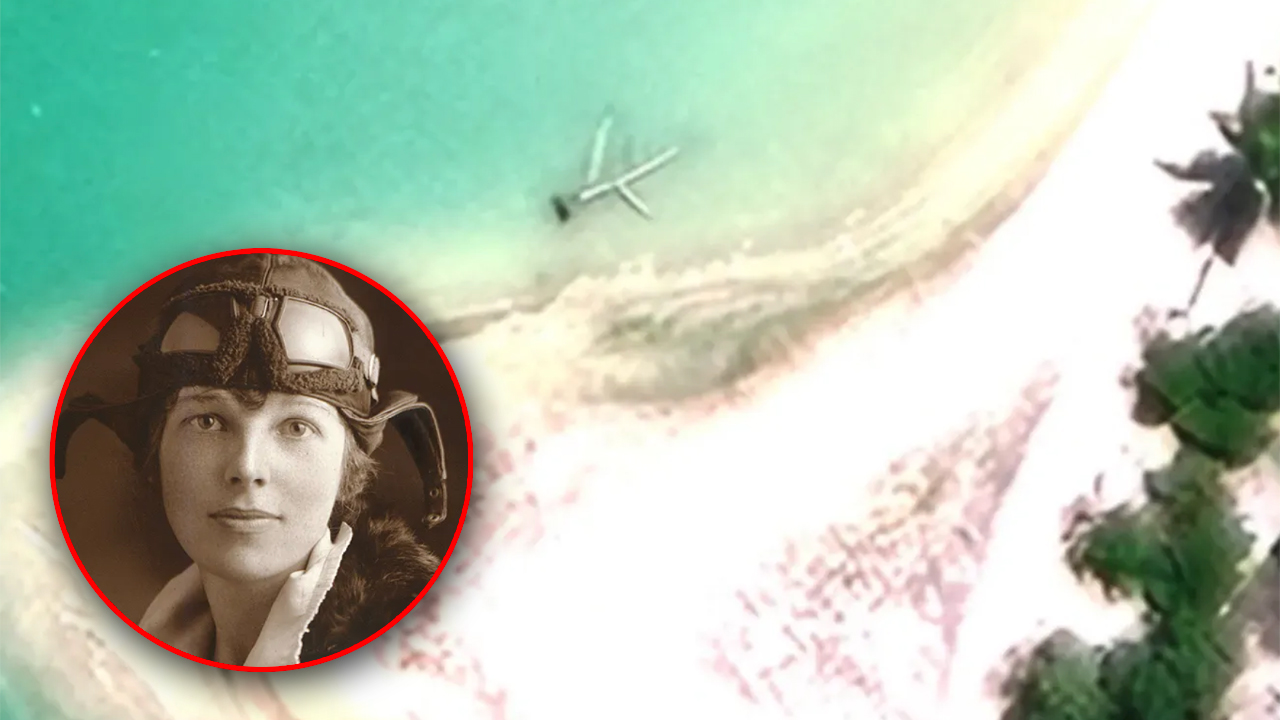
The mysterious object spotted beneath the waters of a remote Pacific island, which researchers hoped might be the wreckage of Earhart’s long-lost aircraft, has turned out to be something considerably less exciting.
A collection of trees.
The discovery brings a rather underwhelming conclusion to a much-publicised expedition that had raised hopes of finally solving one of aviation’s greatest mysteries.
As previously reported by Over60, a team of 17 researchers travelled to the remote island of Nikumaroro, part of the Pacific nation of Kiribati, to investigate a mysterious shape spotted in satellite imagery in 2020.
Dubbed the Taraia Object, the unusual formation appeared to resemble part of an aircraft, raising the extraordinary possibility that Earhart’s Lockheed Electra 10-E had finally been located.
There was just one problem.
When researchers arrived and began investigating, the suspected aircraft wreckage proved to be a collection of large trees and other natural debris that had accumulated along the island’s lagoon.
Even the object’s intriguing metallic-looking surface turned out to be a coating of hardened coral sand.
In other words, what looked like a potentially priceless piece of aviation history was essentially a very convincing pile of driftwood.
The expedition, involving Purdue University, the Purdue Research Foundation and the Archaeological Legacy Institute, had spent days travelling across the Pacific before conducting detailed investigations using specialised equipment.
Sadly, the Pacific Ocean wasn’t quite ready to surrender its most famous secret.
Despite the disappointment, expedition leader Rick Pettigrew said the mission had achieved its primary objective of identifying the mysterious object.
“Amelia Earhart’s spirit of courage and curiosity drove every step of the search,” he said. “We accomplished our goal to determine what the Taraia Object was, and we’re deeply grateful to the private donors who shared our vision and made this journey possible.
“Our team remains in great spirits and proud of what was accomplished.”
And while the researchers didn’t find Earhart’s aircraft, the expedition wasn’t entirely without discoveries.
Several artefacts were recovered, including a steel tube approximately 76cm long, which will undergo further examination.
The team also remains interested in the theory that Earhart and her navigator, Fred Noonan, managed to land on Nikumaroro’s reef before becoming stranded on the island.
Earhart, 39, and Noonan disappeared on July 2, 1937, while attempting to fly around the world. Their final flight departed from Papua New Guinea, bound for Howland Island, but the pair never reached their destination.
Despite numerous searches, theories and tantalising clues over the decades, neither the aircraft nor the definitive answer to their fate has ever been found.
For now, the mystery remains as stubbornly unsolved as ever.
But as expedition member Steve Schultz pointed out, Earhart herself once said, “Adventure is worthwhile in itself.”
And after travelling halfway across the Pacific to discover a pile of trees, the researchers could probably be forgiven for hoping their next adventure delivers something a little more spectacular.