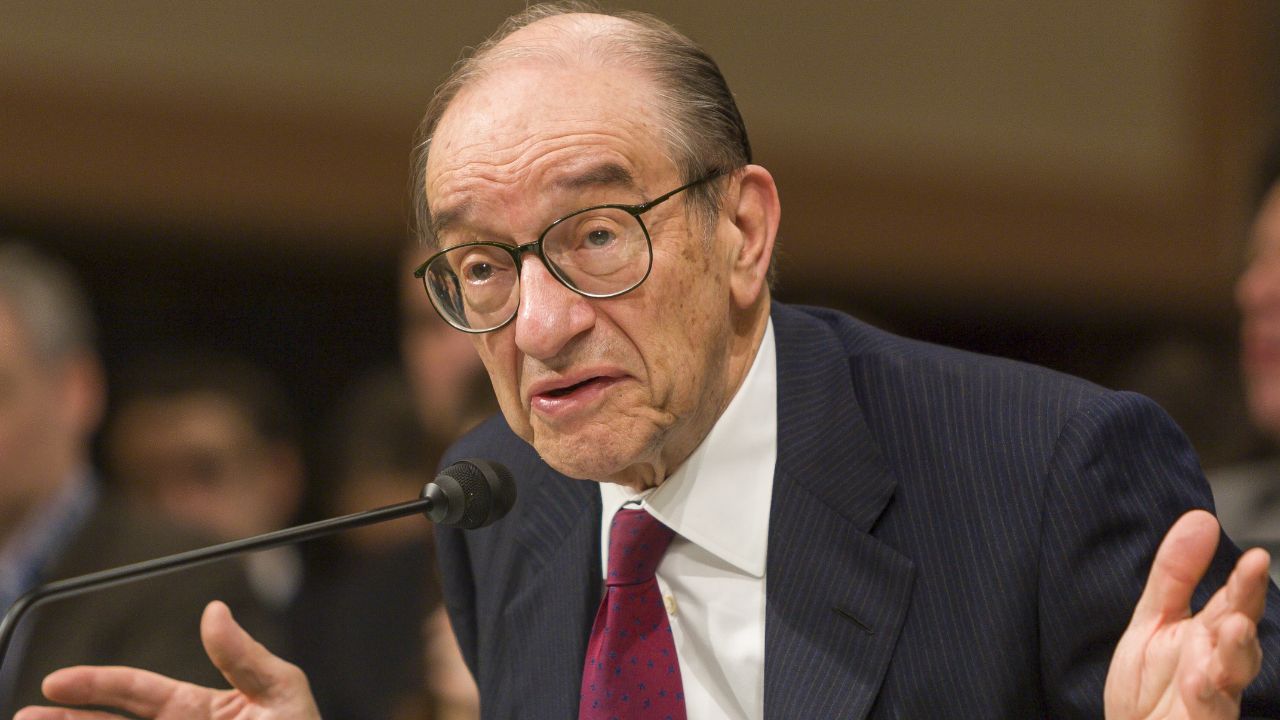
Investigative economist and former chairman of the US Federal Reserve Alan Greenspan, whose influence helped shape the global economy for nearly two decades, has died aged 100.
Greenspan died on Monday from complications of Parkinson’s disease, according to his wife of 29 years, NBC News correspondent Andrea Mitchell.
“To me he was my husband, who shaped my life from our very first date in 1984,” Mitchell said.
“He had ‘irrational exuberance’ for baseball, the Washington Commanders, tennis, golf, and music, especially jazz. He will be remembered for his brilliance and his kindness. Being his life partner was the joy of my life.”
Greenspan led the US Federal Reserve from 1987 until 2006, serving under four presidents and becoming one of the world’s most influential central bankers.
During his 18½ years in the role, he oversaw a lengthy period of economic growth, low inflation and rising share markets, earning the nicknames “the Maestro” and “the Oracle”.
His words carried enormous weight with investors, none more famous than his 1996 warning about market “irrational exuberance”, which sent global markets tumbling.
Born in New York and raised in a working-class family, Greenspan showed an early aptitude for mathematics and music. He briefly studied at the prestigious Juilliard School before turning to economics, eventually earning a doctorate from New York University and building a successful consulting business.
Former US President Ronald Reagan appointed Greenspan to head the Federal Reserve in 1987, just months before the stock market crash known as “Black Monday”.
Greenspan was widely credited with helping restore confidence after the crash by assuring financial markets the central bank would provide support if needed.
He later steered the US economy through the Asian financial crisis in the late 1990s and presided over what was then America’s longest economic expansion.
However, his reputation suffered after the collapse of the US housing market and the 2008 global financial crisis, which unfolded two years after he left office.
Critics blamed his support for low interest rates, deregulation and faith in self-regulating financial markets for helping fuel the crisis.
Greenspan later conceded: “I made a mistake” in believing major financial institutions could effectively regulate themselves.
Known for his often cryptic public comments, Greenspan once joked to lawmakers: “I know you believe you understand what you think I said, but I am not sure you realise that what you heard is not what I meant.”
Away from economics, Greenspan remained active well into his 90s, writing books, advising businesses through his consulting firm and continuing to comment on economic issues.
He is survived by his wife, the couple had no children.
Image: Rob Crandall / Shutterstock.com