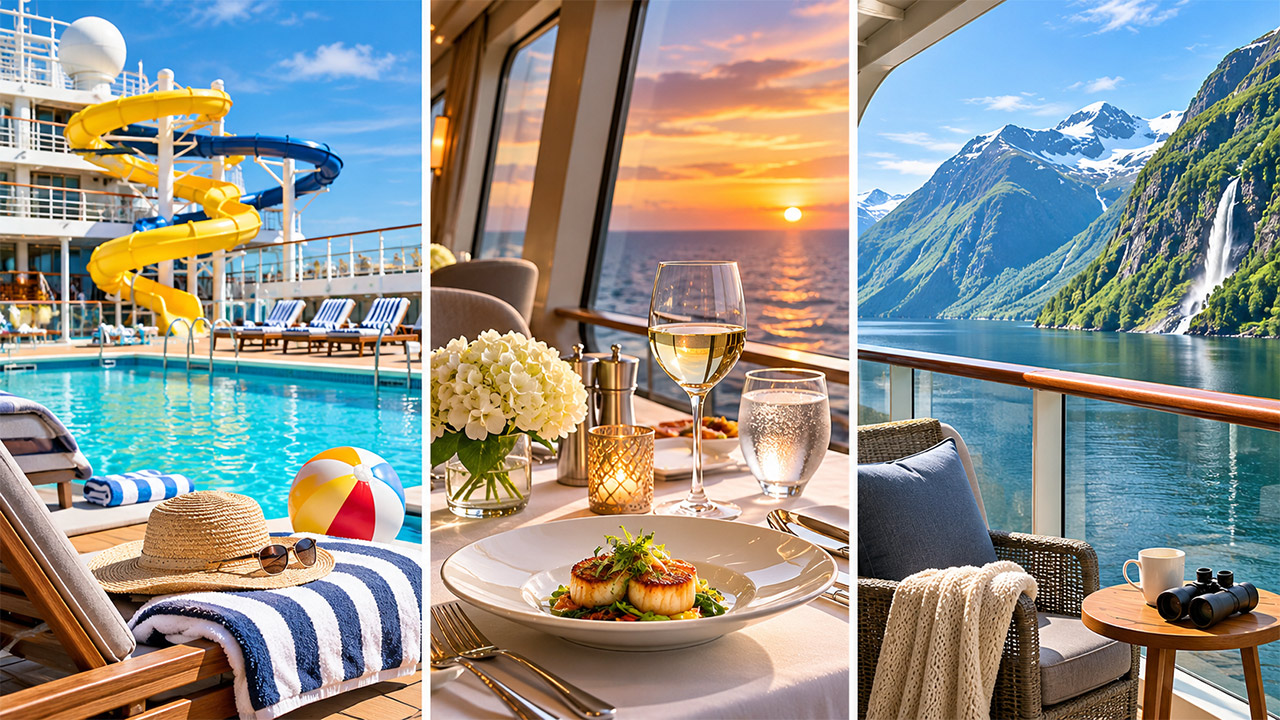
Picture the holiday before you picture the ports. A quiet library with a glass of something good, or a deck party that runs past midnight? A kids’ club that frees up your afternoon, or a dining room with the same waiter calling you by name every night? Pick the cruise line that matches that picture first, and the itinerary second – because the most common booking regret isn’t a wrong port, it’s a wrong fit.
Why the brand matters more than the itinerary
On most mass-market and premium cruise lines, the fare covers the cabin, meals in the main dining room and buffet, and the entertainment program. Drinks, wifi, shore excursions and gratuities – the daily service charge added to your onboard account – are charged separately, so two headline fares that look similar on paper can leave very different holes in your wallet once you add it all up.
Some cruise lines take a different approach and build more of that spending into the base fare. Viking Ocean, Princess and Virgin Voyages all lean toward a more inclusive style of pricing, which changes the real comparison against a mass-market fare that looks cheaper at first glance.
Flexible or “freestyle” dining setups, the kind Norwegian Cruise Line runs, tend to carry more onboard upsell toward specialty restaurants and extras than a ship with one fixed dining room. The number on the booking confirmation is only the opening bid.
For the family chasing the kids’ club and the big slide
Carnival sails mostly short three to seven night trips and leans hard into a loud, casual atmosphere built for first-time cruisers and budget-conscious groups. One assessment puts it plainly: it’s “loud, it’s fun, it’s unapologetically casual” – a line built to test the cruise waters rather than impress on day one.
Royal Caribbean plays in the same family-friendly space but at a bigger scale, running some of the largest ships afloat and built around large-scale entertainment and its private destination, Perfect Day at CocoCay. Shorter sailing options make it an easy entry point for newcomers too.
Disney Cruise Line sits at the premium end of the family bracket, built around theatre-standard shows and dedicated family programming, with the price tag to match that level of production.
For the couple wanting dinner conversation over organised activity
Viking Ocean is pitched squarely at cultural travellers rather than families or nightlife seekers, with a more inclusive fare structure than mass-market rivals. It’s been described as “a class by itself for cultural travellers,” built around enrichment and quieter spaces instead of a packed activity schedule.
Celebrity Cruises sits at the premium end on modern design and dining, and its Retreat enclave gives suite passengers a separate space away from the main ship crowd, alongside what’s been called “exceptional dining” across the fleet.
Virgin Voyages is adults-only, bundles dining into the fare, and trades the traditional cruise format for what’s described as “a vibe unlike anything else at sea” – a different kind of ship for travellers who’ve done the family cruise already and want something else entirely.
For the destination-first and value-conscious traveller
MSC Cruises positions itself on some of the lowest fares at sea, then offers a very different experience one deck up through its premium Yacht Club tier, plus its own private island product, Ocean Cay. The two sit under one brand but feel like two different holidays.
Princess Cruises leans destination-focused with strong inclusive-style packaging, making it a regular pick for cruisers who care more about the ports than the onboard activity sheet. Holland America plays a similar mainstream game but built around food quality, with a particular specialty in Alaska itineraries.
Norwegian’s flexible dining suits couples and families with older kids who want simple logistics over four to seven night itineraries, though the same cruise line also runs separate party-focused sailings aimed at an entirely different crowd – worth checking which sailing you’re actually looking at.
What to check before you pay a deposit
Large resort ships from Royal Caribbean and Carnival are built with lifts to every deck and minimal tendering, which suits travellers who want easy logistics and plenty to do without long port days. Smaller or more destination-focused ships tend to tender more often and build in longer days ashore, so check how a specific itinerary gets passengers off the ship before you book if easy access matters to your day.
Booking windows vary by how family-driven the demand is. Lines with strong kids’ club programming see their best cabins move earliest around Australian school holiday periods, while adults-only and cultural lines carry far less seasonal rush.
Confirm what each fare actually includes – dining structure, drinks, wifi and gratuities differ meaningfully between a party-leaning line, a flexible-dining line and an inclusive one – and check cancellation terms and travel insurance requirements with the cruise line or your agent before you compare two fares as if they’re the same holiday.
Whichever crowd you picture when you close your eyes – the deck party, the library, the chef’s table with your name on it – book that one, not just the map. The ports will still be there. The holiday you actually wanted only turns up if the ship matches the mood you packed for.