Planning a European trip these next few months? A new digital border system could accuse you of breaking the rules on how long you are allowed to stay – even when you have done nothing wrong.
That is exactly what happened to British traveller Paula Pugh, who flew into Reggio Calabria in southern Italy to celebrate her husband’s 60th birthday. Passport control officials told her she had overstayed the 90-day limit within a 180-day period that applies to British and Australian visitors alike in Europe’s Schengen Area. It was a mistake, but not one she could simply wave away at the border.
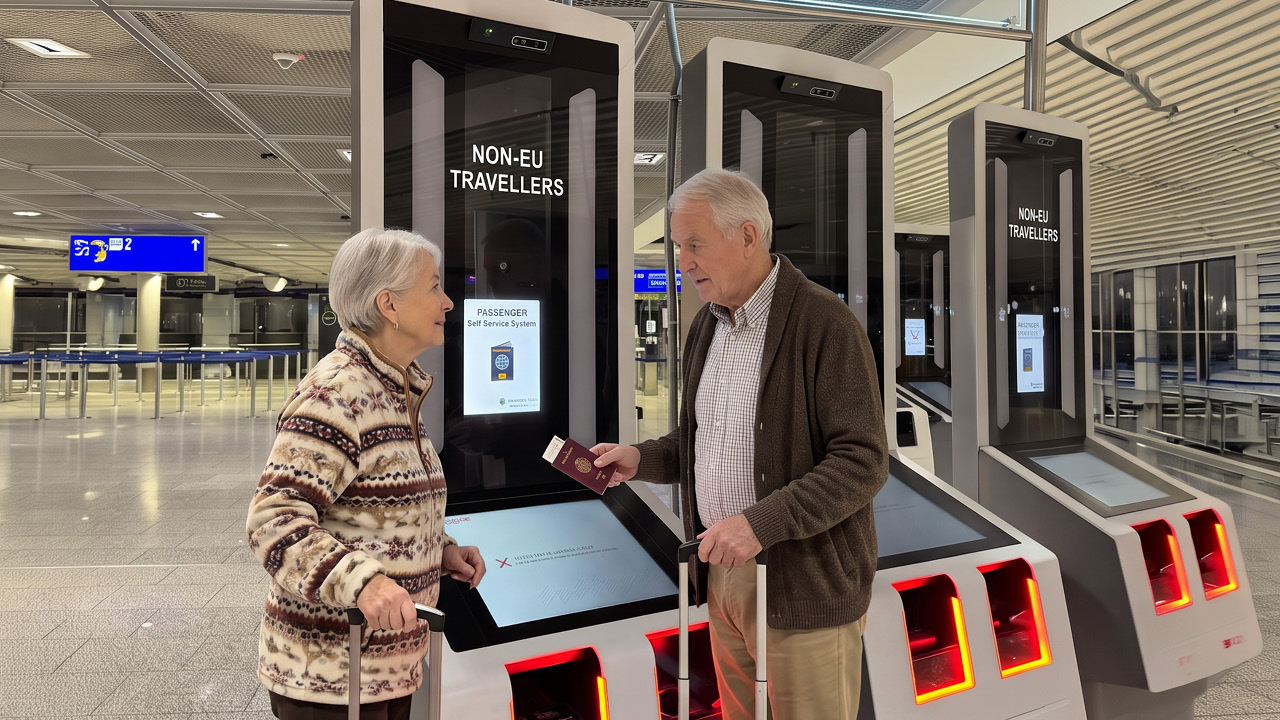
The culprit is Europe’s new Entry/Exit System, known as EES, which is replacing the old ink passport stamp with a digital record of every arrival and departure. It is designed to track visitors more accurately across the 29 Schengen countries. In practice, the rollout has been messy, with long queues, software glitches and shortages of the self-service kiosks meant to speed things up.
For older Australians used to a quick stamp and a smile from a border officer, the change is worth understanding before you land. The system relies on accurate data entry and functioning software at each crossing point, and when either fails, travellers can be wrongly flagged as overstayers through no fault of their own.
The underlying rule itself has not changed. Australians can still spend up to 90 days in any rolling 180-day period across the Schengen Area without a visa. The key word is rolling: it is not a simple calendar reset every six months, but a moving window that counts backwards from whatever day you are calculating on, tallying every day spent in the zone over the previous 180 days.
That rolling calculation is precisely where confusion creeps in, for both travellers and border staff still finding their feet with the new technology. Keeping your own written record of entry and exit dates, alongside boarding passes and stamped documents where you can still get them, gives you something solid to point to if a kiosk or officer gets it wrong.