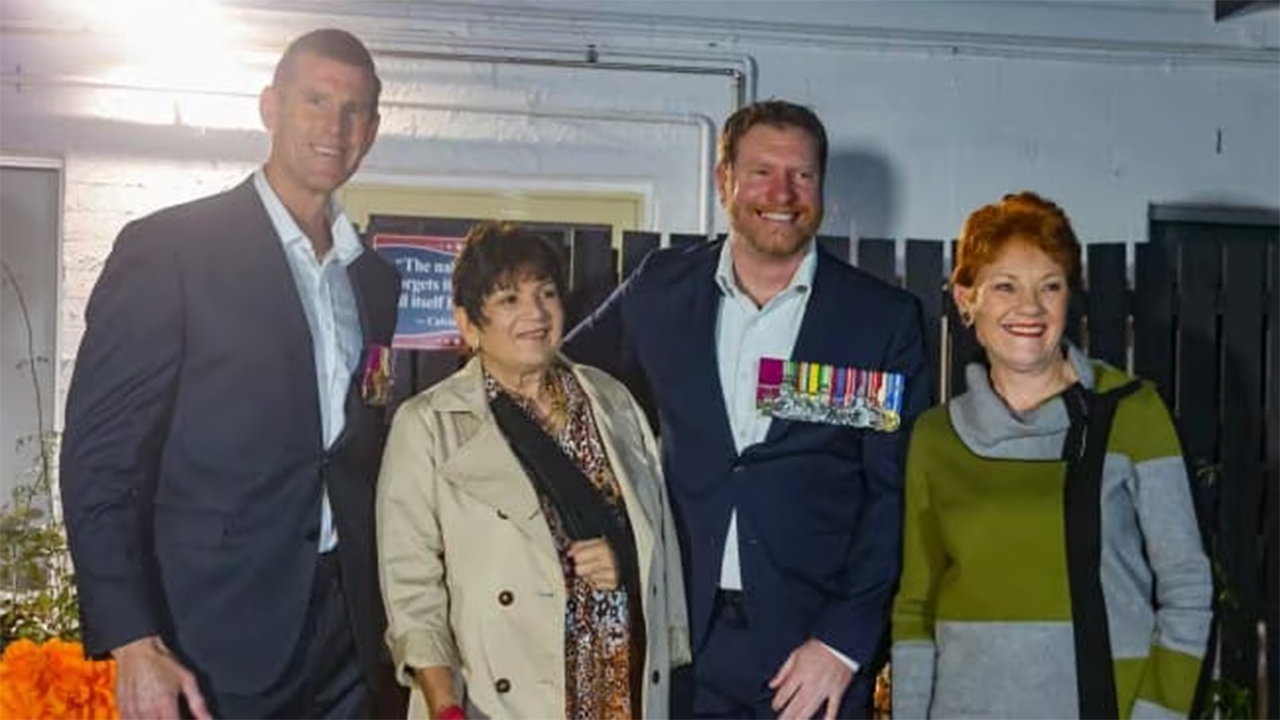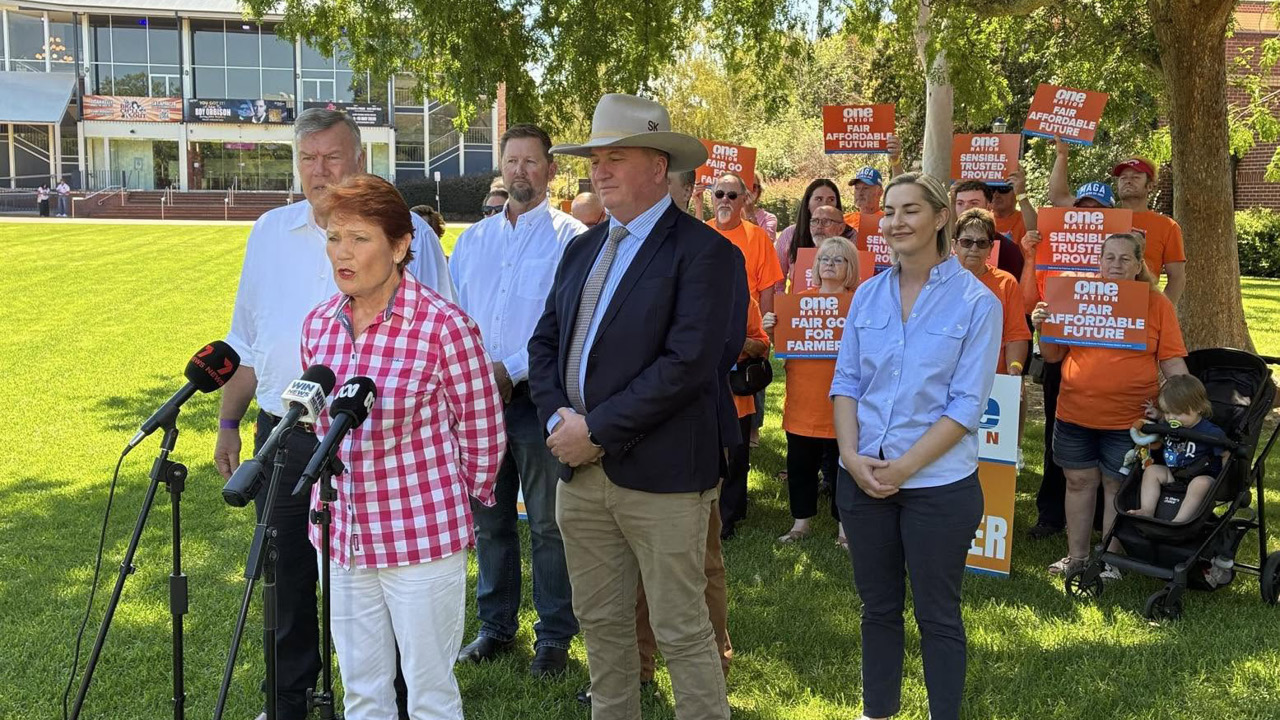
A federal election held right now would be “too close to call” between Labor and One Nation, according to new polling.
Pauline Hanson’s party lifted its support by two percentage points after her National Press Club speech, where she criticised migrants and called for more backing for hard-working Australians. The rise also follows the party’s “Fire the Liar” campaign targeting Anthony Albanese, which One Nation says brought in $1.5 million in 24 hours.
Roy Morgan polling now shows Labor and One Nation in an extremely tight race. Based on voter preference flows, the polling found that “on a two-party preferred basis the result could be: ALP 51 per cent, One Nation 49 per cent”.
Labor’s primary vote has slipped by one point to 27 per cent. One Nation’s primary support has climbed 2 per cent to 31.5 per cent, while the Coalition is up 0.5 per cent to 17.5 per cent. The Greens have fallen 0.5 per cent to 13.5 per cent.
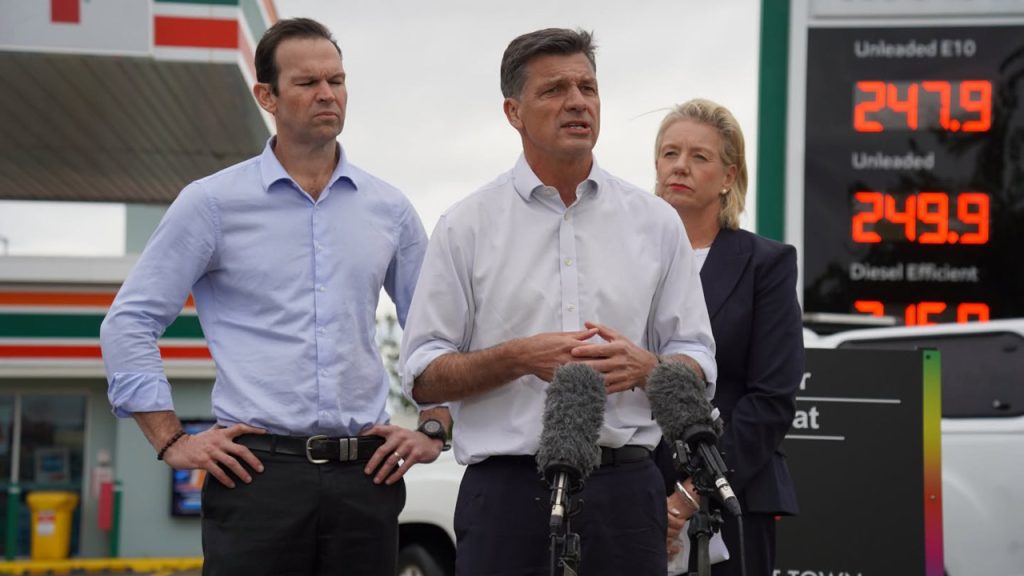
A separate Capital Brief/DemosAU poll for June found One Nation had overtaken the Coalition as the opposition party. Seat modelling based on probability analysis suggested that if those numbers were repeated at a federal election, Labor would secure between 71 and 81 seats, while One Nation would take between 54 and 63.
The Coalition’s representation would be cut by more than half compared with earlier polling, with the Liberals and Nationals projected to win between four and 11 seats, down from 16 to 28 in May.
Even so, DemosAU Head of Research George Hasanakos said the political picture could still shift.
“On these numbers, One Nation would likely fall short of forming government, even with Coalition support, but a further improvement in support, or a further drop for Labor, could change the equation,” he said.
The same polling found Anthony Albanese remained ahead as preferred prime minister against Opposition Leader Angus Taylor and Pauline Hanson, with support at 35 per cent, 19 per cent and 28 per cent respectively.
The polling comes as Ms Hanson again pushes income splitting as a tax measure for families, as she continues focusing on cost-of-living pressure. The Queensland Senator has renewed her backing for a system that would let couples lodge joint tax returns, arguing it could “significantly reduce” tax for Australians.
Over the weekend, she promoted the idea on X.
“One of the best ways to support families and new parents is income splitting,” she wrote on X.
“Allow couples with at least one dependent child to file joint tax returns, significantly reducing their joint taxable income if one partner earns significantly more than the other.”
Versions of income splitting exist in countries including the US, Canada, Germany and France, though they operate differently. Under the systems used in France and Germany, a household where one parent earned $120,000 and the other earned nothing would be taxed as though both earned $60,000. Under Australia’s progressive tax system, that would mean savings of more than $9000 for that couple if One Nation’s policy applied.
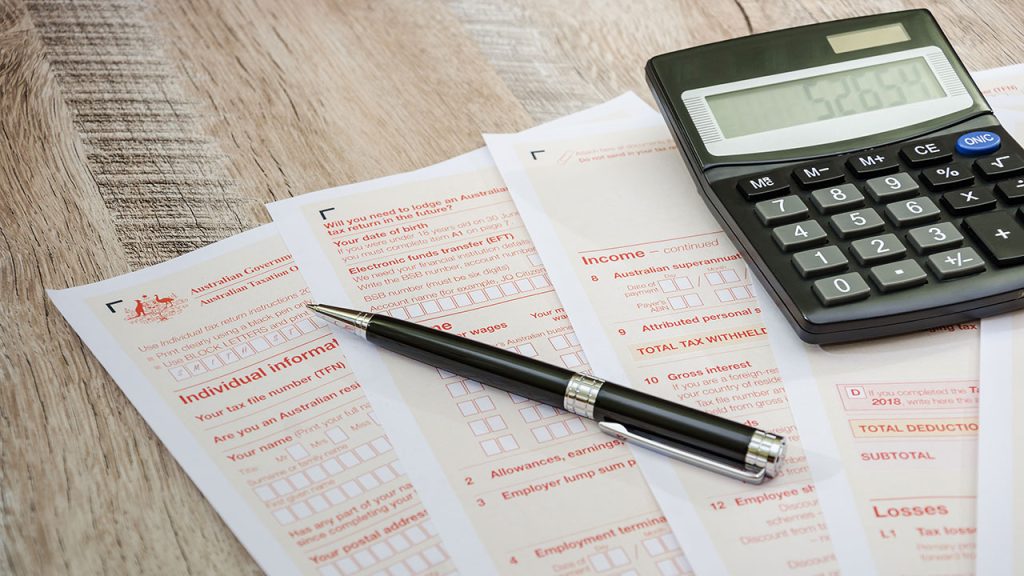
One Nation took the policy to last May’s federal election and intends to bring it forward again at the next one. During her National Press Club appearance last week, Ms Hanson said, “I want people to be able to split their incomes so that those families, whether mum or dad, want to stay home … to give them help”.
“But we’ve got … a lot of work to do. You need to actually rein in government spending.”
At present, Australian families can achieve tax-based income splitting through a family trust or company structure, an option unavailable to most people.
Opponents say the proposal could discourage one parent from working, worsening skills shortages and dragging on productivity. Economist Leith van Onselen has described the idea as both “economically reckless” and a “gimmick”.
“I am no fan as it is unaffordable, could lower labour force participation and is unfair to single people,” he said.
“(One Nation) should simply argue for lower income taxes and less government waste.”
The proposal has remained contentious because of its likely effects on both the budget and workforce participation. Ms Hanson is not the only Australian politician to promote it in recent years. Former senator Gerrard Rennick also put forward the idea last year.
“The proposal would allow couples with a dependent to split their income for personal income tax purposes, so that it appears on their tax returns that they both earn the same amount,” his plan’s summary stated.
In assessing Mr Rennick’s plan, the Parliamentary Budget Office assumed about 26 per cent of taxpayers would use income splitting, matching the share of the population with at least one child or dependent with a severe disability.
“There would be no significant behavioural impact on labour supply or resultant impact on taxable income under the proposal, including no reduction in work associated with higher effective marginal tax rates for secondary earners,” advice on Mr Rennick’s proposal said.
The PBO estimated the policy would cut tax revenue by about $5.9 billion in 2026-27, rising to $9.4 billion in 2032-35.
A One Nation spokesman said the party accepted the policy would reduce revenue, but argued it could create conditions that help couples start families earlier or reduce the taxpayer cost of childcare subsidies by making it easier for one parent to remain at home.
The party’s website says the measure would “encourage parents to look after their own children, and reduce the cost to the government of childcare, especially pre-school”.
“It will also encourage homeschooling.”
Nationals Leader Matt Canavan has also supported income splitting for years and first advocated for it more than a decade ago, saying the tax system should be more “family friendly”.
“The situation now is that families with a single breadwinner are disadvantaged compared with families where both parents have paid employment, mainly through the tax-free threshold,” he said in 2015.
“Figures from the Parliamentary Library indicate a single-income household earning $120,000, for example, now pays around $10,000 more tax than a double income family with the same joint income of $120,000.
“The disparities carry on across various income levels.”
Last week, Mr Canavan said he had “always backed a fairer tax system for families via income splitting”.
“It’s why I entered politics 12 years ago,” he said.
The Albanese government used its May budget to announce cost-of-living measures including a $250 tax offset and a $1000 instant deduction for this financial year. But it has faced criticism for failing to deliver larger income tax reform or tackle bracket creep in a high-inflation economy.