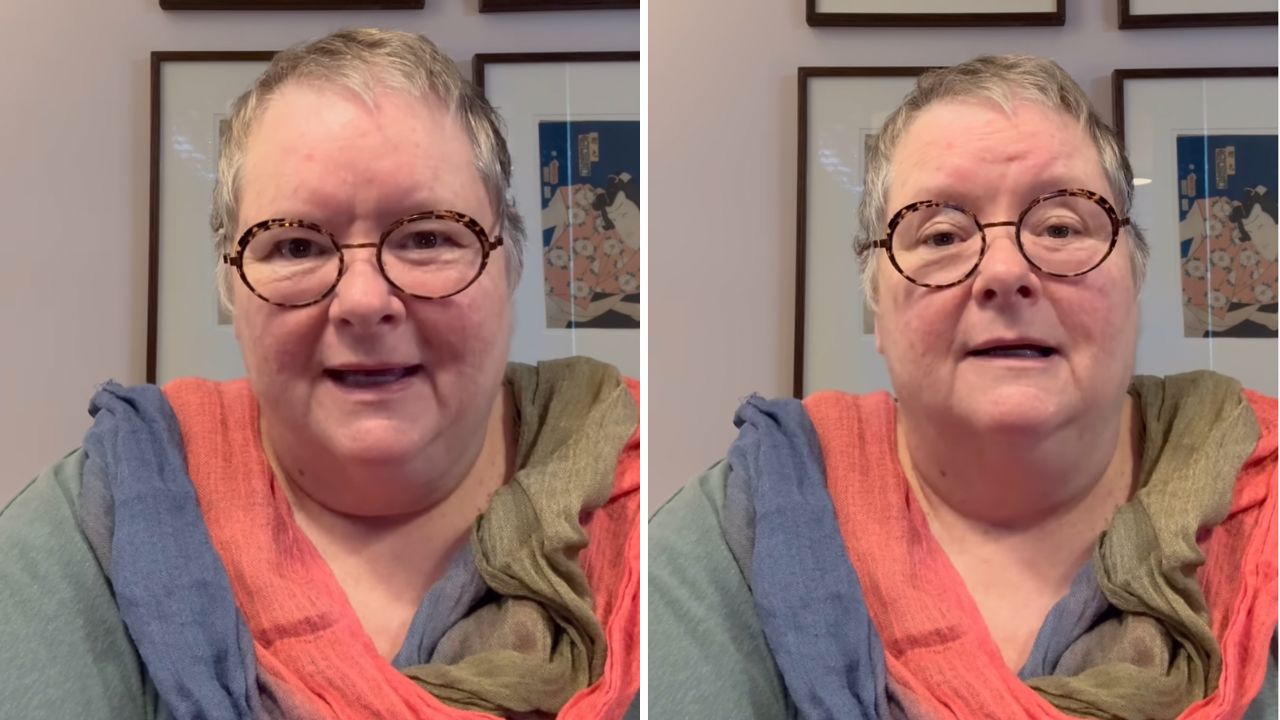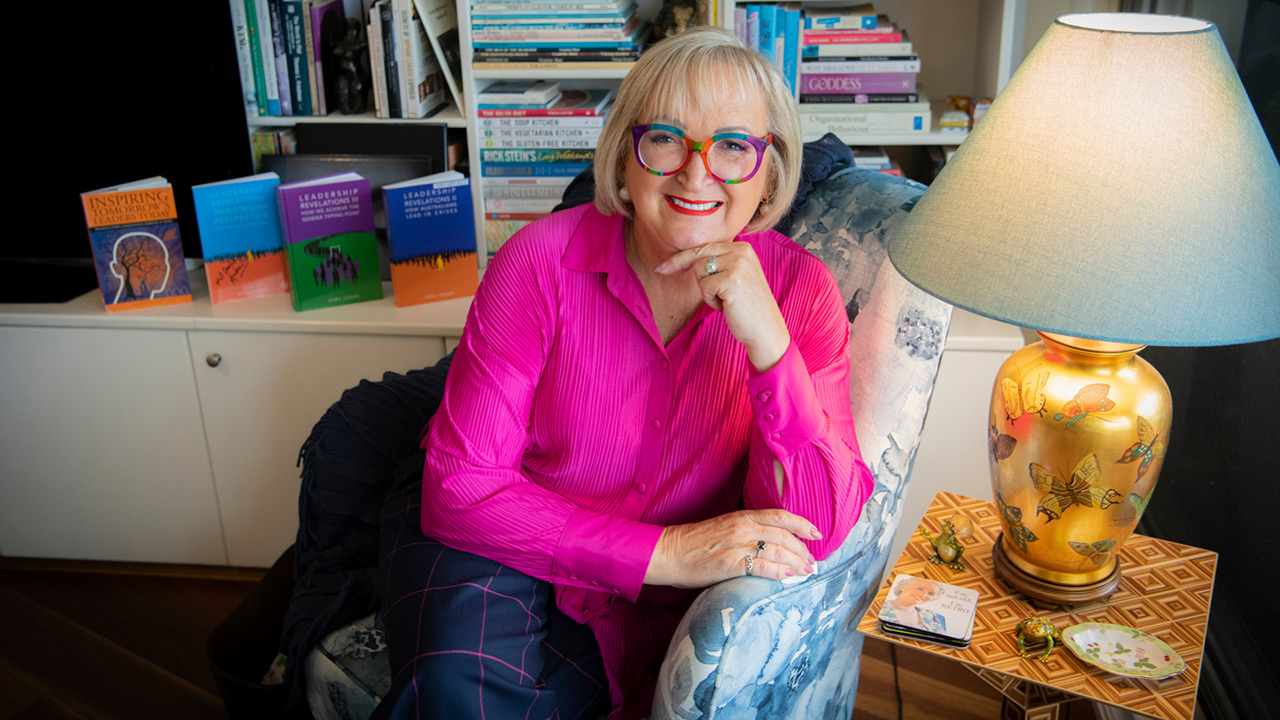
At 22, Avril Henry AM left apartheid South Africa with two suitcases and $500, determined to build a life free from discrimination. Four decades later, she has helped transform the working lives of Australian women, from challenging the corporate boys’ clubs to helping introduce one of the country’s first corporate paid maternity leave schemes.
In her memoir, Not All Diamonds Are Worn, Avril reflects on the experiences that shaped her determination to fight inequality and the legacy she has left for future generations.
Leaving everything behind
Growing up in Kimberley, South Africa, Avril witnessed firsthand how race and gender could determine a person’s opportunities.
“From a young age, I was an observer, but never a bystander. I understood what was expected of me as a White South African woman in that era: Stay in line, stay polite, stay quiet. Wherever I could, I pushed those boundaries. Some would say I crossed them.”
By 1980, aged just 22, she had made the difficult decision to leave her homeland.
“I left because I could no longer build a life inside a system that demanded silence in exchange for belonging. I had no plan to return. I was searching for fairness, democratic freedom, and the right to speak honestly without surrendering my conscience. I arrived in Australia with no roots and no guarantees, but with a clear conviction that I could build a life consistent with my values.”
Challenging a man’s world
Avril’s determination to champion women’s opportunities was influenced by the restrictions experienced by earlier generations of women in her family.
“My mother, grandmother, and aunts grew up in a time when there were many more restrictions on women’s choices and employment opportunities. Some of them couldn’t finish high school because getting a good education was prioritised more for boys than girls.”
Arriving in corporate Australia, Avril discovered that women still faced significant barriers to advancement.
“In previous organisations, predominantly in the 1980s in Australia, and during my working life in South Africa in the late 1970s, women worked largely as typists, secretaries, office administrators, and receptionists. My peer group and mentors for 14 years had been men, and I had worked in male-dominated industries since leaving university – newspapers, financial institutions, mining, and investment banking.”
Fighting for working mothers
One of Avril’s greatest achievements came during her time at Westpac, where she helped build the business case for paid maternity leave, introduced in 1995.
“Several of us in the team were mothers, and we knew that the things that stopped us from having the careers we wanted and deserved were a lack of quality, affordable childcare, paid maternity leave, and family-friendly, flexible work practices. I already had two children, and no more were planned, but I wanted the world of work to be more family-friendly for other working parents, including my daughters in the future, than it had been for women of our generation.”
Avril and her colleagues demonstrated that supporting working mothers also made financial sense.
“We found that half of the women who went on maternity leave did not return. Our figures showed that it was more cost-effective to pay maternity leave and increase the return-to-work rate of women from 50% to 65% than it was to lose these women and have to replace them, together with the associated costs to do so.”
The board approved six weeks’ paid maternity leave and one week’s paid paternity leave, making Westpac a pioneer in Australian corporate parental leave.
Standing up to the boys’ club
Not everyone welcomed the changes. Avril recalls being confronted on a Sydney street by an angry male Westpac employee.
“He was angry and aggressive and walked up to me, stuck his face right up into mine, and said: ‘When are you going to stop all this women’s shit at Westpac?’. Without skipping a beat or step, I replied, ‘When we have as many competent women in management as we currently have incompetent men,’ and kept walking. I left him standing in his tracks with his mouth hanging open!”
A legacy that came full circle
For Avril, the true significance of her achievements became especially personal more than two decades after Westpac introduced paid maternity leave.
“There is nothing quite like being the first to do something that leaves a lasting, lifelong legacy. When my eldest daughter had her first baby in 2018, she called me and said, ‘Thanks, Mum, for introducing paid maternity leave all those years ago, because I get the benefit of it today!’. That warmed my heart, and I felt very emotional seeing the fruits of my legacy within my own family so many decades later.”
Adapted from Not All Diamonds Are Worn by Avril Henry AM (Entourage Media, $55.00).