In the first year of my show in Australia, I received an email from a listener, Peter Logan. He had terminal bowel cancer. Pete asked if I’d read his letter on air, to warn people to do ‘the poo test’: the free bowel screening kit the government starts sending you when you turn 50. The one hardly anyone bothers with. He hadn’t done it. And it would sadly cost him his life.
Pete had so much shame and regret – and he was motivated to make his mistake mean something, to save others. He just needed a platform.
His email was so honest, so moving. I also felt honoured that he’d trusted me with his story. I called him that night and invited him to come on the show. He should share his own story rather than have me read his email out. Hearing his voice would move people more – and give Pete the gift of being in service.
My team weren’t so sure. ‘You don’t have the ratings yet to take a risk like this,’ they said. One of them added, ‘No-one wants to hear about cancer – bowel cancer – at 8 in the morning’.
Fair point. But no-one ever wants to hear about cancer. It lives in the shadows.
I started to doubt myself. Then I remembered: I’m committed to being more authentic on this show than I’ve ever been before. And there is no deepening of connection without vulnerability.
Pete came in
He had notes. Pages of them. I asked if I could see them.
I looked at him and said, ‘Here’s the best thing you can do with these’. And I tore them up.
‘You just need to speak from here,’ I said, putting my hand on his racing chest. ‘Like you did on the phone.’
He did. He was funny and open. He shared his story. He asked people to do the test and not be like him. He made me cry live on air.
At the end of the show, I asked him what he had come here to say.
Talk about speaking from the heart! He pointed to his two beautiful daughters, both in their 20s, and said he wouldn’t live to walk them down the aisle.
A few weeks later, I got a call from someone at the Cancer Council, excitedly saying something miraculous had happened.
She went on to say that thanks to Pete’s vulnerable story, there was a 600 per cent increase in returned bowel screening kits across the state.
I asked how she knew this, and she reminded me that live on air Pete had said, ‘Do the test. Don’t end up like me. Send it off and write on the back, “Pete sent me” so I’ll know some good came from this’.
Pete sent me. Six hundred per cent.
When we speak from the heart, authentically, it moves people
A few days before he died, I went to see Pete. We shared a beer. He joked that some good news is that he’d be dead before he had to watch Arsenal’s rivals lift the cup, which made me spit out my beer.
That night was the last time I heard from him. He emailed me one last time, thanking me for giving meaning to his mistake. His final line sits on a note on my desk:
Keep up the humour, don’t forget the human.
That line broke my heart wide open. It still does. Some stories stay for life. Pete’s is one of mine.
We talk a lot about ‘finding your voice’. But the truth is, your voice isn’t something you find – it’s something you remember. Something you allow. It’s the sound of you when you stop trying to be someone else.
You don’t need a crowd of 250,000 to have your own moment like this. It can happen in a meeting. In a conversation. In a quiet moment with your child. On a morning when you’re scared and tired but show up anyway.
Next time you feel that tug —that whisper of something unsaid, that flicker of emotion you want to hide —pause. Push the notes aside. Take a breath. Look up. Tell them about your dream. It doesn’t have to sound perfect. It just has to sound like you.
He had a dream, not a script. And remember: keep up the humour, don’t forget the human. Pete sent me.
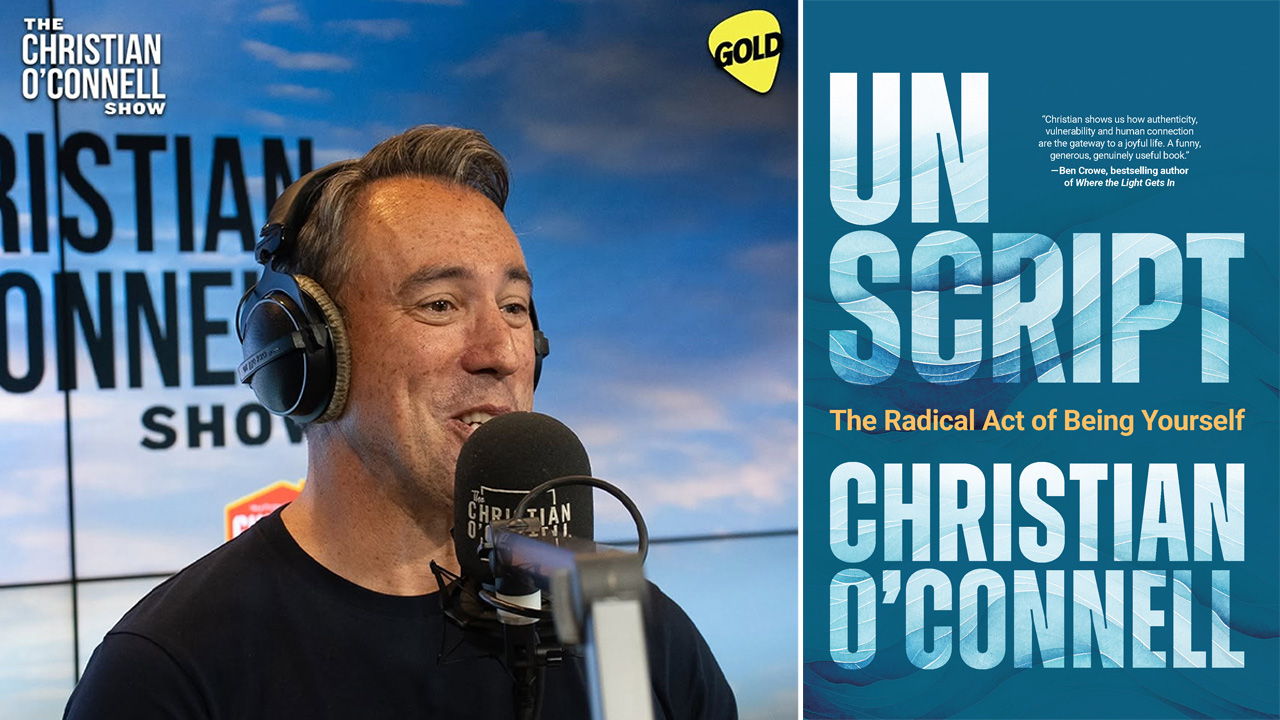
This is an edited extract from Unscript: The radical act of being yourself by Christian O’Connell (Wiley, $34.95), available 29 July at all leading retailers.
Images: Supplied