New Zealand head coach Stacey Jones did not try to dress it up after the 32-12 defeat on Sunday, in the Kiwis’ first final since 2013. “Any time you get to a final and don’t get the result it is always going to be a missed opportunity,” Jones said. “It was our worst performance. We got off to a bad start and could not fight our way out of it. When you make errors and your discipline is poor and give them all that ball, no matter what team you are it is just too hard.”
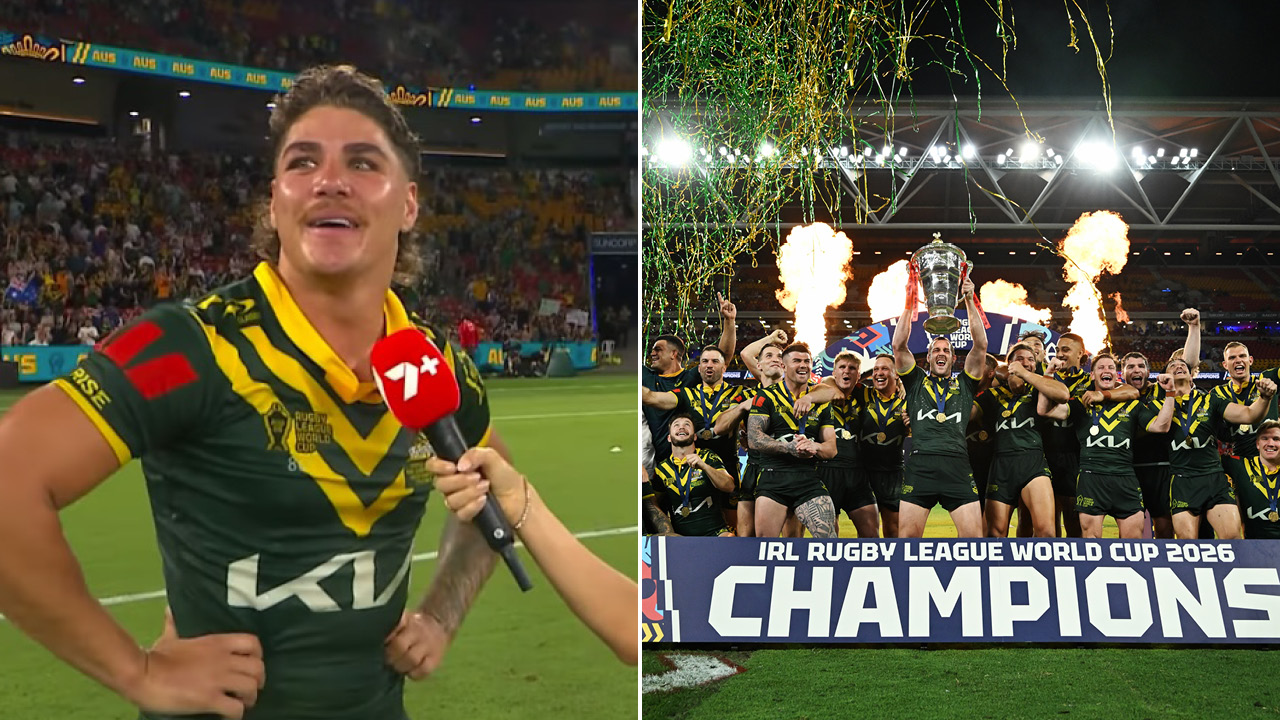
For Australia, the result locked in a fourth straight World Cup crown and their 10th title in the past 11 tournaments, a run that reaches back to 1975. It also meant Kevin Walters’ side were preparing to raise the Paul Barriere Trophy for a record-extending 13th time.
Full-back Reece Walsh, stung by the way Australia were assessed before and during the competition, said the talk had gone too far. “I’m pretty speechless to be honest,” said Walsh. “The chat from everybody coming into this tournament, everyone wrote us off, talking about how good all the other teams are and how good their coaches are. “I feel we got disrespected. Seeing all the Aussie fans coming out – how’s that for culture, baby? I am so happy for Kevvie and the coaching staff. “It was tough there but we kept building each week, believing in each other. This is something I’m going to remember for such a long time.”
Questions about Australia’s middle rotation had followed them through the World Cup, even as forward Tino Fa’asuamaleaui and captain Isaah Yeo rejected the idea they had been pushed around. Much of the noise traced back to the tournament opener on 15 October, when New Zealand went down 24-22 in a match they could and perhaps should have won, and to the game 10 days later when Fiji stayed in touch before losing 36-22. Australia survived both tests and then delivered their clearest statement in the final.
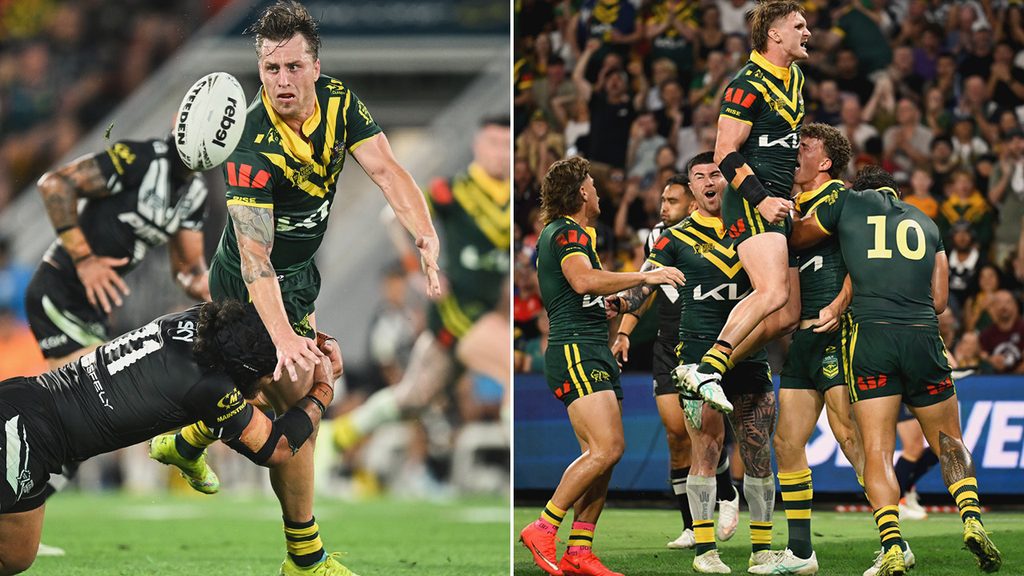
Walsh’s own tournament began under a cloud. One of the defining scenes from that first clash with New Zealand a month earlier was the Brisbane Broncos No 1 bent over and vomiting, a sign of how far short he was of full condition after an eight-week lay off. Walsh said he had been trying to beat the clock after an ankle injury, and admitted he was not as right as he insisted to his coach. “I kept telling Kev [head coach Kevin Walters] it was sweet but I wasn’t sweet,” he said. “It was hurting that first game. Coming off eight weeks of rehab, I was unfit, I didn’t touch a ball but the belief Kev had in me, all the boys made my job so easy. To be out here now and win for Australia, I am so proud.”
Walsh’s selection shaped Australia’s backline for the tournament and kept James Tedesco, who captained the Kangaroos to World Cup glory four years ago, largely in the background. Still, the Sydney Roosters full-back, now 33, took the field late in what was described as a gesture recognising his place in the sport. Immediately after the match, Tedesco announced his retirement from international football.
Walters said the late appearance was about respect, and he revealed he did not know retirement was coming. “Teddy has been such a great player for a long time. We can only have one full-back but James with his season, it was just reward,” Walters added. “He didn’t tell me [he was retiring]. The reason James got on was because I respect him as a player and a person and what he has done for our game and as a former Australia captain. “Without being disrespectful with the scoreline, I thought he needed to get on the field and experience that. I am so glad that happened now because he has been a champion in the jersey and the sport.”
Tedesco finished with another major honour, adding the Clive Churchill medal to a long list of personal achievements in 2026. His record also includes three NRL Premierships and two World Cups.
In the end, Australia’s best football arrived at the perfect moment, while New Zealand’s standard slid on the biggest stage, and the final never became the tight contest many had anticipated.