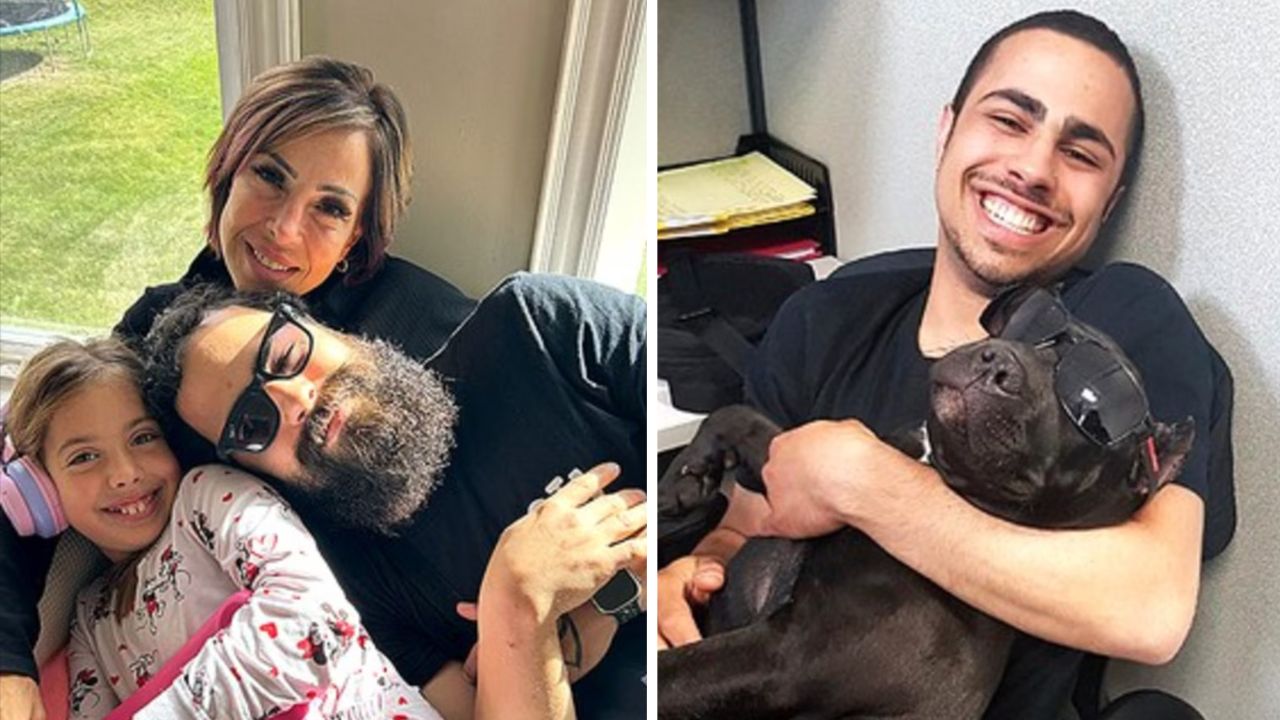
Grieving parents of a 26-year-old Canadian man are speaking out after their son was euthanised under the country’s medical assistance in dying (MAID) laws, saying the system failed to protect what they describe as a “vulnerable” young man with a history of mental illness.
Kiano Vafaeian was euthanised on December 30 in British Columbia, according to Fox News.
His family said he was diagnosed with Type 1 diabetes at the age of four and began experiencing mental health challenges after a car accident at 17.
His mother, Margaret Marsilla, said his depression was often seasonal, but she believed his outlook shifted and he became “obsessed” with MAID in 2022, after he lost vision in one eye.
“He kept on emphasising how he could get approved,” Marsilla said.
“We never thought there would be a chance that any doctor would approve a 22- or 23-year-old at that time for MAID because of diabetes or blindness.”
MAID was legalised in Canada in June 2016. The law allows eligible patients with “grievous and irremediable” medical conditions to request a lethal drug, either administered by a clinician or self-administered.
In 2021, eligibility was expanded to include applicants whose natural deaths are not reasonably foreseeable, often referred to as “Track 2”.
In 2022, after a Toronto doctor initially approved Vafaeian’s request, his family launched a social media campaign opposing the decision. The doctor later withdrew approval.
While Vafaeian was initially angry, his family said he showed signs of improvement over the following year and moved in with them in 2024.
“He tried his best when he was in one of those good highs of life,” Marsilla said.
“Then winter, fall started coming around, he started changing, and then everything that we had worked for from spring and summertime just disappeared … he would start talking about MAID again.”
The family said he was rejected by multiple doctors in Ontario before seeking out Dr Ellen Wiebe, a prominent MAID provider, in British Columbia.
Marsilla believes Dr Wiebe “coached” her son on what to say to meet the criteria for Track 2 patients.
“We believe that she was coaching him … on how to deteriorate his body and what she can possibly approve him for and what she can get away with approving him for,” Marsilla said.
“Because if he had spoken back in 2024, and he was a good candidate for approving MAID, she would have done it right away, but she didn’t.”
Vafaeian’s parents said they were not notified of the approval and only learned of his death days later. They also said his medical records did not substantiate the “severe peripheral neuropathy” listed on his death certificate as a qualifying factor.
“This whole process came to us as a shock,” said Joseph Caprara, Vafaeian’s stepfather.
The family is now advocating for the repeal of the Track 2 provision and for the passage of Bill C-218, which seeks to restrict MAID for patients whose sole underlying condition is mental illness.
“Realistically, safeguards for patients would be reaching out to their family members, giving them a whole bunch of different treatment options,” Marsilla said.
She claimed the current system allows doctors to approve and euthanise patients within 90 days under Track 2.
“How is that safe for patients?” she asked.
Marsilla described the situation on social media as “disgusting on every level”.
On Facebook, she wrote, “No parent should ever have to bury their child because a system — and a doctor — chose death over care, help, or love.”
Caprara said the family hoped sharing their story would highlight what they saw as risks for “vulnerable and disabled” people and prompt caution in other jurisdictions considering similar laws.
“We don’t want to see any other family member suffer, or any country introduce a piece of legislation that kills their disabled or vulnerable without appropriate proper treatment plans that could save their lives,” he said.
In a statement, Dr Wiebe said, “Like my colleagues, every patient I approve for Track 2 has unbearable suffering from a grievous and irremediable medical condition (not psychiatric) with an advanced state of decline in capability and consents to MAID fully informed about treatments to reduce the suffering.”
Images: Facebook