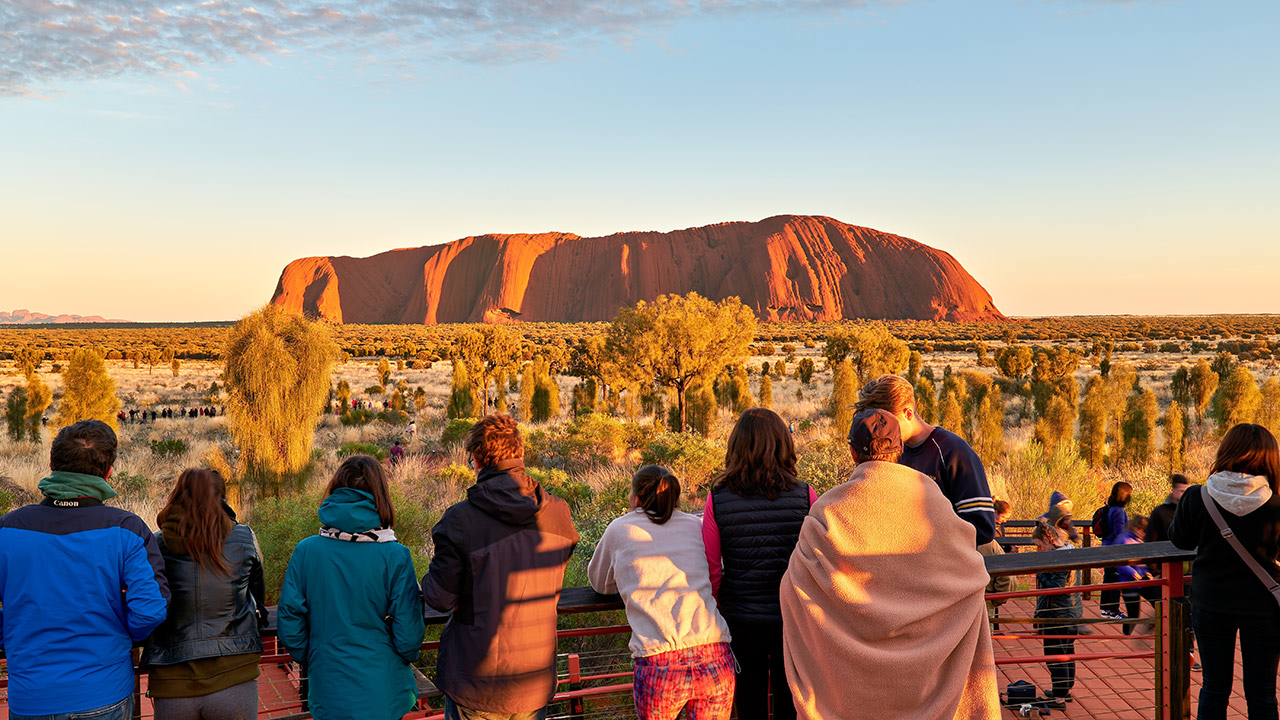
A single day at Uluru buys you the view. Most day trips out of Alice Springs follow the same shape: fly or drive in, watch the sunrise or sunset light up the rock, walk a short stretch of track, then climb back onto the coach for the long haul home, sometimes rolling into town well after midnight. What that buys you is a sighting of the enormous red sandstone formation at the centre of the Northern Territory’s Red Centre. What it does not buy you is the time for the place to actually register.
Four days changes that sum, and without the cost blowing out the way you might expect. A four-day overland trip from Alice Springs through to Yulara, sleeping in swags under the stars with most meals included, runs from $819 per person on one overland operator’s current pricing – about $205 a day, and the best-value length on their books. For that, the itinerary covers Uluru itself, the domed rock formations of Kata Tjuta, the red cliffs of Kings Canyon, and enough breathing room for the free ranger-guided Mala walk inside the national park.
Four days, three sites, one simple sum
The same operator prices a three-day version, which also folds in Kings Canyon, from $729, and a two-day Uluru safari in furnished tented camp from $679, with a child fare of $562. At the top end sits a five-day safari in tents and swags, with national park entry fees bundled in, from $1,499. Day-one arrival on most of these trips includes a sunset barbecue with beer and wine, and a stop at the Cultural Centre before the walking begins in earnest.
Worth checking at booking: the national park pass, $38 per adult for three days with under-18s free, is not always folded into the headline tour price. A few minutes confirming this before you pay saves a surprise at the gate.
Picking the shape that suits you
Travellers who would rather a small-group guided trip than self-drive have Intrepid’s four-day Best of Uluru & Kings Canyon or six-day Red Centre & Uluru Explorer, both built around the same core sites with a host doing the organising. Those who prefer a bed every night rather than a swag can base themselves at Ayers Rock Resort – Sails in the Desert, Desert Gardens Hotel, Outback Hotel or Emu Walk Apartments – and add day tours to Kata Tjuta and Kings Canyon from there, bookable as flight-and-hotel packages through Qantas Holidays or Jetstar Holidays.
For readers who genuinely cannot spare more than a day, that option has not disappeared. A day trip from Alice Springs, from $279, or from the resort itself, from $230, still covers Uluru and the Mutitjulu Waterhole walk. It is simply the version that flashes past rather than settles in.
Locking in dates for a November visit
November sits in the warmer half of the year at Uluru, with night-time temperatures far milder than the lows of a desert winter. Flights into Ayers Rock Airport are worth locking in eight to ten weeks ahead given how few airlines service the route and how sharply demand spikes around school holidays. Return fares from Sydney, Melbourne or Brisbane typically range from $350 to $900, and flying into Alice Springs and driving the roughly 450km to Yulara – around five hours – can work out cheaper for those happy to make a road trip of it.
Ayers Rock Resort currently has up to 40% off four-night stays at Sails in the Desert, Desert Gardens Hotel or Outback Hotel, with children 15 and under staying free and free cancellation up to eight days before arrival, which makes booking early low-risk. A separate Emu Walk Apartments offer saves 20% on four-night stays and throws in return airport bus transfers.
The rock, the walk and the people who belong there
Uluru stands 348 metres high, taller than the Eiffel Tower, and takes roughly 3.5 hours to walk right around at base level, a stretch most multi-day itineraries break into shorter guided sections rather than one long circuit. The formation extends as far as six kilometres underground, part of the same geology as Kata Tjuta, both shaped around 500 million years ago in the Petermann Ranges. Climbing has been prohibited since October 2019, both for visitor safety and because the site is sacred to the Anangu, who have lived in Central Australia for more than 30,000 years and had the land formally returned to their ownership in 1985 after more than 35 years of campaigning.
“Nothing prepares you for the feeling of seeing a 500-million-year-old monolith rising from an otherwise flat desert,” writer Cliona Elliott said.
Multi-day trips sleep in swags or tented camps rather than hotel beds, which suits some travellers and not others – anyone wanting a resort room every night should budget for Ayers Rock Resort separately and day-tour out from there. The driving is real too: Alice Springs to Yulara is a genuine 450km, and tours built around that route involve long coach days either way. Away from Yulara itself, shops and amenities thin out fast, and long stretches of road pass without seeing another soul.
Confirm before you book: fares, accommodation offers and tour inclusions move, so check current pricing and what each operator folds into the headline figure before paying a deposit.
Most people remember the rock from a photograph long before they ever stand in front of it. Give the trip four days instead of one, and what you take home is not another photograph of the same sunset everyone else has, but the quiet of actually having been there long enough for it to sink in.