Coming home from hospital is a relief, but it’s also a vulnerable time. Even a short hospital stay can lead to big losses in strength, stamina, and trust in your own body. What you do in the first few days at home matters.
Don’t wait and hope
The easiest movement is the kind you barely notice. Walking to the kitchen to boil the kettle counts. Standing up during the TV ad breaks count. Carrying your own plate to the table, stepping outside to check the weather, pacing while you chat on the phone — it all adds up. Here’s a tip: put the TV remote on the other side of the room so you have to get up and move to change the channel. We call this “sneaky exercise”— and it helps! The key is to make movement easy and safe. Keep walkways clear, keep your walker or stick within reach, and look for those little moments throughout the day where you can add a few extra steps. You don’t need a gym. You need a reason to stand up.
Fuel your recovery
Here’s something that surprises a lot of people: many Australians over 70 aren’t eating enough after a hospital stay — and it makes everything harder. One of our clients told us she’d been living on biscuits and the odd cup of Milo for the first week home. “I just couldn’t be bothered,” she said. Fair enough — but that’s exactly when your body needs fuel the most. We’ll get properly into food in the very next chapter. For now, the simple rule: eat something with protein at each meal and drink a glass of water with it. Not glamorous advice, I’ll grant you — but your body is doing a lot of invisible rebuilding, and it needs the raw materials.
Manage pain so movement feels possible
It’s hard to get moving when you’re in pain, I get that. If you’ve been given pain medication, take it as prescribed. There’s no medal for toughing it out, and managing pain properly can make a real difference to how confident you feel on your feet. One thing worth knowing: some pain medications can slow the digestion and cause constipation, which is another good reason to keep moving and keep your fluids up. And if you’re noticing side effects, such as drowsiness, dizziness, or anything that doesn’t feel right, mention it to your GP, pharmacist, or even physio. A quick medication review can make a world of difference.
Choose the right chair
Telling you to rethink your favourite chair is bold territory, I know that! And, if you’ve been sitting in the same recliner since 1998, I’m not here to break up the relationship. But if you’re finding it hard to get in and out of, it might be worth being honest with yourself about whether it’s helping your recovery, or holding it back.
A good chair is stable, lets your feet rest flat on the floor, and encourages you to sit upright rather than sink in. It doesn’t have to be fancy. For a short time after hospital, a solid dining chair often does the job better than a typical armchair that can be soft and deep. As you get better and stronger, practise getting in and out of different chairs around the house to build confidence for when you’re back out and about in other places.
Choose a goal that matters to you
We all know that exercise can be tedious and easily avoided. That’s why goals are critical for success. Get clear on what it is you want to return to. Then, have an easy-to-remember set of exercises linked to your meaningful goal to keep you inspired — easy in theory! A goal to “do exercises three times a day” is about as inspiring as watching paint dry. But a goal to get back out to the front garden and have a yarn with the neighbours? That’s something worth getting out of bed for.
Getting stronger takes steady effort, there’s no shortcut there. And the frustrating truth is that it takes weeks to build strength and only days to lose it after a setback. But that’s exactly why small, regular movement matters so much. It’s your insurance policy. The trick is to notice how far you’ve come. On the first day home from hospital, you might struggle to get up from the dining chair. Three weeks later, you might be getting to the laundry with a clothes basket or even walking around the block. It’s easy to forget where you started, that’s why I love the idea of photos and short videos. Film yourself doing an exercise in week one, then again in week three. The difference can be genuinely surprising, and on a tough day, it’s exactly the reminder you need.
Try this today:
1. Walk to one room in your home you haven’t spent much time in since getting back from hospital. Sit down, have a rest, and notice what felt steadier than you expected.
2. Check what’s in the fridge or pantry right now. Do you have something with good protein in it — eggs, cheese, tinned fish, some chicken? After a hospital stay your body needs that fuel more than usual to rebuild. If the cupboard’s a bit bare, add it to tomorrow’s list. Even a tin of tuna on crackers is your body getting what it needs.
3. Choose one small, meaningful task to be your “purpose” for the day. This could be watering a pot plant, sorting through a drawer, or sweeping the front step.
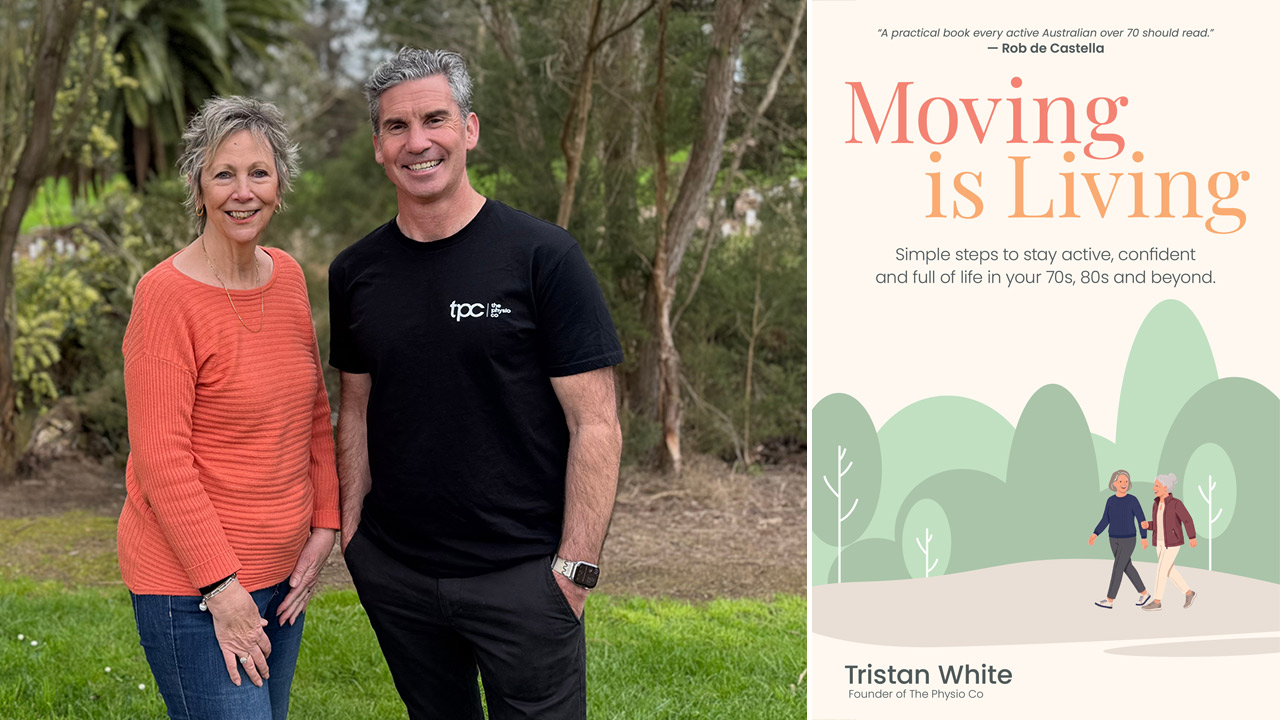
Edited extract from Moving is Living by Tristan White. Tristan is a University of Melbourne-qualified physiotherapist, author and founder of The Physio Co. For more than 20 years, he and the TPC team have worked exclusively with people in their 70s, 80s and beyond, helping them stay active and independent. He also holds an MBA from QUT. Moving Is Living, brings together practical lessons and stories about staying active and doing more of the things you love. Find out more at www.thephysioco.com.au/new-book-moving-is-living/