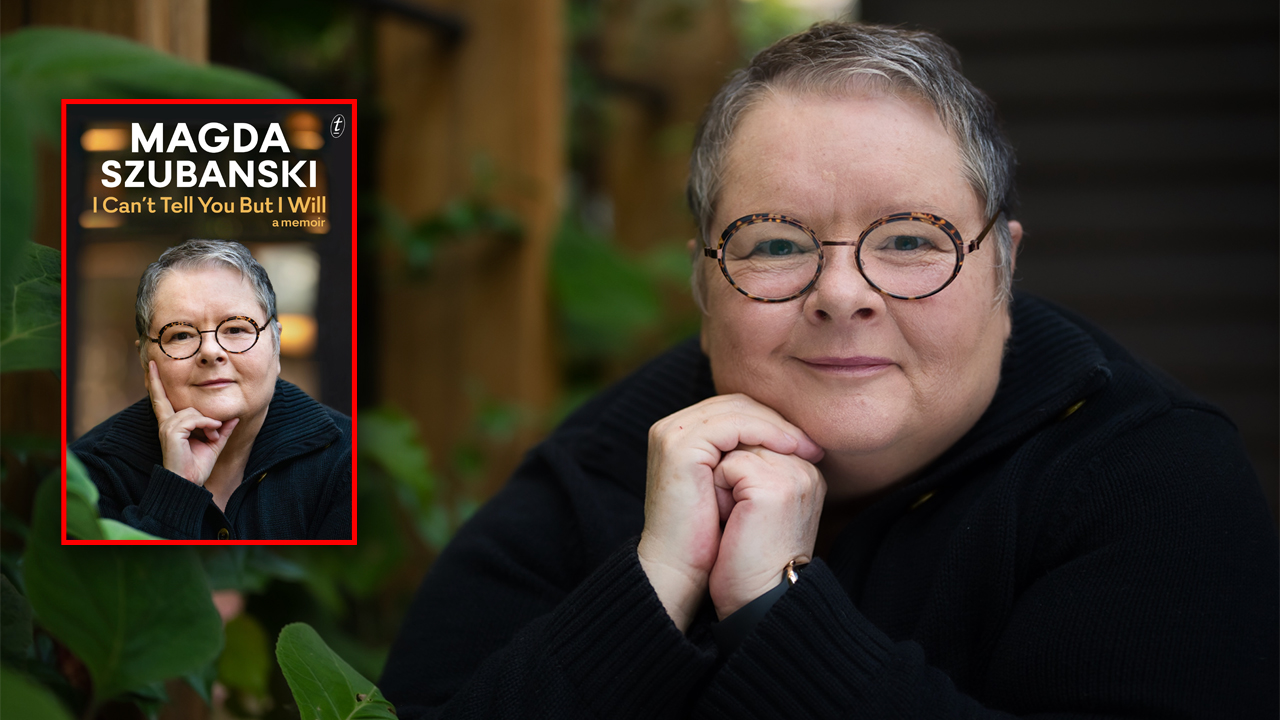
Magda Szubanski has done it again: written a memoir so honest it reads like a long overdue conversation with an old friend. Her new book, I Can’t Tell You But I Will, picks up where her first left off, pulling back the curtain on family, fame and the long road to equality. For Australians who grew up laughing at Sharon Strzelecki, Kath and Kim’s netball-mad, dead-set loyal sidekick, this second memoir feels less like reading about a celebrity and more like catching up with someone who has always understood us.
That sense of recognition is no accident. Szubanski has spent decades playing characters who felt like people we already knew, and she has lived through the same messy business of family and body and health that touches most of us. Roughly half of Australians will face a cancer diagnosis before they turn 85, and Szubanski is one of them. She writes with the same warmth about her own struggles that she once brought to Sharon.
She is careful not to overstate her own importance, even as she describes the strange intimacy fame has created between her and the public. “Most especially Sharon Strzelecki – people feel they know me,” she writes. “More than that – they feel through me.” It is a quietly astonishing claim, and entirely true.
That connection is partly why the organisers of the marriage equality campaign asked her to become its public face, a role she carried through the successful Yes vote. In the memoir, that campaign becomes the thread holding her memories together, even though she admits she arrived sceptical of slogans and uneasy about being told how to behave once she had come out on national television. “What do I even bring to the fight, apart from fame?” she asks. “And what is fame, other than a giant popularity contest? It’s not real power.” Most readers will disagree. Her recognisability was exactly the point.
The memoir turns rawest when Szubanski writes about her parents, and the love and cruelty that passed between her and her mother in equal measure. One parent was embarrassed by her weight. The other wanted her to know the “gay gene” had not come from him. Reading those pages can feel like watching two people tear each other down and stitch themselves back together in the same breath.
“In the psychological war between my parents, I was collateral damage,” Szubanski writes. She does not flinch from her own part in the damage either, describing herself plainly as “the family whistleblower.”
It is no surprise that Sharon Strzelecki, the character so many of us imagined as endlessly chipper, ended up in therapy, a fact Szubanski discusses without a shred of embarrassment. That willingness to laugh at herself, even in the hardest chapters, is the same quality that made a nation claim her as its own all those years ago.
I Can’t Tell You But I Will by Magda Szubanski is out now (Text Publishing, $55).