There is no fitness test to pass before you book a Kimberley cruise. Instead, there is a matching exercise – working out what your body handles happily on a given day, then choosing the ship and itinerary built to deliver exactly that.
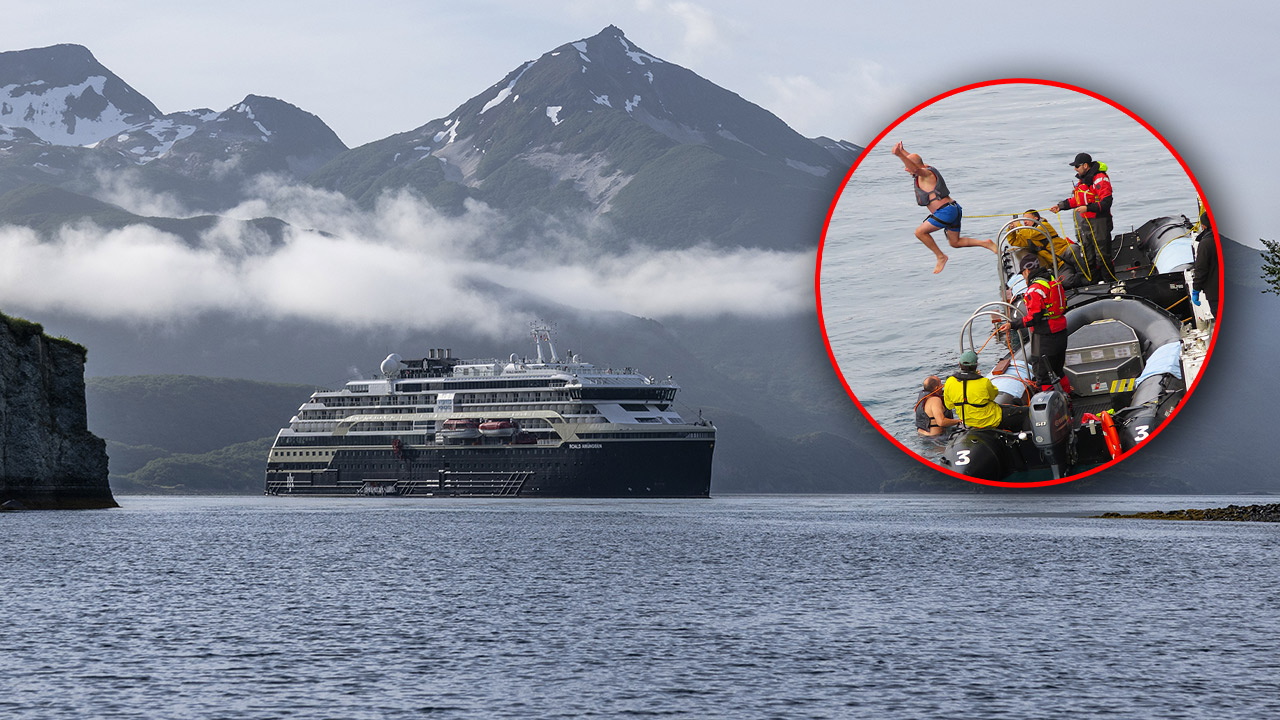
Every operator will tell you the same thing if you ask directly: this is not a cruise where you walk down a gangway onto a dock each morning. Most Kimberley excursions run by zodiac, the small inflatable boats that ferry passengers from ship to shore, and many of those landings are wet – meaning you step straight from the boat into shallow water rather than onto a jetty.
What a typical shore day actually asks of you
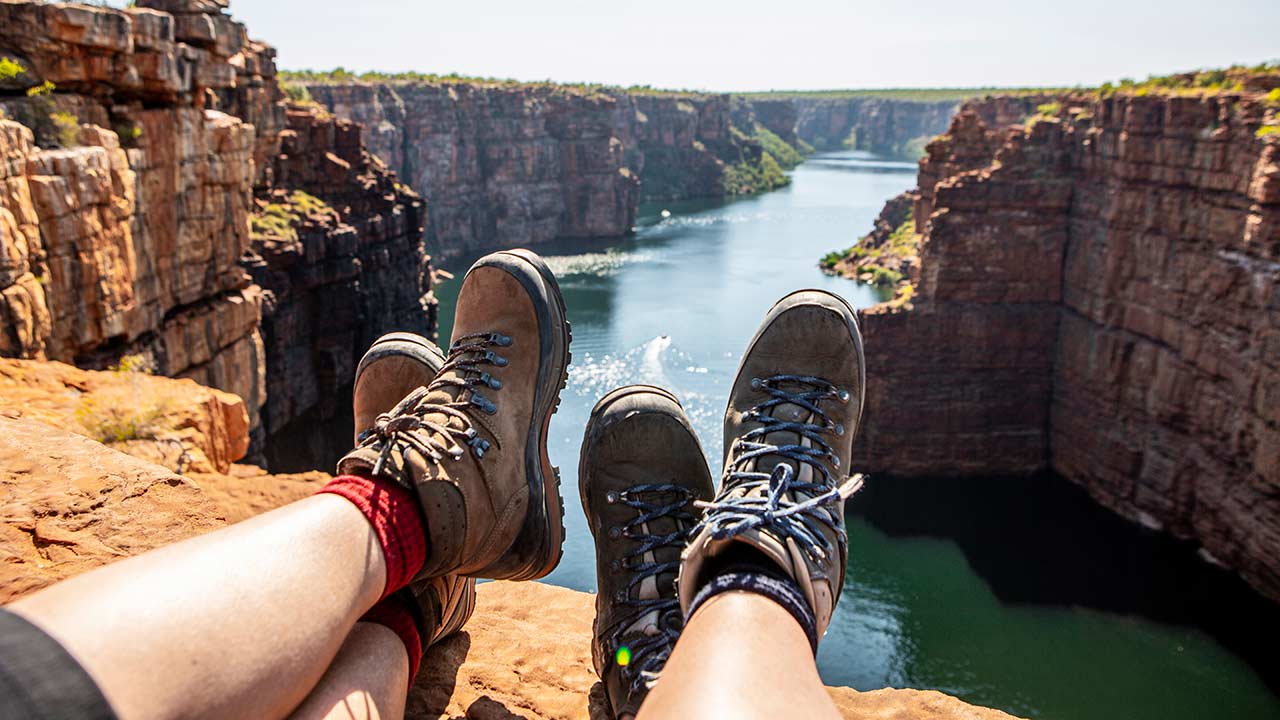
Once ashore, the walks themselves cross rocks, sand, creek crossings and uneven tracks on the way to waterfalls or Aboriginal rock art sites. Reaching a swimming hole is not automatically the easy option either – the walk to get there over rocky ground can be the real effort, not the swim itself. Swimming in the open bays and rivers is generally avoided anyway, because of saltwater crocodiles, so crew build in visits to freshwater pools and billabongs when conditions allow.
Jenny Flower, from Expedition Partners, put it plainly: “A Kimberley expedition cruise is an active style of travel.” But she was equally clear that active does not mean compulsory. “You don’t need to be super fit to experience the Kimberley, and you certainly don’t need to do every walk or excursion to have an incredible time,” she said.
Skipping a landing is a normal rhythm on these ships rather than a concession. “Some of my happiest clients have skipped an excursion and spent the afternoon sitting on deck with a glass of wine, watching waterfalls tumble down those magnificent red cliffs,” Flower said.
Choosing between a steadier ship and a livelier one
Ship size is the real lever here, more than any personal fitness measure. Mid-size expedition ships carrying between 72 and 120 passengers tend to run a fixed daily itinerary, with larger cabins, bigger expedition teams and more onboard amenities – a steadier pace suits passengers who want the excursion program predictable and unhurried.
Smaller vessels, carrying between 12 and 36 passengers, generally run a more active program – think boulder scrambles to reach swimming spots, with fishing often added as an option. That extra activity tends to come with a higher per-person fare, since fewer passengers are sharing the cost of the ship.
One point holds across every vessel in every fleet, regardless of size or pace: passengers need to move around unassisted, including using stairs to reach evacuation points, and manage personal care independently for the length of the voyage. Operators recommend a direct conversation about mobility before booking, since guests relying on walking frames or wheelchairs may find few or no suitable ships in a given fleet.
What it costs, and what that fare does and doesn’t buy
Most Kimberley cruisers pay between $15,000 and $20,000 per person twin share, though entry-level itineraries start lower. Coral Expeditions’ classic ten-night Kimberley Cruise between Darwin and Broome, which visits King George River’s twin falls and ancient rock art sites, starts from $11,815 per person twin share for March-September 2027 sailings. Its Coral Frontiers and Kimberley Icons itinerary, which adds Rowley Shoals, Ashmore Reef and Scott Reef, starts from $9,200 per person twin share, with departures on 21 September 2026 and 22 September 2027. Ponant’s 2027 Kimberley sailings have carried discounts of up to 30 per cent, pricing from around $12,695 per person twin share.
None of these fares include flights to Broome or Darwin, gratuities – the daily service charge added to your onboard account – drinks packages or any pre or post-cruise accommodation, so confirm those separately before you commit. Fitness level does not shift the headline fare on any of these sailings, but it does shift which ship and cabin grade actually suits you, and smaller, more active vessels tend to cost more per person for fewer passengers aboard.
Timing your trip around waterfalls, weather and whales
The season runs March to early October, with no ships operating during the wet season from October to early March. March, April and May bring the big waterfalls, including King George Falls and Mitchell Falls, at their fullest. June and July bring the steadiest daily temperatures and the lowest humidity, while late July through September overlaps with humpback whale migration and wildflower season. At least one major operator now prices September as low season alongside March and April, treating May, June and July as peak – worth knowing if a September sailing near the whales appeals but you also want the softer fare bracket.
Because the 2027 season is already released, with 47 departures across three ships, waiting rarely saves money on these low-season fares – it mostly risks losing the cabin grade or ship you actually wanted. Comprehensive travel insurance that explicitly covers remote-region medical evacuation matters here too, given how isolated the Kimberley coast really is – check with your insurer that zodiac transfers and wet landings are covered activities, not exclusions, before you sail.
Get the match right – the ship that suits your pace, not the one with the loudest brochure – and the reward is watching the tide pull back across Montgomery Reef or the twin falls of King George River from the deck of a boat built for exactly the kind of day you wanted. That, more than any fitness test, is what decides whether you come home already planning to go back.