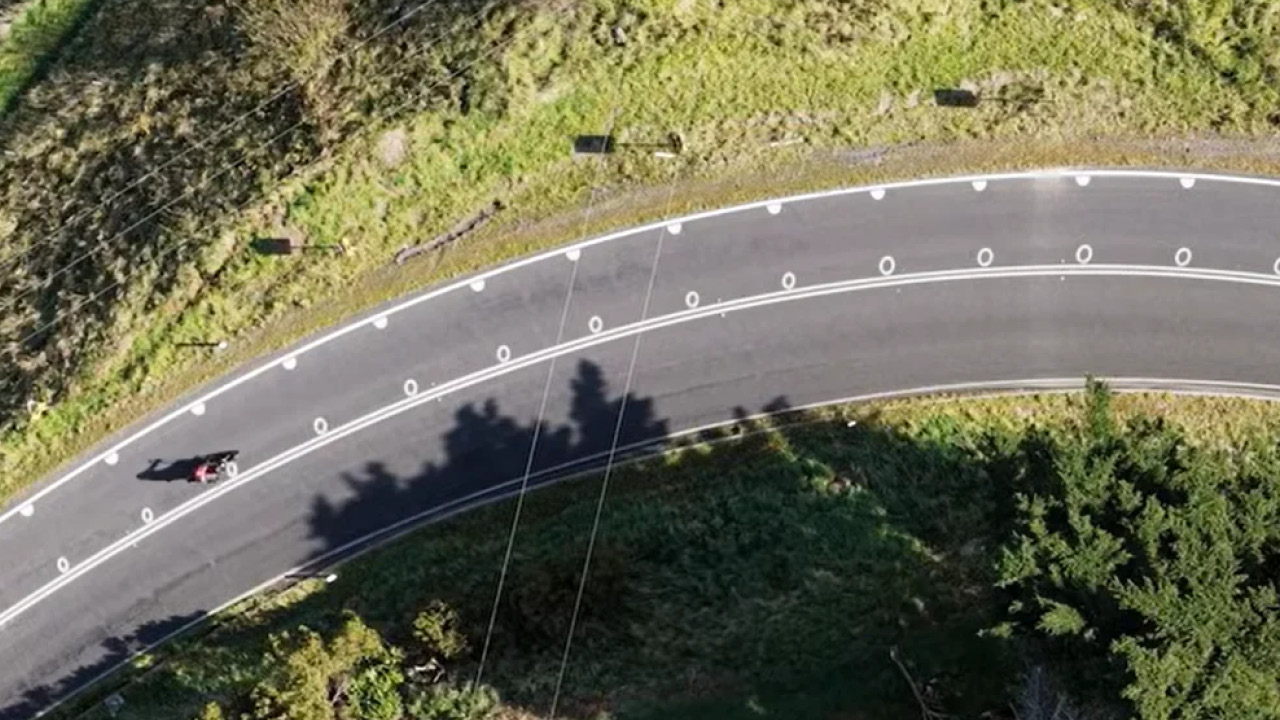
Odd little circles are being painted beside the centre line on curving roads in Victoria as part of a low-profile safety program that is expected to expand interstate. The markings are known as perceptual countermeasures (PCM), and they are designed to prompt motorcyclists to position themselves toward the middle of their lane.

The Victorian Government wants riders to “start wide and finish tight” on winding roads so they stay clear of oncoming traffic. Riders are being encouraged to remain outside the painted circles and begin their turn while keeping a safe gap from the middle of the road.
The Victorian rollout is the opening stage of a national trial aimed at cutting the number of serious crashes. The project has already secured funding and backing from transport bodies in NSW, Tasmania and Queensland, meaning the trial is set to move beyond Victoria.
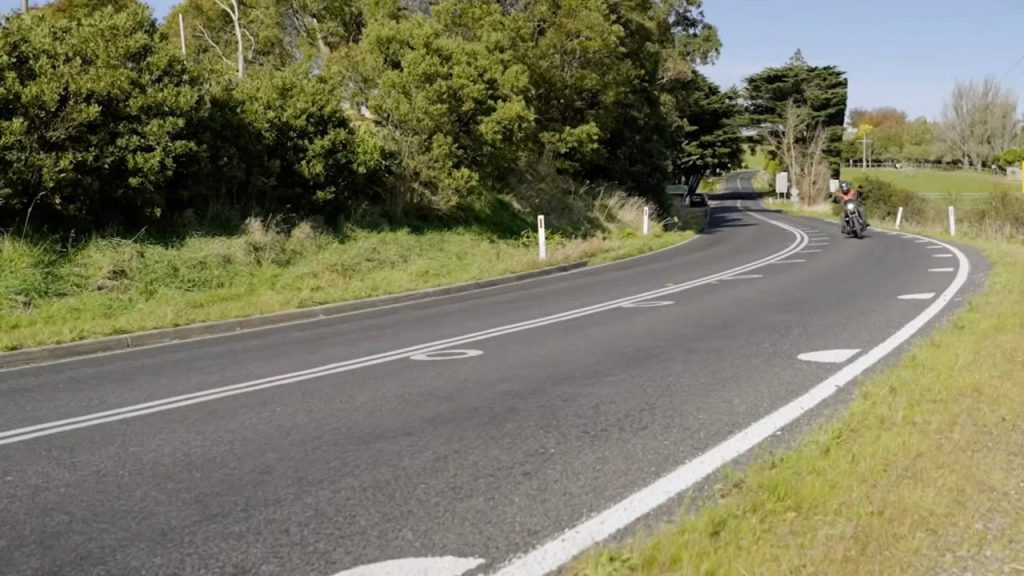
Right-hand bends can be especially risky for motorcyclists when they travel too close to the centre line and end up crossing it with their upper body. Failing to “start wide” and then drifting over the centre line is a frequent cause of head-on crashes involving cars and motorcycles on these roads. The markings may also help prevent drivers from losing control while trying to avoid a rider, reducing harm to themselves and others.
Perceptual countermeasures, or visual clues, are similar in concept to chevron markings, which help drivers maintain a safe distance from the vehicle ahead. PCM have also been used successfully overseas.

In Austria, a 2019 trial found a major reduction in motorcycle crashes, with some sites recording falls of up to 80 per cent. The Federation of European Motorcyclists’ Associations (FEMA) reported that “the cause of many motorcycle accidents is an incorrectly chosen cornering line.”
“If the upper body extends too far … into the oncoming lane, it is often no longer possible to swerve without causing an accident when oncoming traffic suddenly appears,” it said.
FEMA also noted that “Motorcyclists generally avoid riding on road markings, even if they are sufficiently grippy and non-slip.”
Long-term results from the Victorian study are due to be finalised by October 2026. If the figures show the markings improve safety, they could be rolled out far more broadly across Victoria and elsewhere in Australia, with authorities hoping for gains similar to those seen in other countries.