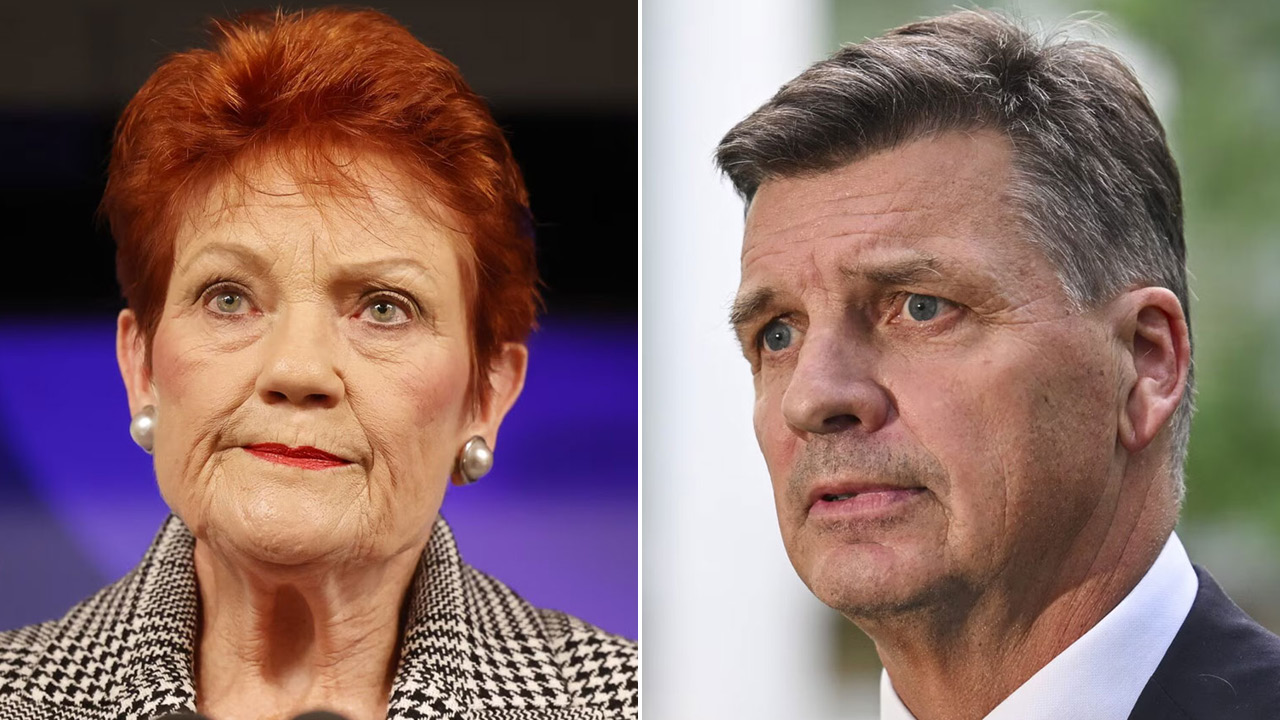
One Nation leader Pauline Hanson has stood by her controversial use of the word “monocultural” after raising it during a National Press Club speech this week.
While setting out her party’s agenda on Wednesday, Senator Hanson argued Australia should be “monocultural” rather than “multicultural”. The remark drew criticism from politicians and public figures across the political spectrum.
Speaking on Thursday, Hanson said she understood “monocultural” to mean the “culture of the nation” and argued Australia already had a shared language, dress, laws and “cultures”.
On Sky News, host Chris Kenny asked whether the word was “too strong” and whether Australia should “accept people of all ethnic backgrounds and cultures as long as they embrace our values”.
Hanson replied: “What’s the difference with it if they’re going to embrace our values”.
She continued: “People are actually coming here to be Australian, isn’t it the Australian culture?”
“We are multiracial, multiculturalism is failing us, and if people are going to be treated totally different on their cultural background, well that’s not going to work either..”
“We’re seeing the division that’s happening in other countries around the world, so I think being monoculture is the way for us to move forward.”
Hanson then added: “Japan has no problem with it”.
Kenny pushed back, saying “monoculture” was widely seen as too extreme.
“It suggests we don’t allow for variations in background in this country, which are obvious around the country when you look at Indians, Italians, Sikhs, Chinese, Middle Eastern people,” he said.
“They’re all expressing some elements of their culture while embracing Australian values.”
Hanson responded that people from some of those very communities had told her they were “Australians” and “proud to be here”.
“It’s not just about the culture of persons, it’s about the culture of the nation, who we are: our traditions, our own culture, our language, our dress, our laws – these are all monocultural,” she said.
She also said: “We don’t have multicultural laws, do we? We have a monoculture law where everyone is treated the same under the one law, so if people have chosen to come to Australia.
“They know what they’re doing, they say they want to come on board to be Australian, I think that’s very important.”
Among those to criticise the language on Thursday was Opposition Leader Angus Taylor.
“I judge people on their character and their conduct. That’s how the Liberal and Nationals approach things,” he told a press conference.
“If she wants to judge people based on the colour of their skin or their race, One Nation needs to explain that, but our position on this is clear.”
Prime Minister Anthony Albanese, at a separate press conference, said parties aiming to form government should focus on policies, “not simply seeking to divide Australians against each other”.
Islamophobia envoy Aftab Malik told ABC Radio National that the “reality is that Australia is multireligious, multiethnic, multifaith”.
LNP MP Garth Hamilton also rejected Hanson’s position, telling The Australian that monoculturalism was “not even a vision of the past” in Australia, let alone a future one.
“I celebrate the cultural divide of my Irish Catholic side as much as my Scottish Protestant side. I will not deny either,” he said.
“Monoculturalism has nothing to do with unity of purpose. Monoculturalism is about suppression of the individual and I will not stand for it.”
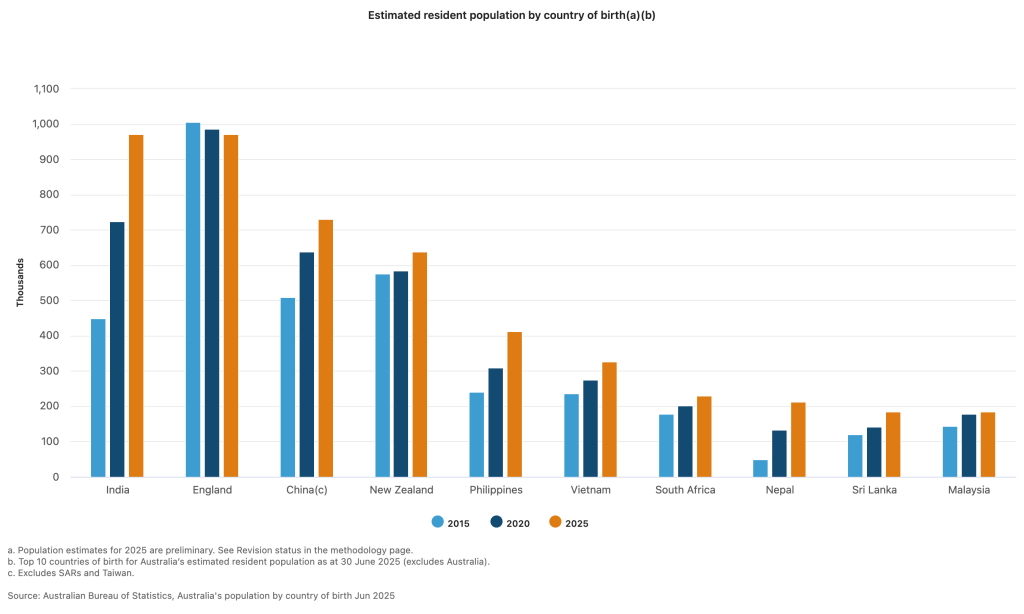
Fresh figures from the Australian Bureau of Statistics released in April showed Australia’s foreign-born population has been shifting, with more residents from nearby countries settling in the nation.
Over the past decade, the resident populations born in India, China, New Zealand, the Philippines, Vietnam, South Africa, Nepal and Sri Lanka all rose. Over the same period, the number of English-born residents, previously the largest foreign-born group at every count, edged down slightly.
An ABS social survey in 2025 found support for cultural diversity had softened, but multiculturalism still had overwhelming backing. Three-quarters of Australians in 2025 agreed that it was good for society to be made up of different cultures. That was down from 85 per cent in 2020 and 81 per cent in 2019.
Women were more likely than men to agree, with 79 per cent compared with 73 per cent. The data also showed people in metropolitan areas were more culturally tolerant than those in other parts of the country.
Additional ABS data released on Thursday found Australia’s population climbed 1.5 per cent to 27.8 million over the same period. That equated to an increase of 412,500 people. Births and deaths accounted for growth of 111,500, with the rest coming from net overseas migration.
Migration is set to remain a major political battleground heading into the next election, with both the Coalition and One Nation making the issue central to their campaigning.
Hanson said on Wednesday that population growth was putting unsustainable pressure on housing and infrastructure.
“Undeniably immigration or immigration policy has our country in the state of crisis,” she said.
Earlier this year, Angus Taylor announced the Coalition’s first tranche of migration policy, including proposals to deport tens of thousands of visa overstayers and impose stricter, values-based entry requirements. A second tranche aimed to link migration levels to housing completions.