Some of the wildest destinations on earth lie on Australia’s southern doorstep.
Yet, few know much about the Australasian sub-Antarctic islands, and even fewer go there. Those that do seek their unadulterated ecosystems, slate-green oceans, other-worldly plants and plentiful wildlife, and they’ll go to the end of the world to find them, quite literally.
I had my own wild sub-Antarctic experience in January aboard Aurora Expeditions’ newest vessel, the purpose-built Douglas Mawson. This would be the ship’s inaugural Antarctic/sub-Antarctic season and the company’s heralded return to Australasian sub-polar and polar waters after a 13-year hiatus.
Aurora prides itself on ‘big adventures that tread lightly in wild places’, which was right up this expedition cruiser’s gangplank. While I couldn’t wait to sample its smorgasbord of untamed fauna, flora and seas, not to mention its top-to-toe (and tummy) indulgence, it could not be at nature’s expense.
We would be visiting the UNESCO World Heritage sites of New Zealand’s Snares, Auckland and Campbell Islands, and Australia’s Macquarie Island. Combined, these nature reserves host 50-plus seabird species, rare and endemic land birds and invertebrates, great whales and multiple sea lion and seal populations. Some are found only in these barely-reachable locations, as are many of their plants, most notably the outsized megaherbs.
Sadly, humans haven’t always been kind to them, their fragile ecologies almost collapsing in the 1800’s and 1900’s at the cudgels of whalers and sealers and as shipwreck survivors and farmers brought exotic species ashore. The only island group to remain relatively unscathed was the Snares, sea captains from the past giving their jagged cliffs a wide berth.
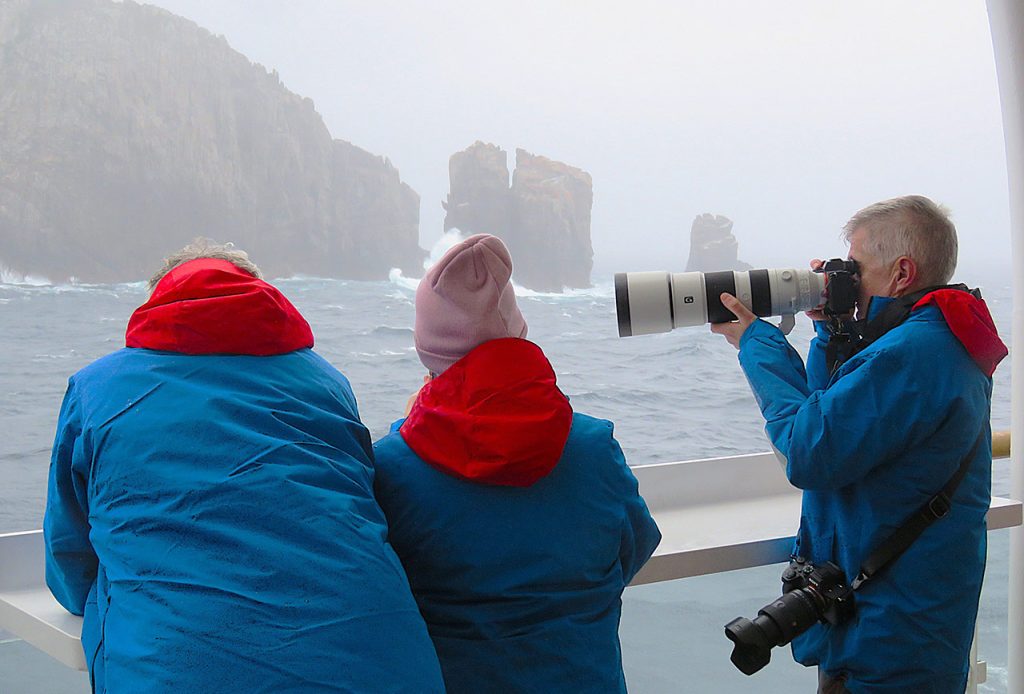
An overnight sail from New Zealand, we approached the Snares Islands at early light to a sky alive with albatrosses, prions, terns and shearwaters commuting between nests and feeding grounds. Shore landings are prohibited here, but that didn’t impact viewing, the Douglas Mawson edging close enough for us to observe the prolific birdlife, striking geology and gnarled tree daisy forests.
As always, nature rules in these domains, and inclement weather saw our highly anticipated zodiac explore aborted. While that was disappointing, we were compensated with a captivating circumnavigation of the Snares archipelago aboard ship.
Nature also interceded with our next destination. Macquarie Island was our intention, but the wind and swells were such that the Auckland Islands appeared a more sensible option, and it proved the right call.
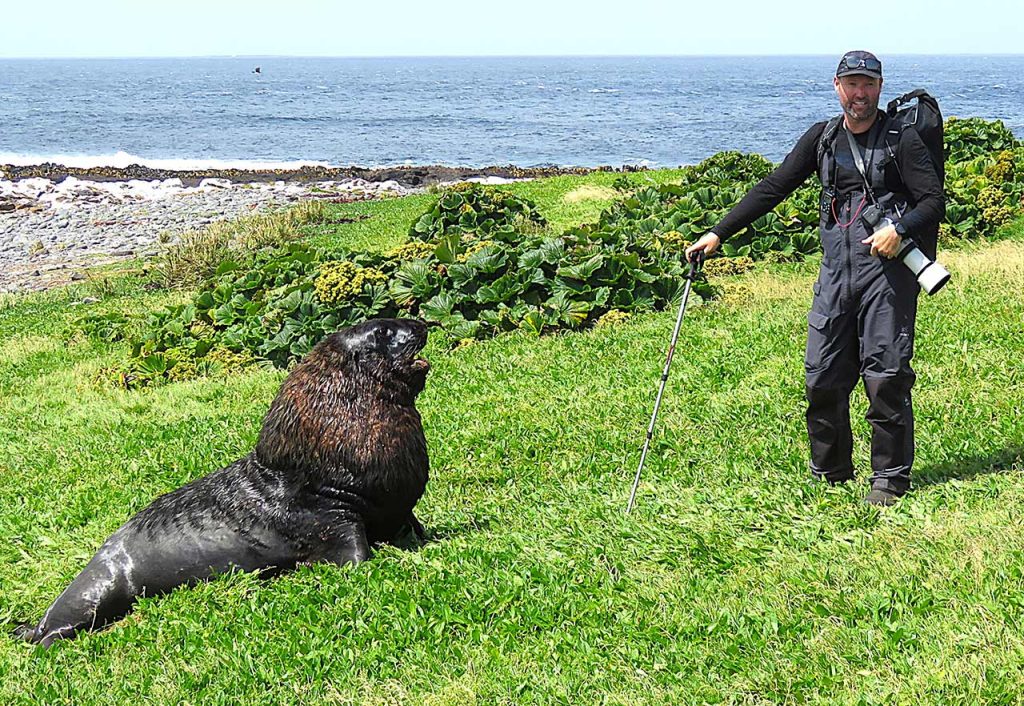
A glorious day greeted our arrival at Sandy Bay in the north of the Auckland group. Taking advantage of the sun and calm seas, we piled into the zodiacs, post-breakfast, zipping to the beach for a day of adventure. No disappointment this time, as we navigated short and long walks through twisted rata forest, spectacular megaherb fields, conga lines of yellow-eyed penguins and nesting royal albatrosses, the expedition crew keeping curious New Zealand sea lions at bay.
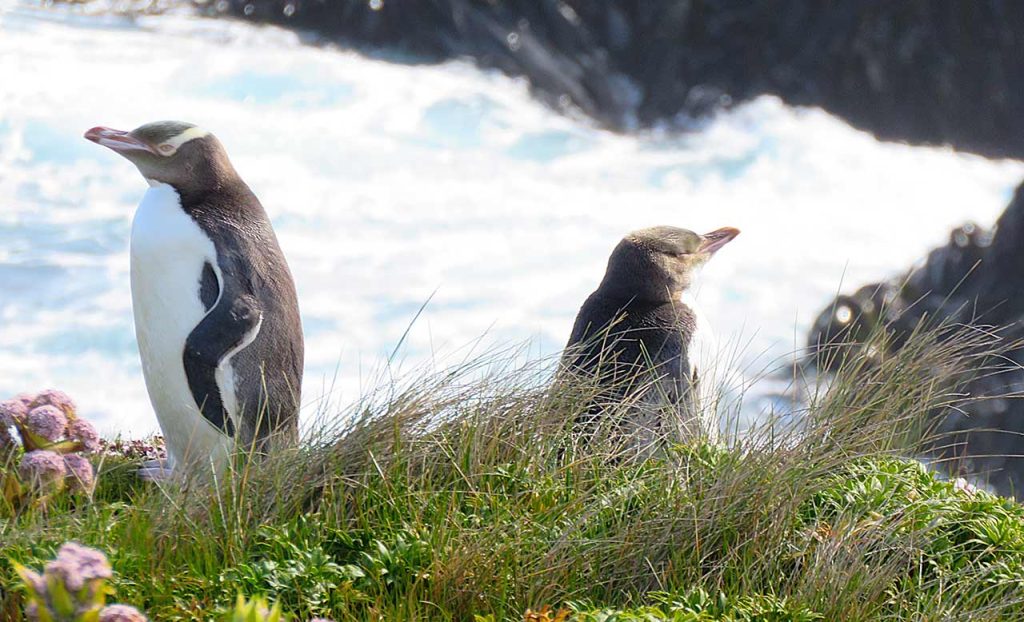
It was a feast for nature-lovers and photographers, alike, to be followed by the sweet treat of an afternoon zodiac cruise around the fascinating, cave-pocked coast of more southerly Musgrave Harbour.
We went further south to Carnley Harbour the next morning, the sea-filled caldera’s hills of olive green fringed by red rata bloom. Moored up, we took to the zodiacs for a morning-long explore overseen by playful sea lions, light-mantled sooty albatrosses and, for one lucky zodiac, an endemic falcon and teal.
The next 24-hour leg of the voyage to Macquarie Island offered a chance to get educated by onboard naturalists and be entertained by albatrosses from the observation lounges. Macquarie slowly solidified on the horizon that evening, seabirds cluttering its skies and seas.
The island’s profuse wildlife is matched only by its unique geology, torrid human history and remarkable conservation success story. Inscribed as a World Heritage site for its major geo-conservation significance, Macquarie first attracted world attention in the early 1800’s for its fulsome – and then plundered – seal and penguin colonies. Fittingly, it was Australian Antarctic explorer, Douglas Mawson, who put an end to the slaughter through unrelenting efforts to have the island declared a wildlife sanctuary, eventually succeeding in 1933.
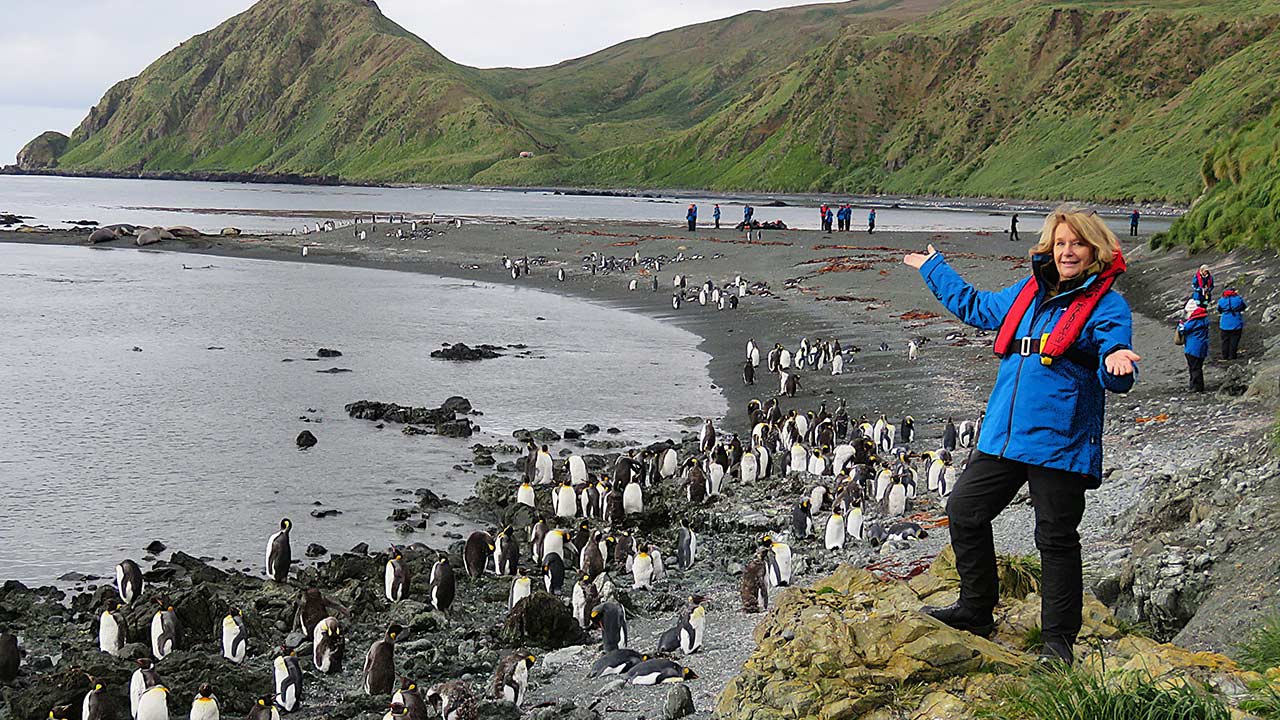
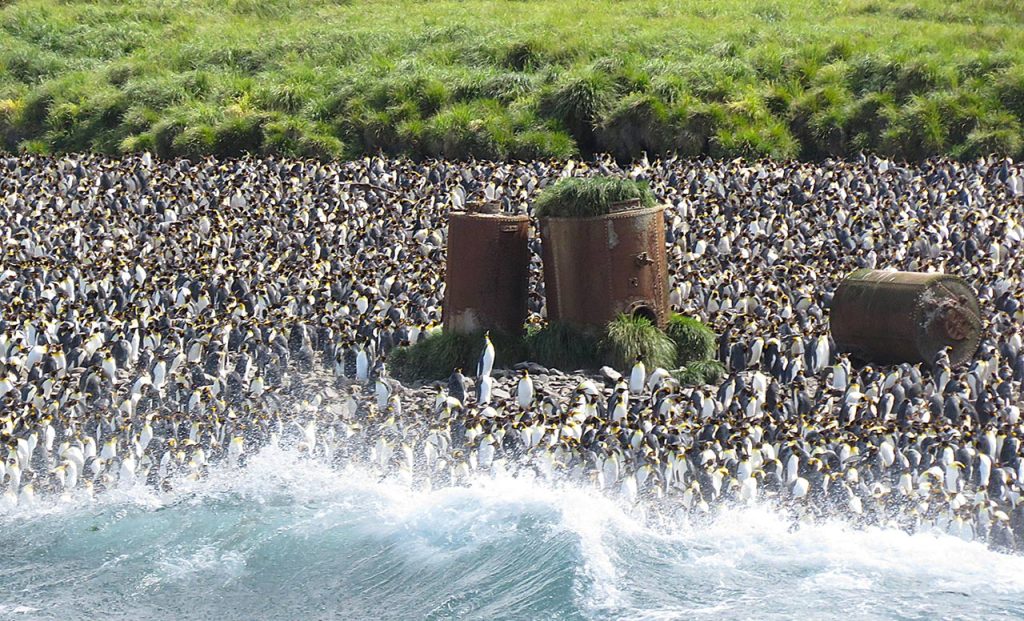
A cacophony of king, royal, gentoo and rockhopper penguins, seabirds and seals in their thousands greeted our morning and afternoon landings on our first day. At once fetid and fabulous, I could understand Sir Douglas describing Macquarie as ‘one of the wonder spots of the world’, noting in 1911 that ‘penguins were in their thousands on the uprising cliffs, and from rookeries near and far came an incessant din’.
Day two saw us in expedition mode around penguin-packed Lusitania Bay and Macquarie’s southern tip. A pod of orca – possibly one of three groups we’d seen the previous day – provided morning entertainment close to the ship, and we met them again on the zodiacs that afternoon, flotillas of penguins scattering in their wake.
It was wild, as was our final stop at windswept Campbell Island. Here, immature sea lion bulls welcomed us at the wharf as we embarked on the 7-kilometre return Beeman Hill boardwalk past an active scientific station, megaherb gardens and nesting royal albatrosses. Zodiac explorations of Perseverance Harbour that afternoon and North Cape the next morning also delivered bird and sea lion bonanzas. Blustery this place may be, but barren it is not.
Which pretty much describes all Australasian sub-Antarctic islands. While they are windblown and little known, they are filled with life so wonderful that lovers of wilderness, oceans, flora and fauna cross the globe to see them.
What’s more, they are right on Australia’s southern doorstep; close and even closer now that they are only a wild expedition cruise away.
Learn more about Aurora Expeditions’ sub-Antarctic voyages or the Douglas Mawson at
https://www.aurora-expeditions.com


![Three hikers celebrate atop Katahdin beside a weathered summit sign with backpacks and blue sky above (split image).] ,](https://www.oversixty.com.au/wp-content/uploads/2026/09/OLD1.jpg)