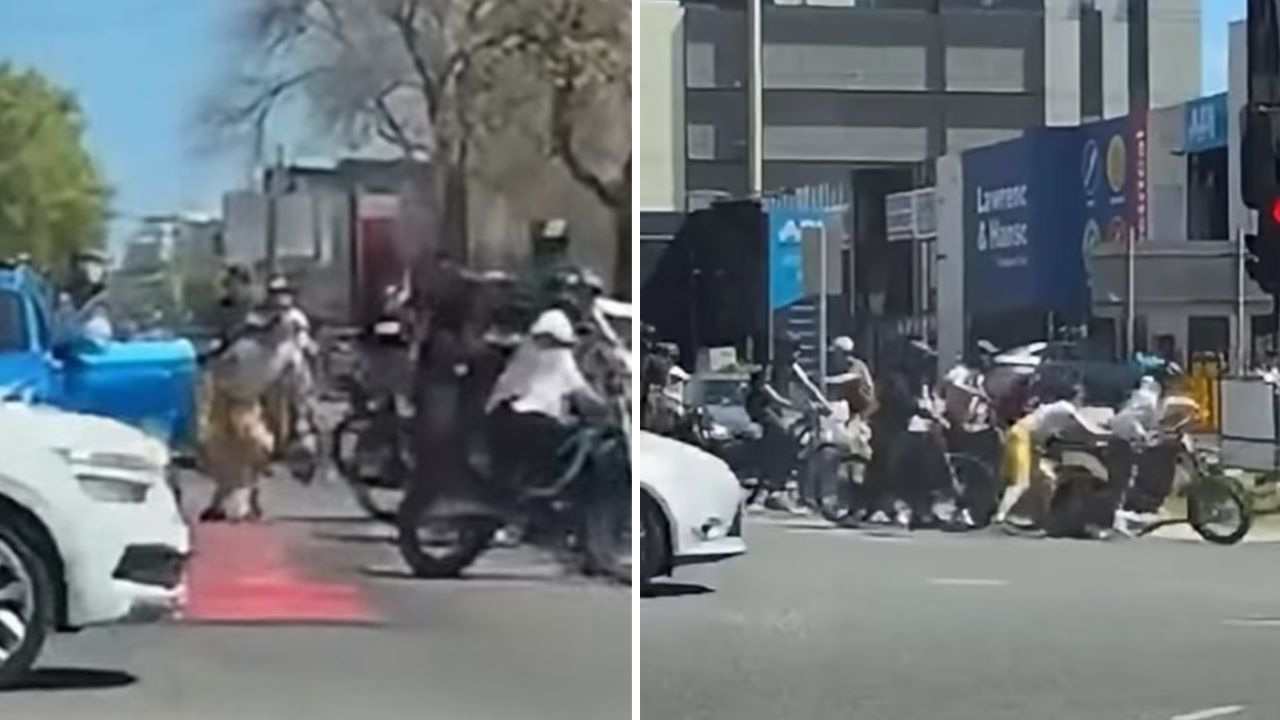
Most of us haven’t opened a road rules handbook since the day we sat our test, and for plenty of Over60 readers that test was decades ago. Road Rules Awareness Week is the annual nudge built for exactly that gap – the week that catches what has changed since you last looked, and what you never fully knew in the first place.
The campaign runs each year through state road safety agencies, with Transport for NSW and the National Transport Commission among the bodies behind it. It exists because the Australian Road Rules are model laws rather than one uniform national code – each state and territory has adopted its own version, complete with local quirks such as Melbourne’s hook turns. A rule confirmed in one state is worth checking against your own jurisdiction’s handbook before you rely on it.
In NSW alone there are more than 350 individual road rules on the books. Transport for NSW’s Bernard Carlon said most are common sense, but the yearly refresher still catches drivers out. “There are around 350 road rules in NSW – all designed to keep us moving safely and efficiently… most are common sense and… we are encouraging all road users to refresh their knowledge,” Carlon said.
The give-way rule we all quietly forget
Top of the misunderstood list in NSW is giving way to pedestrians when turning at an intersection, whether or not there are traffic lights. It sounds obvious written down. On a wet afternoon with traffic banked up behind you, it is the rule drivers most often let slide.
Overtaking trips people up in a different way. NSW rules require three conditions to be met together, not just one: a clear view of approaching traffic, lane markings that permit the manoeuvre, and staying within the speed limit for the entire pass. Drivers also cannot overtake a heavy vehicle that is turning at an intersection or roundabout, since trucks and buses may need more than one lane to complete the turn. A vehicle displaying a sign limiting its speed must be followed within those conditions, not passed.
Why the quiet intersections are the dangerous ones
Crash figures from Transport for NSW show more than 18,000 injury or fatal crashes occurred at intersections without traffic lights over the five years to 2023, with over half involving a failure to comply with stop or give-way signs. Of those, 27 per cent resulted in death or serious injury. Around one in five injury or fatal crashes between 2019 and 2023 were rear-end collisions, pointing to drivers following too closely or travelling too fast for the conditions.
Carlon put the stakes plainly. “The simplest oversight or disregard for the rules can have big consequences and mean the difference between life and death,” he said.
Pedestrians, cyclists and the e-scooter trap
Pedestrian rules catch people out just as often. In NSW, if the signal is flashing red when you approach traffic lights, the rule is to stay on the footpath rather than try to beat the countdown. Bicycle riders follow the same road rules as drivers, plus extra conditions – an approved helmet must be worn and properly fastened, and footpath riding rules differ for under-16s, 16 to 17 year olds and adults riding with children.
Personal e-scooters remain illegal to ride on NSW roads, footpaths, shared paths or bicycle lanes. They are currently permitted only on private property, a rule many riders get wrong simply because the vehicles are so easy to buy and hop on casually.
Buses deserve more room than they usually get
Bus safety is another recurring blind spot. Motorists must give way to buses merging into traffic and must not cut in front of them, and must slow to 40km/h when a bus’s amber or red lights are flashing to signal passengers boarding or alighting. Busways’ Head of NSW Service Delivery, Steven Hawkins, said the physics are simple. “Buses are large, heavy vehicles that cannot stop quickly. Motorists need to avoid cutting in front of buses and must give way when buses are merging into traffic,” Hawkins said.
He pointed to the scale of the problem in Sydney’s west. “Over the past 12 months, there have been more than 170 avoidable safety incidents involving buses in Western Sydney… Penrith has seen 24 percent of these incidents,” Hawkins said.
Checking your own knowledge costs nothing
Transport for NSW has added seven new Road Safety Learning Lab modules covering driving to the conditions, child car seat safety, drug and alcohol driving, road safety treatments and commonly misunderstood rules. None require a booking or a fee – the online Driver Knowledge Test practice version, the Road User Handbook and the Top 10 Misunderstood Road Rules guide are all free to work through from home.
South Australia takes a parallel approach with a Road Rules Refresher pocket guide, revised in 2023, focused on give-way rules at intersections and slip lanes, merging, overtaking and roundabouts. It is handed out through police stations, council offices, RAA stores and Service SA centres, a low-friction way to put the rules in front of regional and metro drivers alike.
Worth remembering before you assume you’re covered: these refreshers aren’t compulsory, and not knowing a rule has changed offers no legal protection if it catches you out. The Australian Road Rules are reviewed every two years, and provisions aren’t copied identically across every state, so it pays to check your own jurisdiction’s current handbook rather than one from a friend interstate.
None of this takes more than a few minutes, and none of it requires you to doubt a single thing about your own driving. It simply means the next time you turn at an intersection, overtake a truck, or pull up behind a bus with its lights flashing, you’re acting on what the rule actually says today – not what you remember from the handbook you read before most of today’s roads existed.