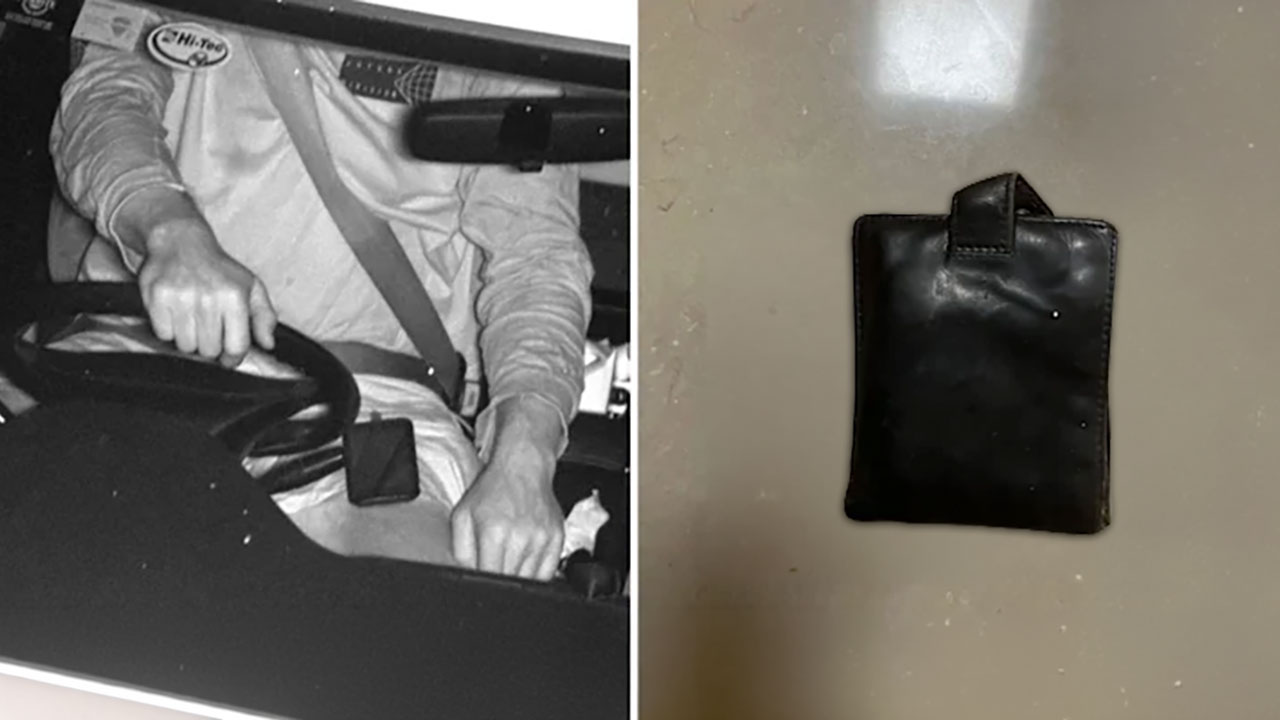
Mick, who asked for his surname to be withheld, was photographed in November last year while driving on the North-South Motorway at Regency Park in Adelaide’s north. In February, South Australia Police issued him a $678 fine and three demerit points over the alleged offence.
He said the image was captured shortly after he had left a service station where he had bought snacks. “I am old school, I don’t do digital [payments], and I remember I had just paid and was driving out of the service station,” he said. “I put my wallet on my lap because I don’t like having it in my back pocket and sitting on it when I am driving.”
Mick acknowledged the disputed object resembles a phone in the image, but said that was not what it was. “Absolutely, it looks like one, but it’s not a phone,” he said.
Helping him contest the fine was his close friend Deb, who assisted because English is his second language. She said the image, when examined more carefully, showed signs that the item was a wallet. “When we received the fine it was clear to us that it was [his] square wallet. It has a tab on it and the dimensions are square,” she said. “Maybe they thought the tab on the phone was from a phone cover, but he doesn’t use one.”
To support the challenge, Mick submitted a photo of the wallet along with a signed statutory declaration stating it was the object visible in the image, not a mobile phone. South Australia Police rejected the review. In a March 2026 letter advising him of the outcome, it stated: “This expiation notice was issued on the basis that the object observed in the detection images appears to be a mobile phone. After review of your submission there is no further evidence contrary to this allegation.”
Mick then chose to contest the matter in court, but Deb said the experience was formal and daunting once they arrived. “It felt like we would not be heard. It felt like we have to prove that it wasn’t a phone when, from what I understand, they should prove that it is,” Deb said.
Rather than risk several days in court if the case proceeded to trial, Mick decided to plead guilty in return for a reduced fine and the removal of his demerit points. The judge reduced the penalty on the basis that Mick was not using the “phone” and only had it resting on his lap.
“For me, getting no demerit points was better than nothing, but it still hurts,” Mick said. “At the end of the day, I knew if I kept on going, I might still be found guilty and have to pay the fine, and I would still maybe lose out on one or two days at work. “With me being self-employed, I can’t afford that. So I took it on the chin.”
He said he believed AI-detected fines had gone too far and could be wrongly catching other people as well.
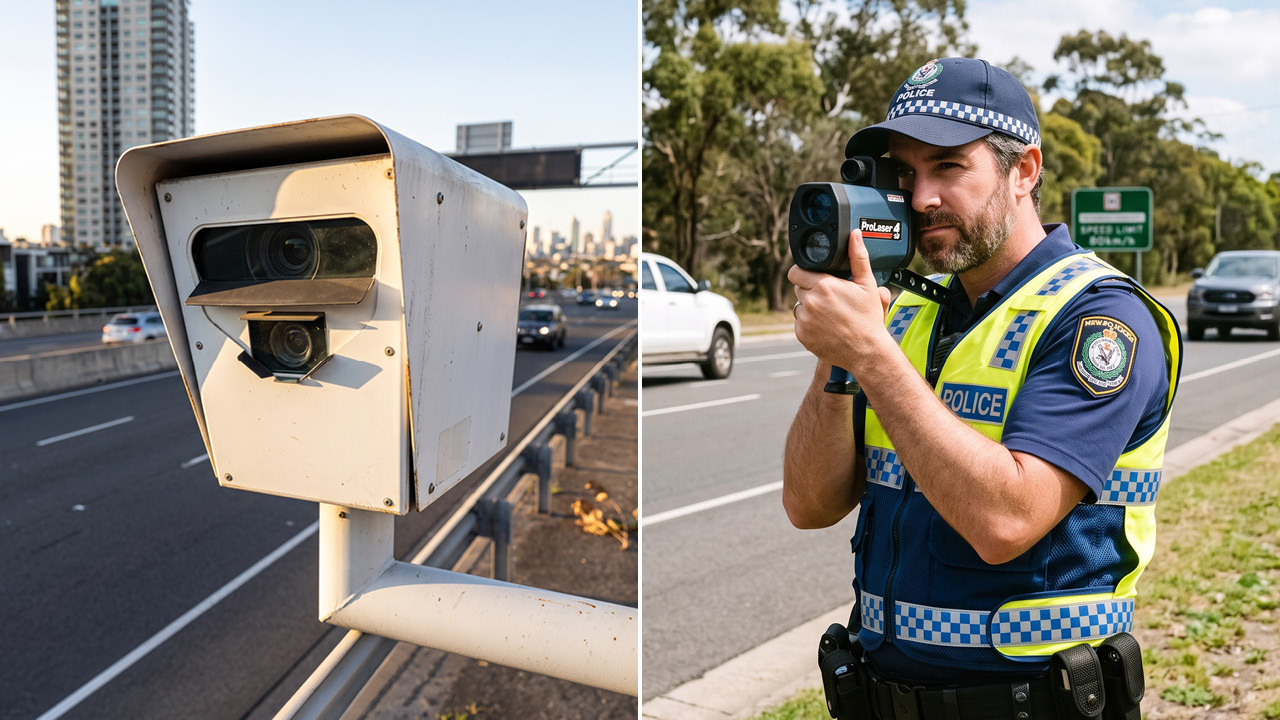
South Australia introduced mobile phone detection cameras in June 2024. In December last year, the SA government said the program would be expanded with two more cameras. The Department for Infrastructure and Transport said that in a little over a year, 80,000 fines had been issued.
The Regency Park camera recorded the highest number of alleged offences, catching 21,000 motorists. “The expansion of these mobile phone detection cameras is a real testament to the powerful message they are sending to drivers who think it’s okay to break the law,” Department for Infrastructure and Transport chief executive Jon Whelan said at the time. “We know that distraction is one of the fatal five and that using a mobile phone behind the wheel is one of the major sources of this.”