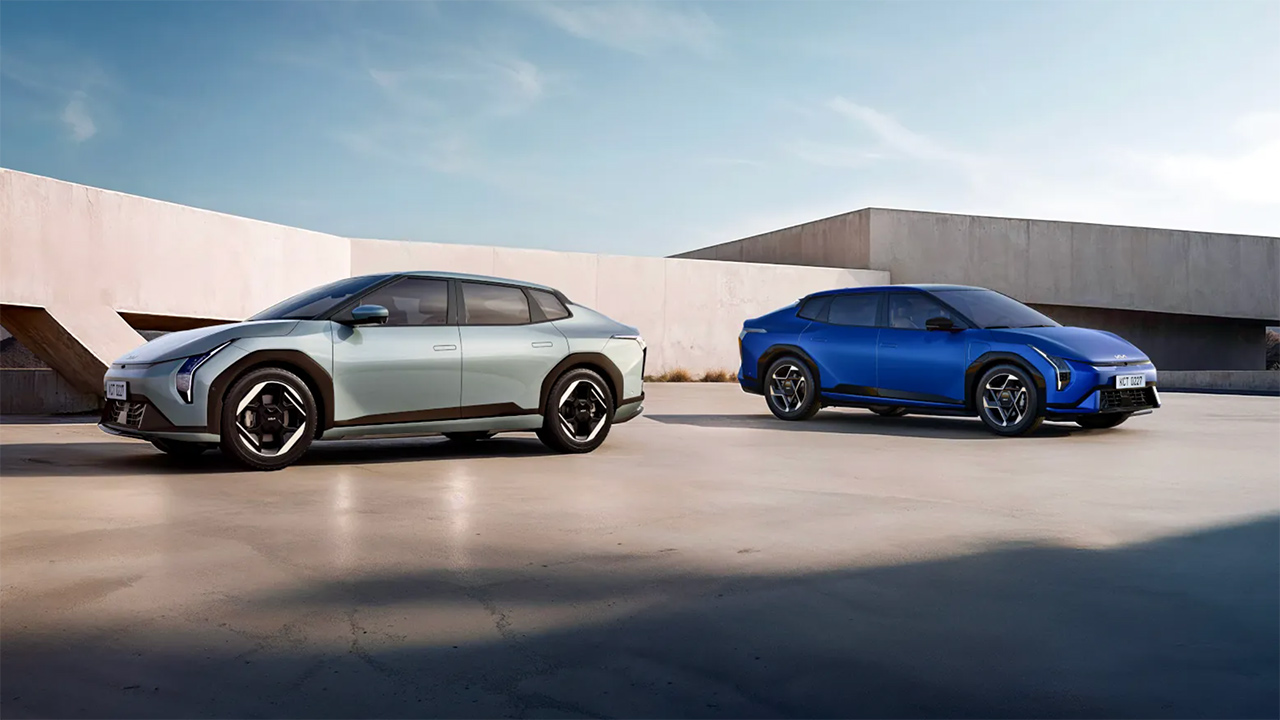
Kia has priced its new electric sedan, the EV4, from $49,990 before on-road costs, undercutting every version of the Tesla Model 3 and sitting within a few thousand dollars of the BYD Seal, two of the most familiar names in electric cars on Australian roads. For anyone who has watched electric vehicle (EV) prices climb further out of reach each year, that number is worth a second look.
The EV4 is Kia’s fifth dedicated battery-electric model to reach Australian showrooms, and customer deliveries began this month. It arrives as a proper sedan rather than an SUV, built to take on the Model 3 and Seal directly rather than carve out its own corner of the market.
Where the entry price really lands
The EV4 range runs from $49,990 for the Air Standard Range through $59,190 for the Earth Long Range to $64,690 for the GT-Line Long Range, all before on-road costs such as stamp duty, registration and dealer delivery, which vary by state. Against the BYD Seal, the comparison is close but not quite a win: the Seal Dynamic undercuts the EV4 Air by $3,000, starting from $46,990, while the Seal Premium sits at $52,990 and the Seal Performance at roughly $61,990.
Against the Tesla Model 3, the EV4 comes out ahead at every grade. The Model 3 Rear-Wheel Drive starts at $54,900, which is $4,910 more than the EV4 Air, and the range tops out at $80,900 for the Performance variant. EV Central describes the EV4 Air as slotting in “immediately above” the Seal Dynamic as “the second most affordable option in the segment”, while Drive puts the comparison plainly: the EV4 is “$3000 more than a BYD Seal Dynamic, but $4910 less than a Tesla Model 3 Rear-Wheel Drive”.
The catch hiding in the options list
The saving looks straightforward until you start matching equipment rather than badges. Stepping from the Air to the Earth grade adds 19-inch alloy wheels, vehicle-to-load power outlets, heated front seats and a power-adjustable driver’s seat. But a wireless phone charger, full leather-look upholstery, a surround-view monitor and a power-adjustable passenger seat are reserved for the $64,690 GT-Line, features the Seal and Model 3 include at considerably lower price points. Drive notes that EV4 buyers “need to step up to the $64,690 GT-Line” just to get equipment rivals treat as standard further down their own range.
Range, motor and the drive itself
All three EV4 grades share a single 150kW, 283Nm front-mounted motor and borrow their motor and batteries from Kia’s EV3 small SUV. Claimed 0-100km/h times run from 7.4 seconds for the Air to 7.8 seconds for the Earth and GT-Line. Range is a genuine strength over one rival and a shortfall against another: the Earth and GT-Line’s 612km WLTP figure beats the Seal Premium’s 570km, but falls well short of the Model 3 Long Range Rear-Wheel Drive’s 750km claim. The EV4 is also front-wheel-drive, where both the Model 3 and Seal are rear-wheel-drive, a real mechanical difference rather than a line on a spec sheet, and one worth feeling for yourself before you commit.
Living with it day to day
Every EV4 grade gets a 12.3-inch touchscreen and a matching 12.3-inch digital instrument cluster, with wireless and wired Apple CarPlay and Android Auto, over-the-air software updates and the Kia Connect app included as standard. DC fast charging from 10 to 80 per cent takes 29 minutes in the Air and 31 minutes in the Earth and GT-Line. Autonomous emergency braking (AEB), lane-keep assist, blind-spot monitoring and rear cross-traffic alert are standard across the range, and Kia says the car went through a dedicated local ride and handling program with a suspension tune developed for Australian roads.
A few figures worth chasing up before you sign anything: ANCAP (the independent safety rating body) has not yet published a rating for the EV4, and energy consumption figures, warranty terms and servicing costs were not confirmed in the pricing release, so ask your Kia dealer directly. It is also worth knowing the Mazda 6e is tipped to land locally from a similar $49,990 before on-road costs starting point, which could put further pressure on pricing across the segment.
None of that changes the headline: the EV4 makes the Model 3 look expensive and the Seal look only narrowly cheaper, and it does it with a cabin that feels consistent and easy to read across every grade. The real decision now is not the price tag, it is which of the three feels right in your hands on a test drive, and that is exactly the kind of choice we are glad to have back on the table.