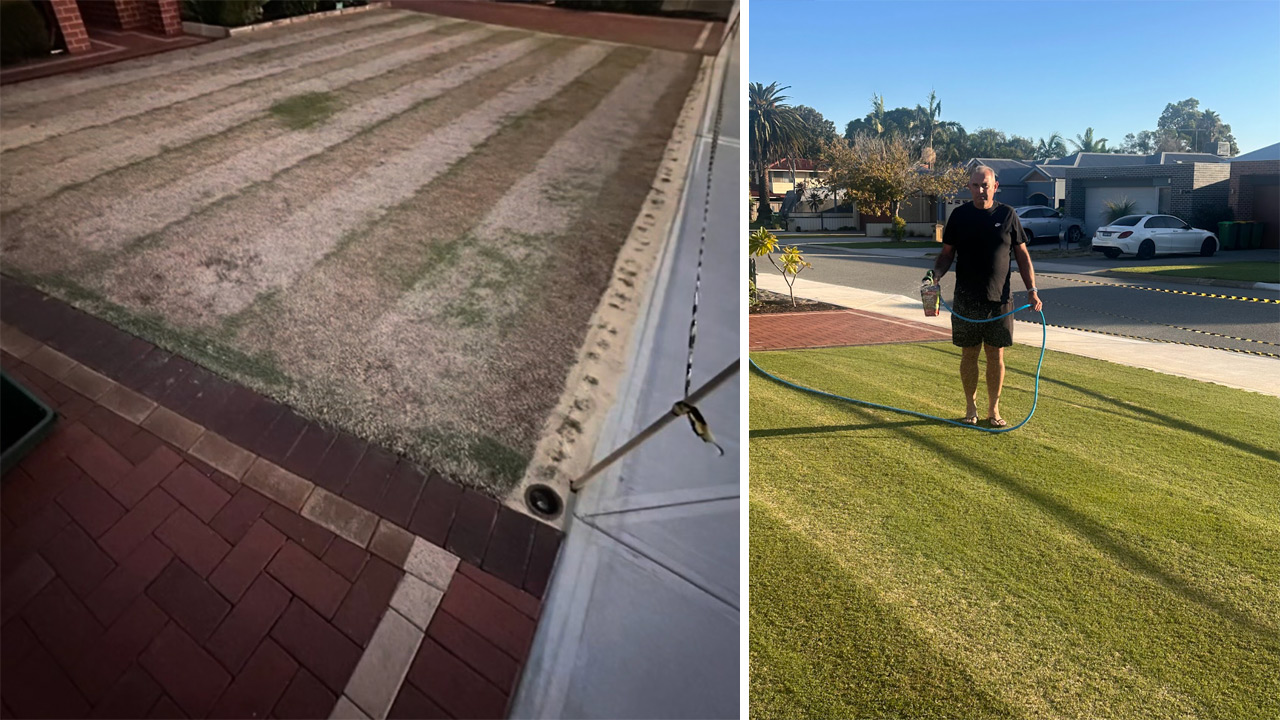
For Perth grandfather Phil Gregory, lawn care is more than a weekend hobby – it’s a full-blown passion.
The self-confessed “lawn addict” and winner of the inaugural Yates National Gardening League spends hours every week maintaining the immaculate grass surrounding his home, carefully mowing, feeding and monitoring every patch to keep it looking its best through the cooler months.
And according to Gregory, the biggest mistake Australians make is waiting too long to prepare their lawns for winter.
“If you wait until winter hits, your granular fertiliser is not going to work as much,” he says.
Gregory says autumn is the ideal time to strengthen grass before temperatures drop, allowing lawns to retain colour and recover more easily during the colder season.
His main go-to product is Yates Dynamic Lifter Lawn Food and Soil Improver, which he says helps support soil health and gives lawns a boost before winter dormancy sets in.
“The fertiliser boosts the lawn up,” he explains. “It helps with moisture retention and feeds the soil when there’s less sunshine around.”
Gregory says healthy soil is the real secret to maintaining a lush lawn year-round.
“By building the soil up, it helps all the micro-organisms as well, like the worms,” he says. “Worms are a good sign of healthy soil.”
But fertiliser is only one part of his routine.
As temperatures cool, Gregory also recommends using a product designed to tackle weeds and improve lawn colour during slower growth periods. He regularly uses Yates Weed‘n’Feed to keep invasive weeds under control and applies Seasol products to help strengthen root systems and reduce stress on the grass.
His “little winter cheat”, however, is iron chelate.
“It doesn’t do anything for the lawn health as such, but it helps bring the colour out and helps the lawn photosynthesise,” Gregory says. “Iron is a magic thing. It’s in most lawn fertilisers.”
While Gregory admits his lawn routine can sometimes border on obsessive – including occasionally measuring grass height with a ruler – he says consistency matters far more than perfection.
One of the biggest issues he sees is overwatering.
“Some people just flood their lawns every day with water, and then the roots don’t go down too far into the ground,” he says. “Then as soon as you get a warm day, the lawn goes, ‘I’m not liking this’, and just dies off.”
Instead, Gregory recommends allowing lawns time to dry between watering sessions so roots grow deeper and become more resilient.
Weeds are another major problem heading into winter.
“You’ve got to be onto the weeds as soon as you start getting a few,” he says. “If they stick around and seed, then you’ve got an ongoing cycle.”
Mowing habits also play a significant role in lawn health, particularly during seasonal changes.
“So many people leave their lawn for too long, let it grow, and then when you mow it, it turns brown and you’re left wondering why,” Gregory says.
If too much grass is removed at once, the lawn can become stressed and exposed to heat damage.
“You have to be consistent,” he says. “I’m over the top sometimes, but you should mow once or twice a week.”
For Gregory, maintaining a healthy lawn is ultimately about looking after what’s happening beneath the surface.
“If you ignore the soil, the lawn weakens over time,” he says. “You end up with poor water retention, wasted products and grass that just doesn’t bounce back.”
As winter approaches, Gregory believes a little preparation now can make all the difference later – and for this lawn-loving grandad, there’s no such thing as being too prepared when it comes to grass.
Images: Supplied