A prominent US epidemiologist has voiced deep concern over the deadly outbreak of a rare Ebola strain in Africa, warning it has already moved beyond local containment and could spread further without a faster international response.
Dr Eric Feigl-Ding, who leads the COVID Task Force at the New England Complex Systems Institute in the US, told Today he is “very alarmed” by the outbreak. He said the pace of transmission and the level of positive test results suggest many infections have not yet been identified.

“We’re very behind on this epidemic,” he said.
The outbreak has mainly been recorded in the Democratic Republic of the Congo, where more than 300 suspected cases and 88 deaths have been reported, including several health workers. Two deaths have also been recorded in Uganda in people who had recently travelled from Congo.
World Health Organization director-general Dr Tedros Adhanom Ghebreyesus has declared the outbreak a public health emergency, while urging countries not to shut their borders. The WHO said the situation does not meet the threshold of a pandemic emergency on the scale of COVID-19, but the declaration is intended to prompt governments and donor agencies to act.
In an official statement, Ghebreyesus said the available evidence “point towards a potentially much larger outbreak than what is currently being detected and reported, with significant local and regional risk of spread”.
The statement added: “Moreover, the ongoing insecurity, humanitarian crisis, high population mobility, the urban or semi-urban nature of the current hotspot and the large network of informal healthcare facilities further compound the risk of spread, as was witnessed during the large Ebola virus disease epidemic in North Kivu and Ituri provinces in 2018-19.”
The WHO has also confirmed a laboratory-tested case in Kinshasa, Congo’s capital, around 1000 kilometres from the outbreak’s centre in Ituri province, raising fears the virus may already be spreading more widely. The patient had travelled to Ituri, and other suspected cases have also been reported in North Kivu, one of Congo’s most populous provinces.
Ebola spreads through bodily fluids including blood, vomit and semen. The illness is rare but severe, and often fatal.
Feigl-Ding said the current outbreak is especially troubling because it involves the Bundibugyo virus, a rare Ebola variant for which there are no approved vaccines or treatments.
“It could be tested of course, but this is a very different strain of ebola than in the past,” he said.

He said testing vaccines alone would not be enough to stop the outbreak, particularly now that the virus appears to have escaped early containment.
“Unfortunately we’ve already lost containment in the region,” he said.
Even so, he said there is still time to stop it from becoming a global crisis if authorities move quickly with testing, quarantine and response measures.
“This one has the potential to spread,” he said.
“I’m like 6 or 7 out of 10 scared but I still think we can contain this before it goes global.”
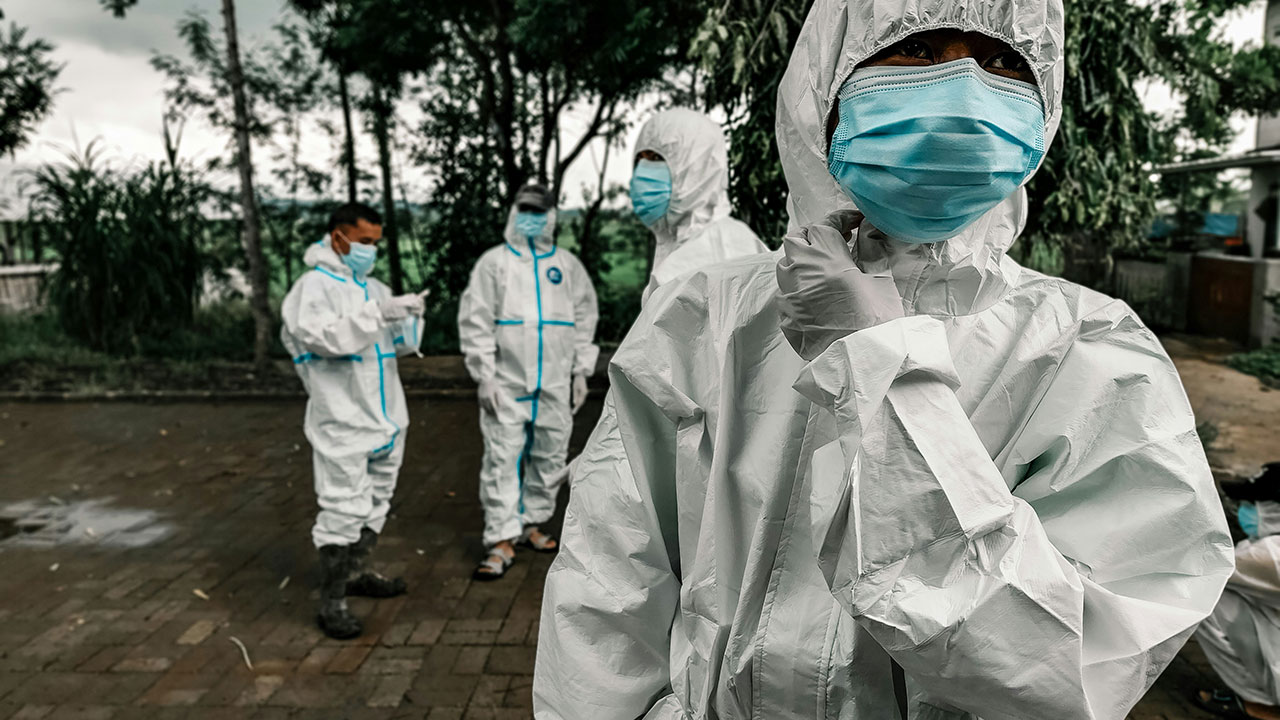
The WHO and Africa Centres for Disease Control and Prevention have begun mobilising support. According to Associated Press, the WHO has released US$500,000 in funding, while the Africa CDC has committed US$2 million. Emergency supplies including personal protective equipment, tents, beds and other operational items have already arrived in Bunia, the capital of Ituri province, to help strengthen frontline efforts and infection control.
But health officials say the challenge is far greater than supplies alone. The Bundibugyo virus has only been detected twice before, making this just the third known outbreak involving the strain. It was first identified in Uganda’s Bundibugyo district in 2007-08, when 149 people were infected and 37 died. The second outbreak was in Isiro, Congo, in 2012, where 57 cases and 29 deaths were recorded.
Although Congo and Uganda have experienced more than 20 Ebola outbreaks between them, this strain remains uncommon and difficult to treat.
Africa CDC director-general Dr Jean Kaseya said many active cases are still in the community, particularly in Mongwalu, where the first cases were reported, “significantly complicating containment and contact tracing efforts”.
He said violence involving militant groups, some linked to Islamic State, along with population movement tied to mining and cross-border travel between Congo and Uganda, is making the outbreak harder to track and control.
Tedros also warned that key details remain unclear.
“There are significant uncertainties to the true number of infected persons and geographic spread associated with this event at the present time. In addition, there is limited understanding of the epidemiological links with known or suspected cases,” WHO director-general Tedros Adhanom Ghebreyesus said.
The WHO said the high proportion of positive test results, the appearance of cases in Kampala and Uganda, and clusters of deaths across Ituri “all point toward a potentially much larger outbreak than what is currently being detected and reported, with significant local and regional risk of spread”.
Kaseya said the response was hampered because the outbreak was not picked up quickly enough.
“This outbreak started in April. So far, we don’t know the index case,” Kaseya said.
“It means we don’t know how far is the magnitude of this outbreak.”
The earliest known suspected patient, a 59-year-old man, developed symptoms on April 24 and died in hospital in Ituri on April 27. By May 5, when health authorities were first alerted through social media, 50 deaths had already been recorded, according to Africa CDC. The WHO said at least four healthcare workers with Ebola symptoms have died.
Shanelle Hall, principal adviser to the head of Africa CDC, said four possible therapeutics are being considered for Bundibugyo, but no vaccine is currently being actively pursued.
Kaseya said the wider problem is that Africa still does not manufacture even the existing vaccines and treatments used for other Ebola strains. He said that has been a recurring obstacle in talks with pharmaceutical companies, especially for a rare virus like Bundibugyo, which is less deadly than the Ebola Zaire strain seen in previous Congo outbreaks.
“If we are serious in this continent, we need to manufacture what we need,” he said.
“We cannot every single day look for others to come to tell us what they are doing.”
Australia’s Smartraveller advice has not yet been updated specifically for the Ebola outbreak in Congo or Uganda. However, Australians are already advised not to travel to the Democratic Republic of the Congo and to exercise a high degree of caution in Uganda because of other security concerns, including civil unrest.