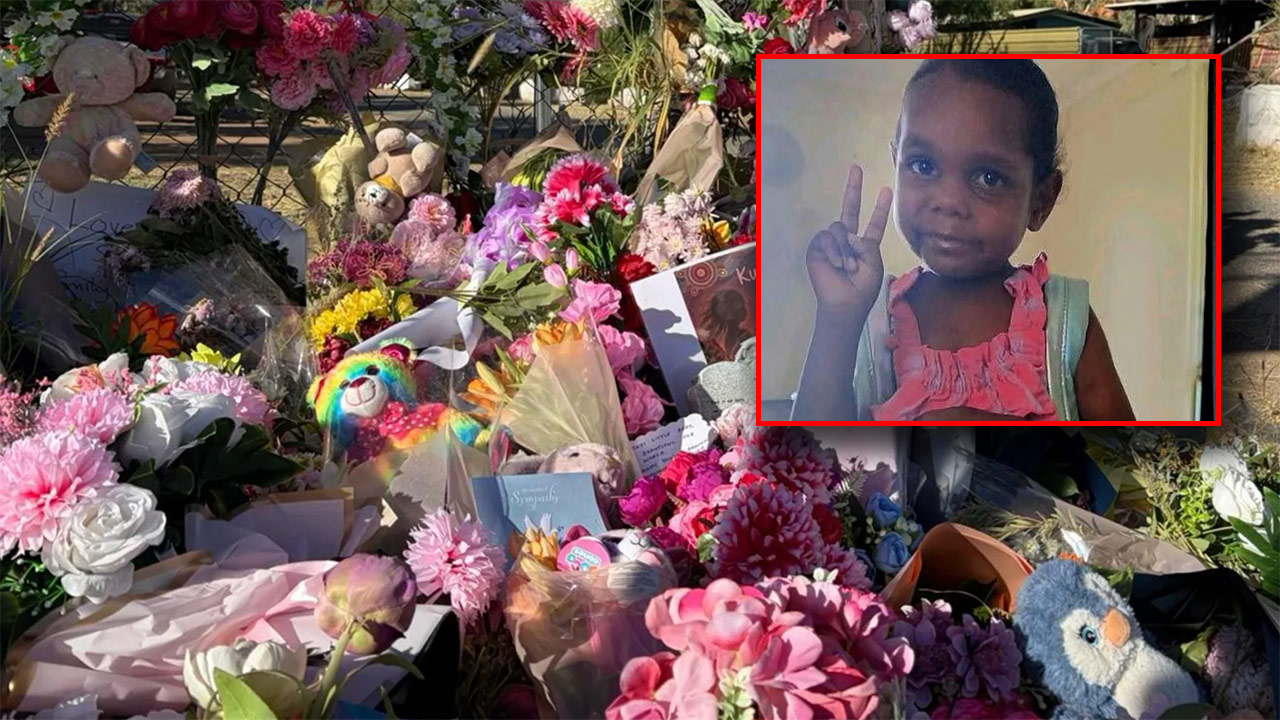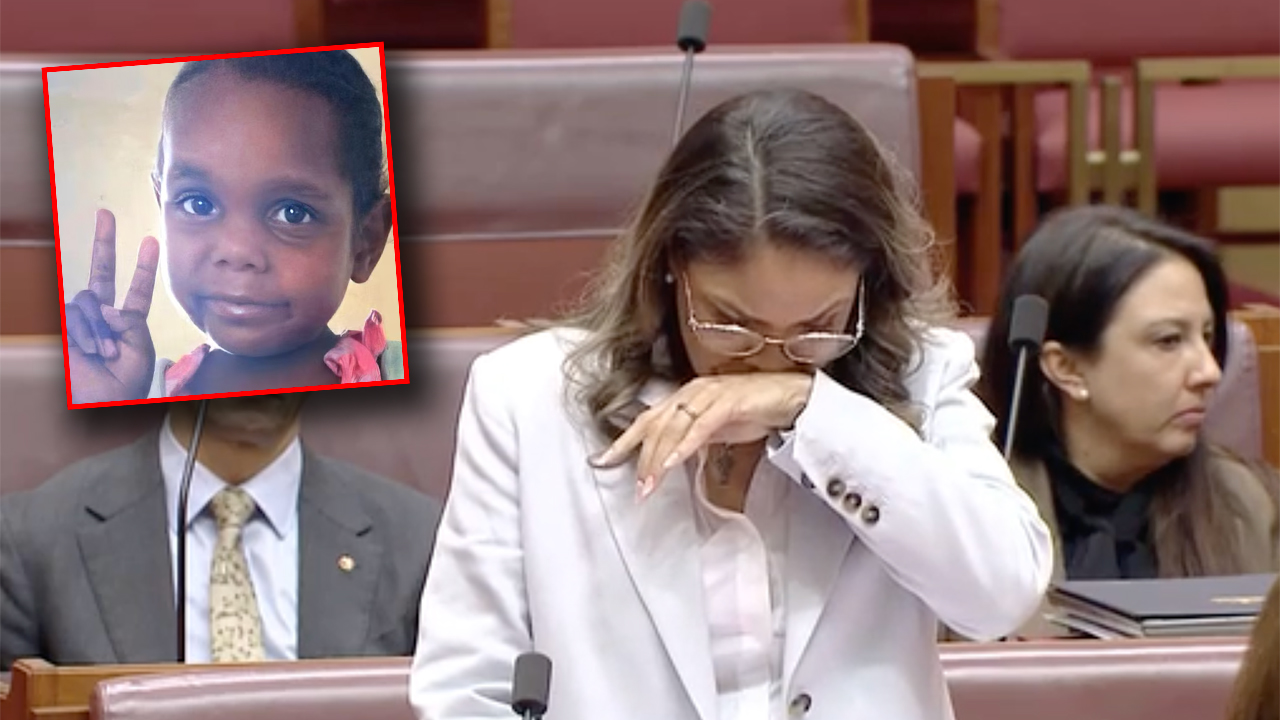
Jacinta Nampijinpa Price has delivered an emotional tribute in the Senate to her niece, Kumanjayi Little Baby, who was allegedly murdered in Alice Springs last month.
Fighting back tears during Tuesday’s address, the Coalition frontbencher said she never imagined she would have to speak in parliament about the death of a child in her own family.
“I don’t want to be here right now, to have to stand in this chamber, to deliver a condolence speech for a little girl in my family,” she said.
“She was loved. She should still be here.”
Senator Price used the speech to call for what she described as a more honest national conversation about the failures of child protection systems affecting Indigenous children and communities.
She said her “niece’s life was taken senselessly, selfishly and horrifically”.
“And the hardest truth is that for many in my hometown, none of this came as a surprise. But the truth is that people do not want to speak this out loud,” Senator Price said.
“For too long in this country, there has been silence around what is happening in too many town camps and remote communities – a silence driven by fear, a fear of causing offence, a fear of being labelled racist, fear of speaking honestly about dysfunction, violence, alcohol abuse, neglect and conditions.
“Vulnerable children are growing up in that silence and it is killing our babies. And when I say our babies, our people, I mean Australians.”
Senator Price said her niece should not have been treated differently because of her Indigenous background.
“My niece was a little Australian girl, yet there is an ideology in this country that has deliberately encouraged people to treat children like her differently because of her racial heritage,” she said.
“It’s that same ideology that has created a hands off culture within parts of a child protection system, an ideology that too often places cultural sensitivities and political correctness ahead of the safety of children, the same ideology that reveres organisations, bureaucracies and so-called leadership structures, while vulnerable women and children continue to suffer behind closed doors.”
She said fear of speaking openly about violence and neglect had contributed to ongoing harm in some communities.
“It’s that ideology that teaches people to stay silent in the face of wrongdoing, because speaking honestly might offend somebody,” she said.
Image: news.com.au