Traveling during major holidays like Thanksgiving can be expensive, since so many people want to see their friends and families, wherever they might be.
It’s especially hard this year with inflation soaring at the fastest pace since the early 1980s. Airline fares were up 43% in October from a year earlier – only a handful of categories increased by more.
One way to ease the blow to your wallet or purse is by using frequent flyer miles. While there’s quite a bit of research on when is the best time to use cash to buy flights, we wondered – as travel lovers – if there’s an optimal time to use miles. So with the help of our research assistant, we investigated this question, with a focus on flights over the Thanksgiving holiday.
Americans return to the skies
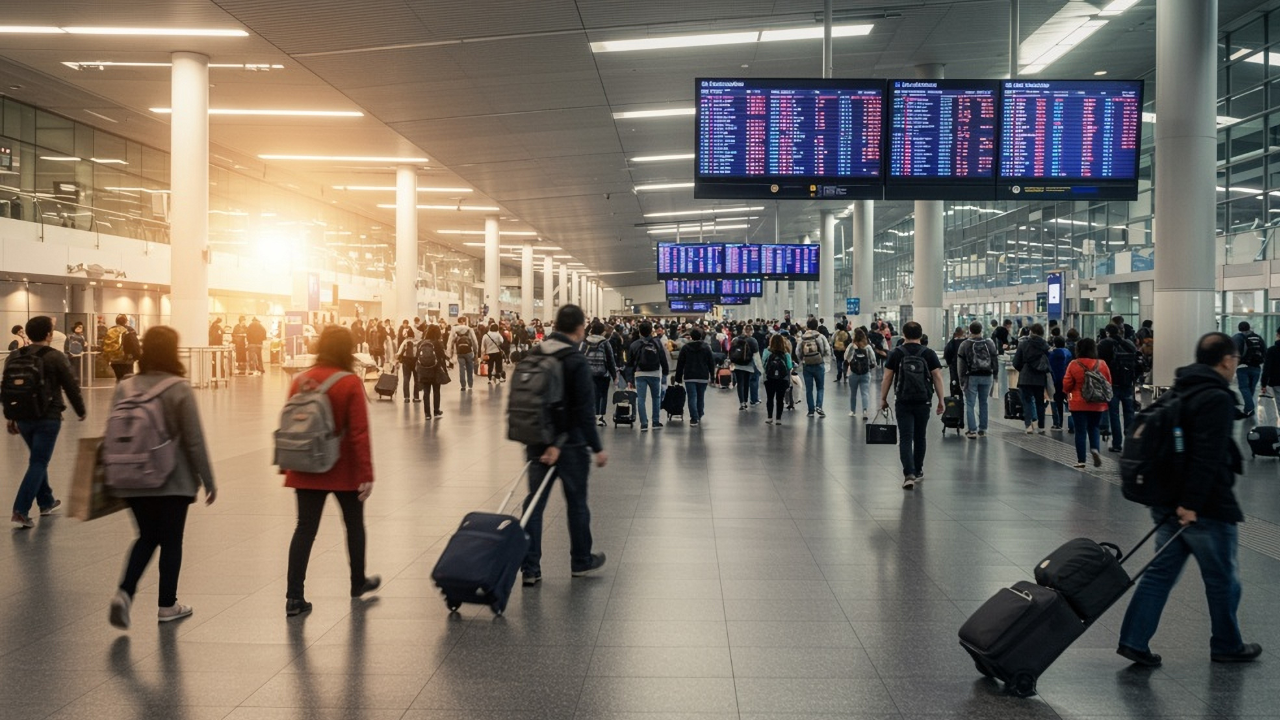
The day before Thanksgiving is one of the busiest days to travel in the U.S.
Before the COVID-19 pandemic upended travel, the Transportation Security Administration screened 2.6 million people on Thanksgiving eve of 2019, just shy of the 2.9 million record. While the number plunged in 2020 as demand dropped, it picked up to 2.3 million last year and is expected to return to pre-COVID-19 levels this year.
The surge in demand, along with significantly higher jet fuel costs, are key factors in leading to more expensive air fares.
To offset these higher costs, many consumers may turn to frequent flyer miles – whether accumulated from other travel or from credit cards – to avoid forking over so much cash.
Frequent flying 101
Frequent flyer mile programs started in the late 1970s after the federal government stopped regulating airfares. Before the change, fares, routes and schedules for all domestic flights were set by the federal Civil Aeronautics Board.
Besides slashing fares, airlines reacted by creating frequent flyer programs. Texas International Airlines, which ultimately merged with United, and Western Airlines, which later joined Delta, were among the first to institute frequent flyer programs.
In a particular airline’s frequent flyer program, you earn miles when you fly with that airline. Many people get miles by using their credit cards as well. These accumulated miles can then be redeemed for free air travel.
Frequent flyer programs were designed to build customer loyalty, as they provide a rebate to regular passengers. They are also meant to lock travelers into a particular airline – since they have a strong incentive to only fly with that carrier.
One downside is that many business flyers go out of their way to use their preferred airline, which boosts their company’s travel costs.
And although airlines use frequent flyer programs to increase customer goodwill, they frequently change the rules and rewards, which often frustrates customers.
Researchers have looked at the optimal time to buy airplane tickets with cash. In general, they have found prices tend to dip anywhere from two months to three weeks before the travel dates. Prices are highest for those who want to book their flights very early, to lock it in, and last-minute travelers booking just before their departure dates.
How frequent flyer miles compare
To see when’s the best time to book with miles, we looked at one of the busiest routes in the U.S. – New York (JFK) to Los Angeles (LAX). Each month, airlines have over a quarter of a million seats flying direct on that route. There are about 30 nonstop flights a day, run by three different airlines.
Starting about three months before Thanksgiving, we collected weekly data from the online booking sites of these three airlines. We tracked the frequent flyer miles needed as well as the price for every coach flight scheduled to take place within one week of Thanksgiving.
As miles are not interchangeable between airlines in general, we needed an alternative measure for more direct comparison between different airlines. So we calculated how much a frequent flyer mile is worth by dividing the number of frequent flyer miles needed by the ticket price. We then compared the dollar worth of 1,000 miles, depending on the airline, when the booking was made and the flight date.
Economic theory tells us that when there is lots of competition and the product is almost identical, competition should result in all businesses charging roughly the same price.
That wasn’t what we found.
In mid-October, Delta was asking 69,000 miles to fly the Tuesday before Thanksgiving. American Airlines was only asking 33,000 miles for roughly the same flight. This means if you have a general travel rewards credit card that lets you use miles on different airlines, it pays to shop around.
Just because an airline has a high price in miles doesn’t mean the price will not come down. At the start of November, Delta wanted 69,000 miles to fly at dinnertime on the Tuesday before Thanksgiving. A week later the airline cut the price to 53,000 miles. A week after that, it was down to 36,500 miles, a price drop of almost 50% in two weeks.
While in general the earlier you book, the better, booking too early can cost you. We found the best time to spend your frequent flyer miles for Thanksgiving travel was to book during the first week of October, which was about eight weeks out. In early October, 1,000 frequent flyer miles were worth over $14 in airfare. The last week of October, about four weeks before Thanksgiving, those same miles were only worth shy of $12.
The best day to fly
As for what is the best day on which to travel to get the most from your miles, there are two answers. On the Monday before Thanksgiving, your miles are typically worth the most, on average $15 per 1,000 miles. This is in sharp contrast to $11 for the day before Thanksgiving. However, flying Thanksgiving Day itself had required the lowest average number of miles, about 27,000 miles.
If you haven’t booked flights yet, you may be too late to find the best value in frequent flyer miles. However, while we are still gathering and analyzing data, these tips look like they will hold up for future holidays.
Image credits: Getty Images
This article originally appeared on The Conversation.