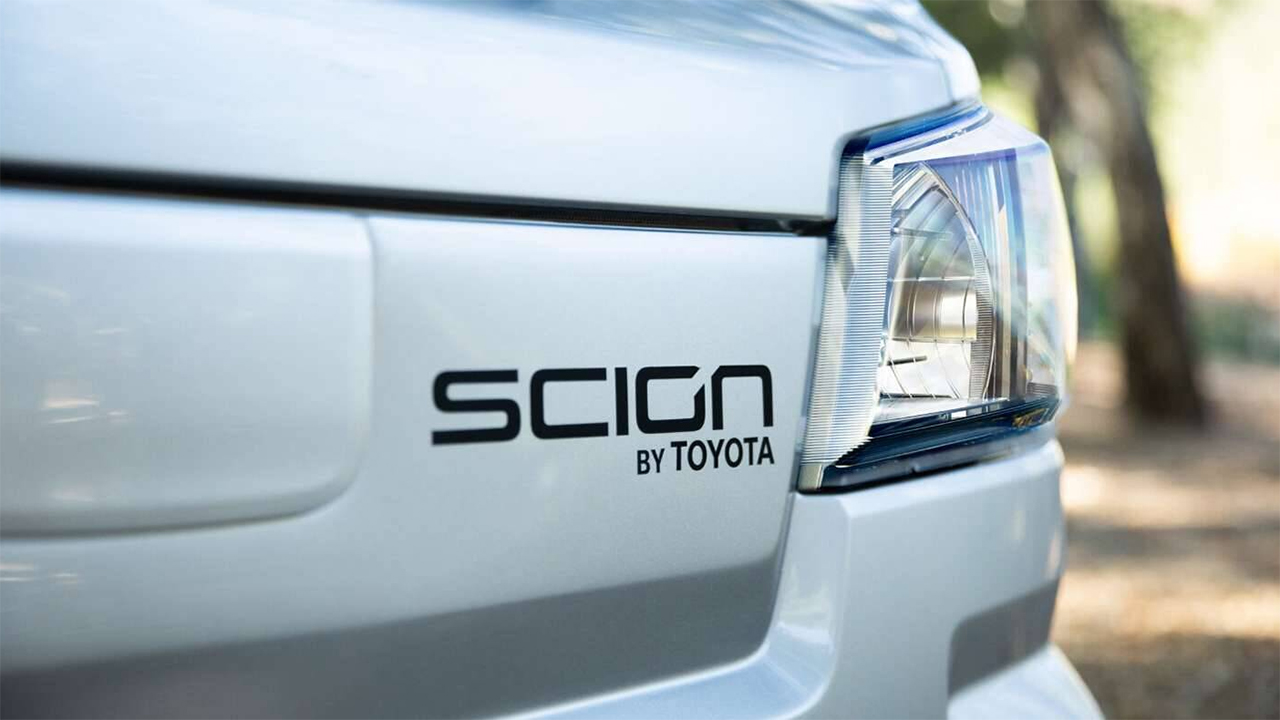
Toyota is bringing back a name plenty of Australian drivers will remember fondly, but there’s a catch for anyone hoping to order one from a local dealer. Scion, the youth-focused Toyota offshoot that quietly closed its showrooms a decade ago, is returning in 2027 built around a tiny right-hand-drive truck barely half the length of a full-size ute. The twist is that this new Scion is being built for the United States, not for us, and there is no confirmed plan to bring it to Australia at all.
What makes the story worth watching isn’t a car we can buy. It’s what the revival says about where demand for small, simple trucks is heading, and why that demand already exists quietly in Australian driveways.
A name some of us remember
Scion has history here, even if the badge itself never crossed the Pacific. The Scion xB sold in Australia as the Toyota Rukus, and the sporty Scion FR-S became the Toyota 86, a car that built a genuine following of its own. Toyota Motor North America vice president David Christ says this version of the brand is a different proposition entirely. “That Scion still existed within the boundaries of the automobile, but this time we are setting out to do something different,” he said.
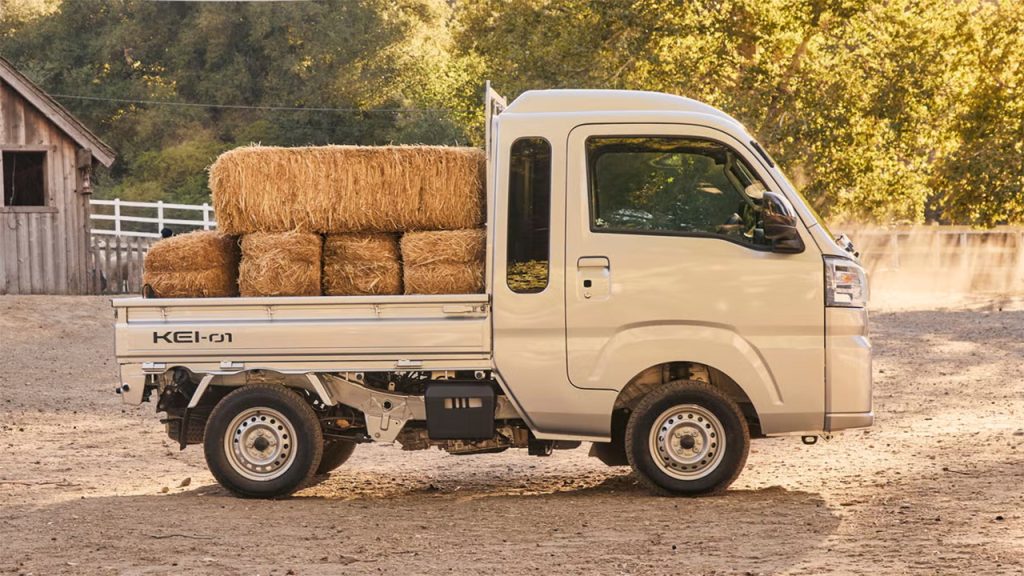
That difference is a vehicle called the KEI-01, based on the Daihatsu Hijet platform already familiar to Australians who follow the grey-import kei truck scene. It measures around 3.3 metres long, shorter than a Fiat 500 and nearly half the length of a US-built Toyota Tundra.
What the little truck actually offers
Under the tray sits a 660cc three-cylinder engine paired with a continuously variable transmission and selectable four-wheel drive, including a push-button lock-up for low-traction conditions. The cargo tray folds down on three sides, and the extended cab adds reclining and sliding seats along with secure interior storage. Payload is listed at up to 272kg, modest next to a standard Australian ute tray and well short of what a dual-cab can carry.
Top speed is capped at 25mph, or 40km/h, to meet US low-speed vehicle rules. That single detail rules out any use beyond a campus, worksite, farm or resort. It was never engineered for a highway anywhere, let alone an Australian one.
Why Australians can’t order one yet
In the US, the KEI-01 will arrive in the second half of 2027 through a small, dedicated network of “Scion by Toyota” dealers selected from Toyota’s existing franchise base. Initial sales are fleet-only, aimed at farmers, ranchers, municipalities, universities and delivery operators, not everyday retail buyers. Toyota has said it may consider “limited retail sales at a later date”, but that comment refers to the US market only, with no mention of exporting the vehicle to Australia.
US pricing is expected to start around US$28,000, roughly A$43,000 at current exchange rates, though that figure comes from an overseas outlet and should never be read as an Australian list price, because no Australian price exists. Toyota is backing the project with a US$34 million investment, about A$49.5 million, in its Gibson County plant in Indiana, creating around 50 jobs to assemble the trucks from complete knock-down kits shipped out of Japan.
Why it’s happening now
The project traces back to a comment from US President Donald Trump, who said he would permit the sale of new kei vehicles in America, describing them as “very small” and “really cute”. Toyota used the same event to show two concept vehicles alongside the KEI-01, an off-road side-by-side called the SxS and an electric bike called the BKE, neither confirmed for production anywhere. Toyota chief branding officer Simon Humphries framed the broader ambition this way: “the future of mobility will not be defined by one vehicle, one technology or one way of thinking.”
The appetite already sitting in Australian driveways
Kei trucks of this size are hardly a novelty here. Private grey imports of similar Japanese mini-trucks have built a steady following around Australia for years, bought for exactly the jobs the KEI-01 is designed around: short runs, tight gateways and low-speed hauling where a full-size ute is more truck than the job needs. None of those imports comes through an official dealer network, and none carries a current ANCAP (the independent safety rating body) rating, a gap the KEI-01 would share if it ever landed here, since it’s built to lighter US low-speed vehicle rules rather than passenger-vehicle crash standards.
Anyone drawn to the idea should keep the caveats in mind: there’s no Australian distribution agreement, no local warranty or servicing program, and no legal path to a new one beyond continued grey importation of other kei models. Confirm any pricing or availability claims directly with Toyota before taking them as settled, since this is a US-market plan with no Australian date attached.
For now, the real appeal of the KEI-01 isn’t a vehicle Australians can park in the driveway. It’s a reminder that somewhere in the gap between a full-size ute and a motorbike, there’s a truck-shaped job going unfilled, and Toyota has just bet US$34 million that someone, somewhere, is ready to fill it.