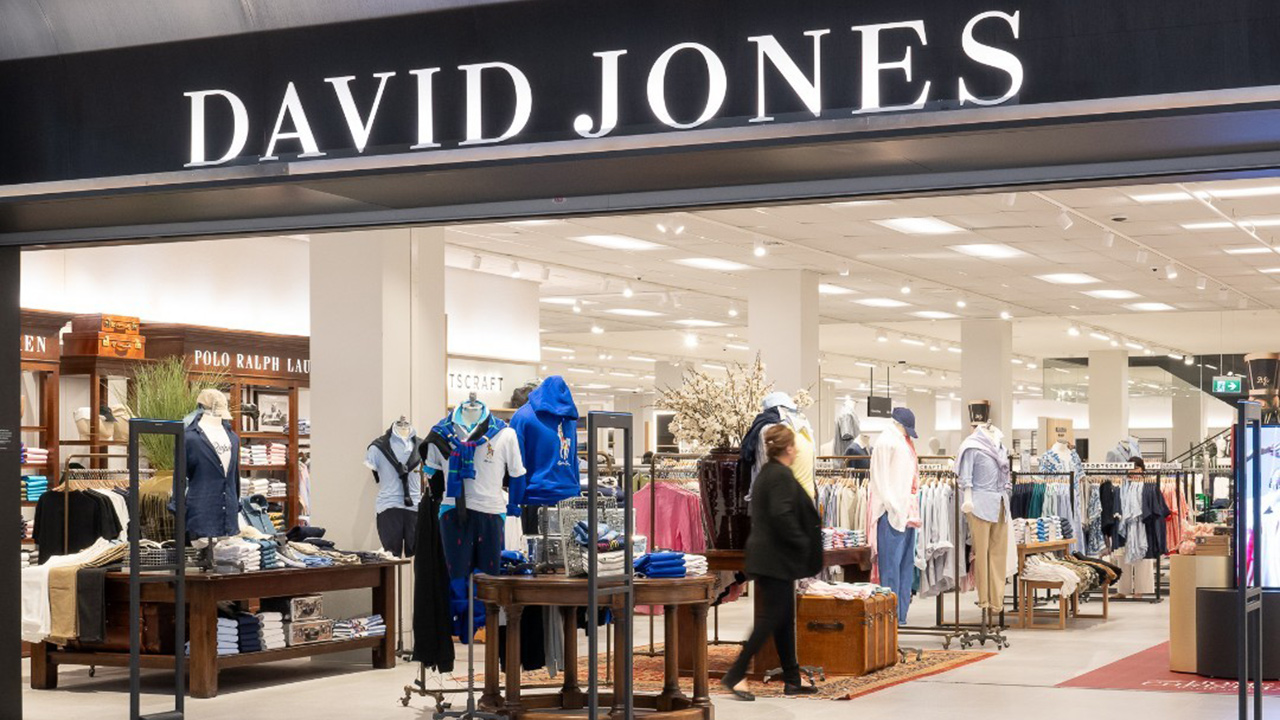
One of Australia’s most iconic retailers has collapsed into voluntary administration, putting thousands of jobs at risk and raising fears that the David Jones department store chain could disappear after almost two centuries.
The extraordinary downfall of the 188-year-old business was confirmed on Thursday, following a last-minute breakdown in negotiations between its owners and major landlords.
For generations of Australians, David Jones has been more than just a place to shop. Its grand department stores, elegant fashion floors, famous Christmas windows and distinctive black-and-white branding have been part of the country’s retail landscape since 1838.
Now, the future of the once-prestigious institution is in the hands of administrators, with store closures expected and approximately 6000 employees facing an uncertain future.
The collapse follows years of mounting financial losses, declining sales, changing shopping habits and increasingly strained relationships with landlords and suppliers.
But it was a dispute over unpaid rent that ultimately brought the crisis to a head.
Westfield owner Scentre Group revealed on Wednesday that David Jones had failed to pay rent for October at its shopping centres, placing the retailer in breach of its lease agreements.
The department store operates in 17 Westfield locations, with Scentre Group chief executive Elliott Rusanow confirming that an attempt to negotiate a rescue deal had failed.
“We have made a generous offer to Anchorage Capital Partners that would have facilitated the continuation of David Jones trading and that offer has disappointingly been rejected by them,” he said.
Anchorage Capital Partners, the private equity firm that purchased David Jones from South Africa’s Woolworths Holdings in 2022, had been desperately trying to renegotiate leases and reduce the size of the struggling business.
However, with negotiations breaking down and mounting debts threatening the company’s ability to continue trading, the board voted to appoint voluntary administrators.
How did it all go so wrong?
The collapse represents a spectacular fall from grace for a retailer once synonymous with luxury, quality and prestige.
Founded by Welsh immigrant David Jones in Sydney in 1838, the business grew from a modest shop into one of Australia’s best-known department store chains.
Its flagship stores became shopping destinations in their own right, attracting generations of families for everything from wedding presents and designer fashion to Christmas decorations and special occasions.
But the retail landscape has changed dramatically.
Online shopping has steadily eroded the dominance of traditional department stores, while international fashion chains, discount retailers and luxury brands selling directly to customers have intensified competition.
At the same time, rising living costs and repeated interest rate increases have left Australians with less money to spend on discretionary purchases.
David Jones has struggled to adapt, burdened by expensive leases, underperforming stores and substantial financing costs.
Financial accounts revealed a pre-tax loss of $95.5 million in 2025, following a $74.1 million loss the previous year.
The company also failed to lodge its latest financial accounts with the corporate regulator by the required deadline, adding to concerns about its financial position.
Behind the scenes, suppliers were reportedly becoming increasingly nervous, with some brands withdrawing stock or demanding stricter payment conditions.
Even a last-minute financial lifeline from lender Hilco Capital, reportedly worth around $10 million to help stock stores ahead of Christmas, was not enough to prevent the collapse.
What happens to the stores and staff?
David Jones operates dozens of stores across Australia and New Zealand, including major flagship locations in Sydney and Melbourne.
Administrators will now assess which stores can remain viable, whether the business can be restructured or sold, and whether some or all of its operations must eventually close.
Retail analysts have suggested the chain could be dramatically reduced, with its strongest-performing stores retained and less profitable locations shut permanently.
Among the stores previously identified as potentially vulnerable are locations at Westfield Parramatta, Hornsby, Southland and Carousel.
However, no final decisions on individual store closures have been announced.
For approximately 6000 employees, the uncertainty is particularly distressing, especially with the Christmas shopping season approaching.
The Shop, Distributive and Allied Employees Association has already been contacting workers to explain their rights and entitlements.
Suppliers and smaller businesses that depend on David Jones could also face substantial losses if outstanding invoices cannot be paid.
The collapse may benefit rival retailers, particularly Myer, which could attract customers and brands displaced by David Jones closures.
But for shopping centres, the disappearance of such a major tenant could leave enormous vacant spaces that are difficult to fill.
What does it mean for customers?
Shoppers holding David Jones gift cards, outstanding orders or lay-by purchases have been urged to pay close attention to developments.
Consumer Policy Research Centre chief executive Erin Turner warned customers not to delay using existing gift cards.
“The best thing you can do is use any gift card you already hold as fast as possible,” she told the ABC.
She also advised against purchasing new gift cards while the company’s future remains uncertain.
In an administration, gift card holders can be treated as unsecured creditors, meaning they may recover only a fraction of their money, or nothing at all, if the business is liquidated.
Customers awaiting deliveries or refunds should retain their receipts and transaction records, while those who paid by credit card may be able to seek a chargeback if goods are not supplied.
Importantly, voluntary administration does not automatically mean every store will close immediately.
Administrators may continue trading while they explore restructuring options, particularly during the lucrative Christmas period.
The end of a shopping tradition?
For older Australians, the possible disappearance of David Jones carries a significance that goes beyond the loss of another retail chain.
Its famous Christmas windows, beautifully presented departments and longstanding reputation for customer service evoke memories of a different era of shopping, when a trip to the city department store was an occasion in itself.
The business has survived two world wars, the Great Depression, countless economic downturns and enormous changes in Australian society.
But its latest crisis reflects a harsh reality facing traditional retailers, where history and brand recognition offer little protection against mounting debts and changing consumer habits.
Whether David Jones can emerge from administration as a smaller, more sustainable business remains to be seen.
What is certain is that one of Australia’s oldest and most recognisable retail institutions has reached a defining moment in its 188-year history.