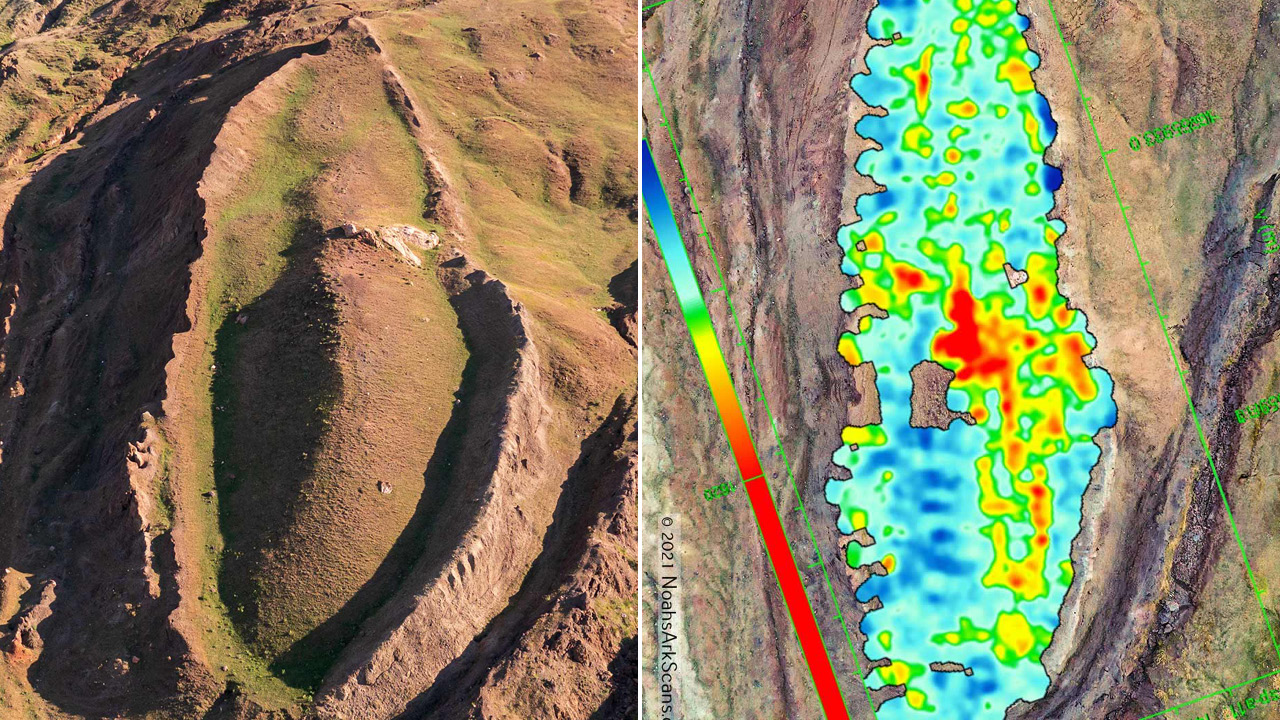
A new survey at the Durupınar Formation in eastern Türkiye has revived one of biblical archaeology’s most debated questions, after researchers reported underground anomalies and unusual soil readings at a site long promoted as the possible resting place of Noah’s Ark.
The formation lies about 29km south of Mount Ağrı and has drawn decades of attention because of its pronounced hull-like shape. The latest work is being led by Professor Cenker Atila of Sivas Cumhuriyet University, in collaboration with Andrew Jones, founder of the Noah’s ark Scans project.
Atila is heading an international team of 20 researchers working at the site from June 28 to September 11. He told the Turkish news agency iHA: “Current data increases the likelihood that it is Noah’s ark with each passing day.” He added: “These studies will yield definitive results within 2-3 months. Then we will provide more illuminating information.”
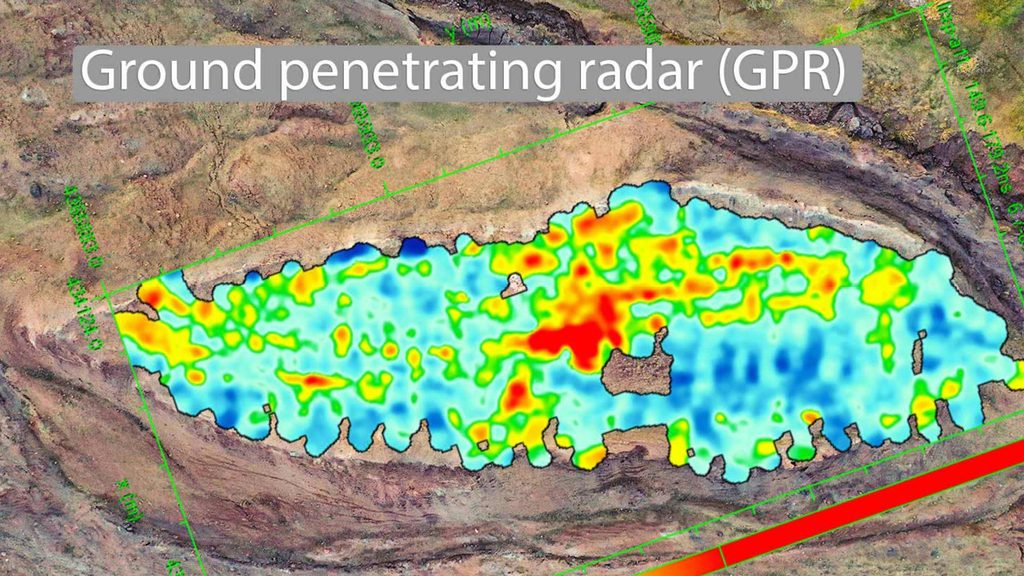
The team has been using ground-penetrating radar and collecting soil samples in an effort to identify buried cavities, possible wood remains and features that might match the shape of a vessel. “We were looking for cavities, wooden remnants, or remains that could form a ship’s shape underground,” Atila said. “We noticed many anomalies on the Durupınar formation. These are gaps. The presence of anomalies intersecting at right angles raised the question of ‘was there a ship here’? Could these be the gaps of that ship?”
He also pointed to a programme to gather 1000 soil samples from the formation and nearby areas. Early results suggest the cavity contains 40 per cent more carbon than the surrounding soil. “This raises the idea that there may be organic material or remains of wood,” Prof Atila speculates. Still, he has stressed that the results are not final, saying: “We will receive the definitive results in two months.” Sivas Cumhuriyet University says it will publish a comprehensive report in 2027.
Jones has spoken far more confidently about what the scans may show. He told Fox News: “We’ve moved from asking ‘Does it look like a boat?’ to ‘Why is there a three-layered, right-angled inside structure, carbon-rich boat formation the exact length of Noah’s ark given in the Bible buried in the middle of a mountainside in the mountains of Ararat?’”
His California-based organisation says it has been detecting what it considers signs of artificial structural features at Durupınar for the past decade, and Jones says the current authorised expedition supports similar claims made by his group in 2014, 2019 and 2021. He is also claiming credit for helping bring about the present mission to the remote mountain site.
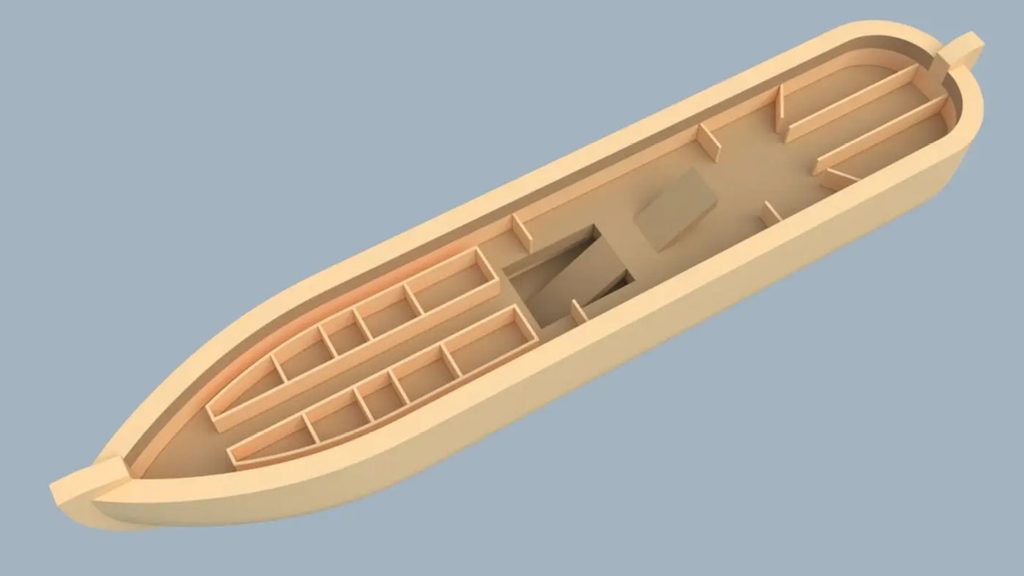
Among the evidence promoted by Noah’s Ark Scans are a “fossilised” rivet, a “petrified” timber plank, radar-derived “deck plans” and carbon-rich soil. In a Christian Broadcasting Network interview, Jones said: “[This is] exactly what you’d expect to find if this were a man‑made boat, consistent with the biblical specifications of Noah’s ark.”
He has also said radar revealed parallel lines and angular structures at depths of 2.5m to 6m. According to Jones, those patterns indicate a 4m passageway and three separate underground layers that match the biblical description of the Ark’s three decks. “[This] suggests an internal complexity that is difficult to attribute to natural geological processes. We really believe that this layout … would suggest that it’s a man-made object and not just a natural formation,” he said.
The Durupınar Formation first entered Ark speculation in 1959 when Turkish army officer İlhan Durupınar identified the distinctive shape in aerial survey photographs. The formation was later named after him. Supporters say its dimensions are another reason it remains under scrutiny, with ancient texts placing the Ark at between 14,400 and 15,000 cubits.
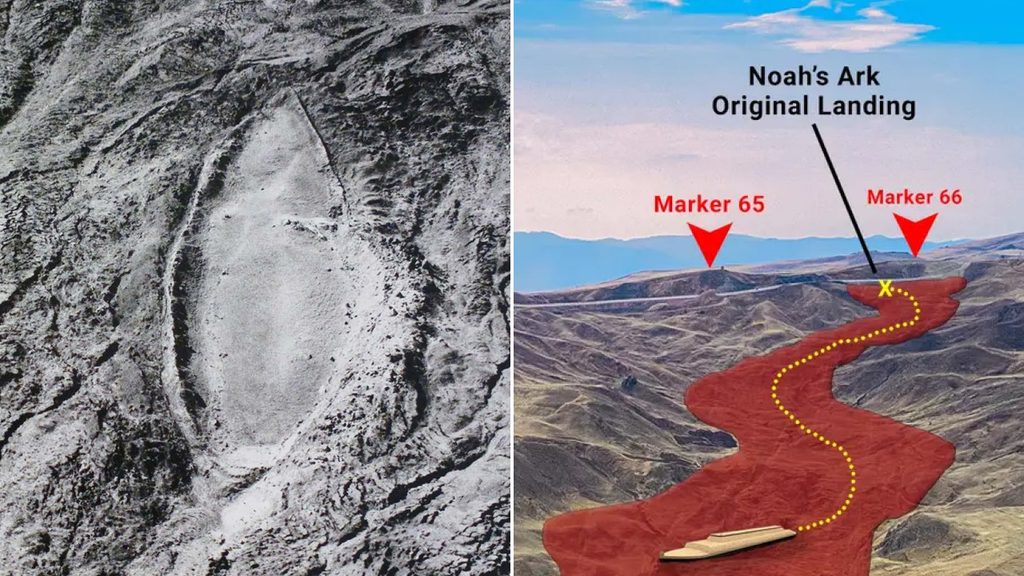
Earlier expeditions also helped keep the site in the spotlight. In 2017, Seventh-day Adventist researcher Professor Raul Esperante called for international support and investment for a new in-depth excavation. That followed a separate 2010 expedition that claimed it had found structural signs and preserved wood dating from 4800 years ago. Istanbul University Professor Oktay Belli backed that push, telling the Hurriyet Daily News: “Noah’s ark and the flood is not a myth but a real incident mentioned in all holy books. It happened in Anatolia. It is a part of our nation’s culture.”
Jones’ background has also added to the attention around the project. His website states: “Andrew Jones is an American researcher, tour leader, and founder of Noah’s ark Scans”. He is a qualified computer coder, though he took a course in archaeology in his first year of college. He says he became fascinated by the Ark as a child and spoke regularly with Seventh-day Adventist Ark archaeologist Ron Wyatt.
The wider significance of the search helps explain the intensity of interest. Noah’s Ark is often described as the holy grail of biblical archaeology. A confirmed discovery could be held up by supporters as proof that the Old Testament is literal truth, and that Charles Darwin’s theory of evolution and astrophysicist Georges Lemaître’s Big Bang theory of the universe’s origins are wrong. That ambition is reflected in a fundraising pitch on the Noah’s ark Scan Facebook page: “Your support today helps us make the evidence of Noah’s ark irrefutable.”
Scholars, however, have long argued that the flood narrative itself contains inconsistencies and overlaps with much older Mesopotamian flood traditions, including the Atrahasis Epic, the Sumerian Flood story and The Epic of Gilgamesh. Even the Ark’s final resting place is disputed. Genesis places it in the “mountains of Ararat”, while one Mesopotamian tradition names Mount Niæir, generally thought to be in the Zagros Mountains of modern-day Iraqi Kurdistan.




![Three hikers celebrate atop Katahdin beside a weathered summit sign with backpacks and blue sky above (split image).] ,](https://www.oversixty.com.au/wp-content/uploads/2026/09/OLD1.jpg)