Australia is famous for landmarks such as Sydney Harbour, Uluru and the Great Barrier Reef, but Lonely Planet’s new guidebook Secret Wonders of the World turns the spotlight on places that are far less expected.
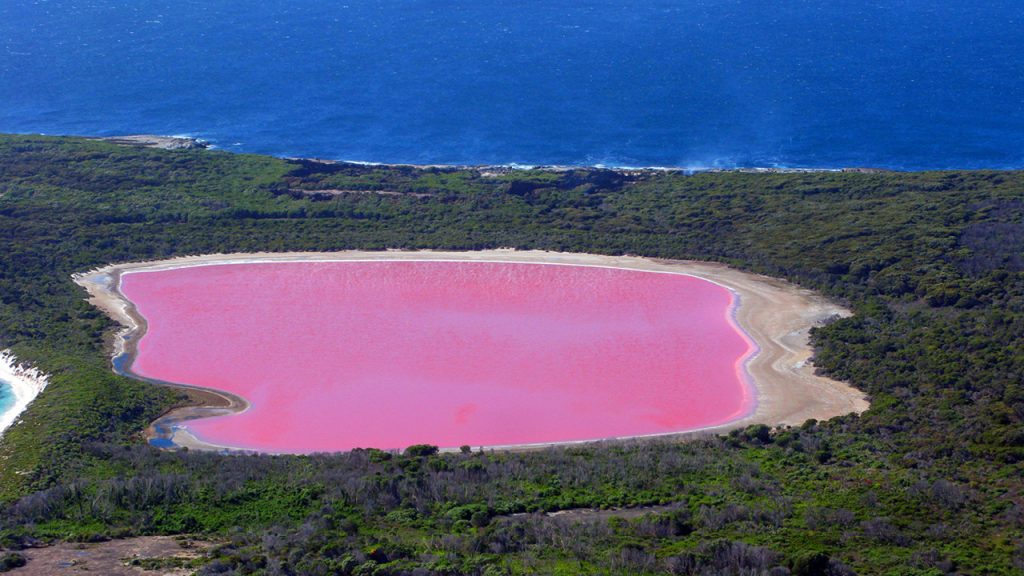
Lake Hillier, Middle Island, WA
One of the most striking is Lake Hillier on Middle Island in WA’s Recherche Archipelago, a vivid pink lake best seen by helicopter from Esperance. Its colour comes not from reflections or seasonal bacteria, but from beta-carotene produced by extremophile organisms feeding on the hypersaline water. Heavy rain in 2022 reduced salinity, allowing green photosynthesising organisms to take over and dulling the lake from bright sherbet to dusky rose. Scientists hope lower water levels will eventually bring back its stronger pink tones. Middle Island itself is off-limits to tourists.
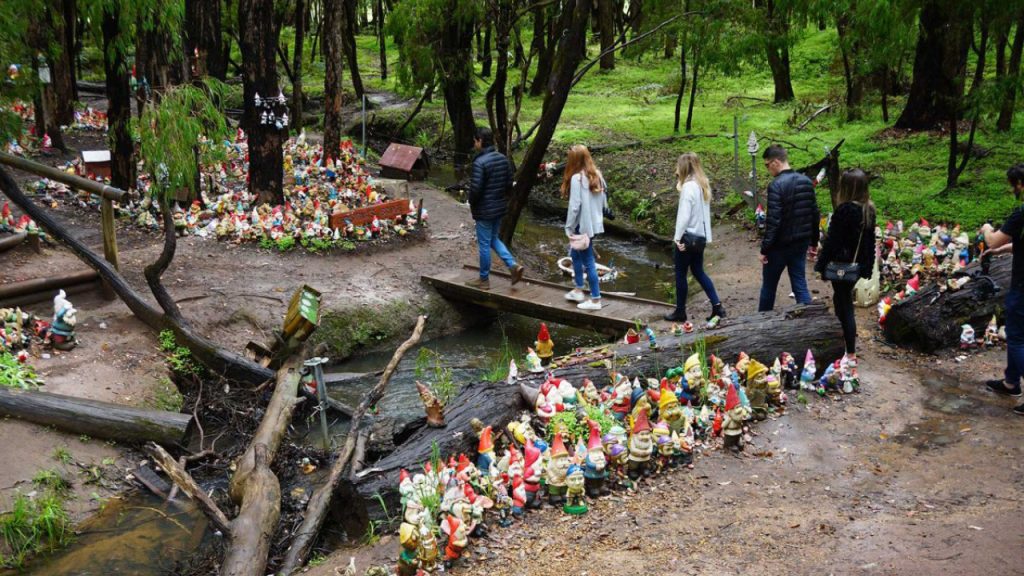
Gnomesville, Ferguson Valley, WA
Also in WA, Gnomesville in Ferguson Valley has transformed a simple roundabout into a home for about 6000 painted gnomes. Locals say it began in the 1990s when one garden gnome was left in a tree hollow and others followed. Since then, visitors have added more from around the world. The display has grown so much that gnomes straying onto private land are reportedly collected and taken back to a designated “gnome jail”. It lies 35 kilometres inland from Bunbury.
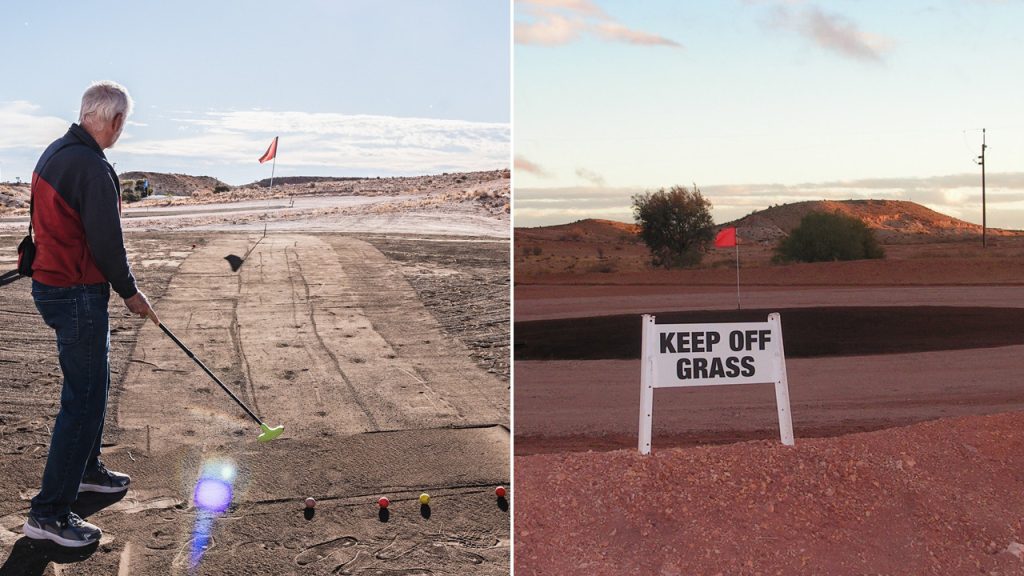
Grassless golf course, Coober Pedy, SA
In South Australia, Coober Pedy offers another kind of oddity. The outback mining town supplies an estimated 80 per cent of the world’s opals, and much of life there happens underground, with residents living in dugouts kept at about 24 degrees year-round. There are subterranean churches and underground hotels, but its most curious attraction sits above ground: an 18-hole golf course with reciprocal rights at St Andrews. Because the daytime heat is so severe, night play with glow-in-the-dark balls is an option, and the only grass comes in the form of artificial turf used for teeing. Coober Pedy has five flights a week from Adelaide, and green fees are paid at Opalios on Hutchison Street.
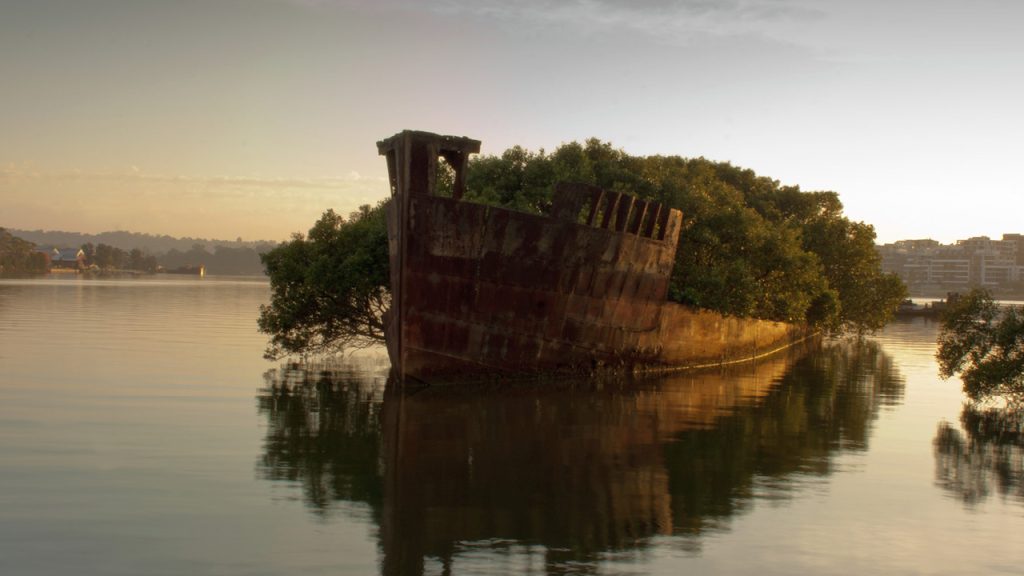
SS Ayrfield, NSW
Sydney’s Homebush Bay is home to the SS Ayrfield, a 1140-tonne ship that has become a striking “floating forest”. Built in 1911, it served the Australian government during WWII under the name SS Corrimal, helping deliver supplies to US troops in the Pacific, then later worked the Sydney to Newcastle route until 1972. Sent to a breaking yard, it now sits beside three other decommissioned vessels, but only the Ayrfield is crowned with flourishing mangroves spilling over both sides of the hull. Visitors can take the train from Central Station to Rhodes and cross Bennelong Bridge for the best view.
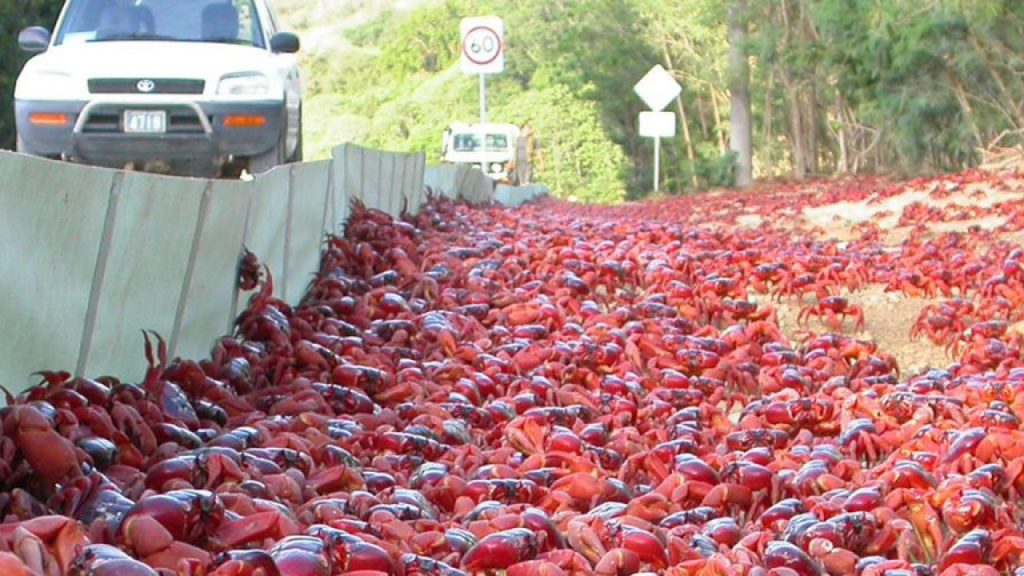
Red-crab migration, Christmas Island
At the start of the rainy season on Christmas Island, tens of millions of red crabs leave forest burrows and head up to eight kilometres to the sea to mate. The migration begins with the first rain and must align with a receding high tide during the moon’s last quarter so females can release their eggs. Even with road closures, fences and crab underpasses, many still cross roads, where rangers use plastic rakes to move them to safety. Their shells are strong enough to puncture tyres. Christmas Island can be reached by air from Perth and Jakarta.
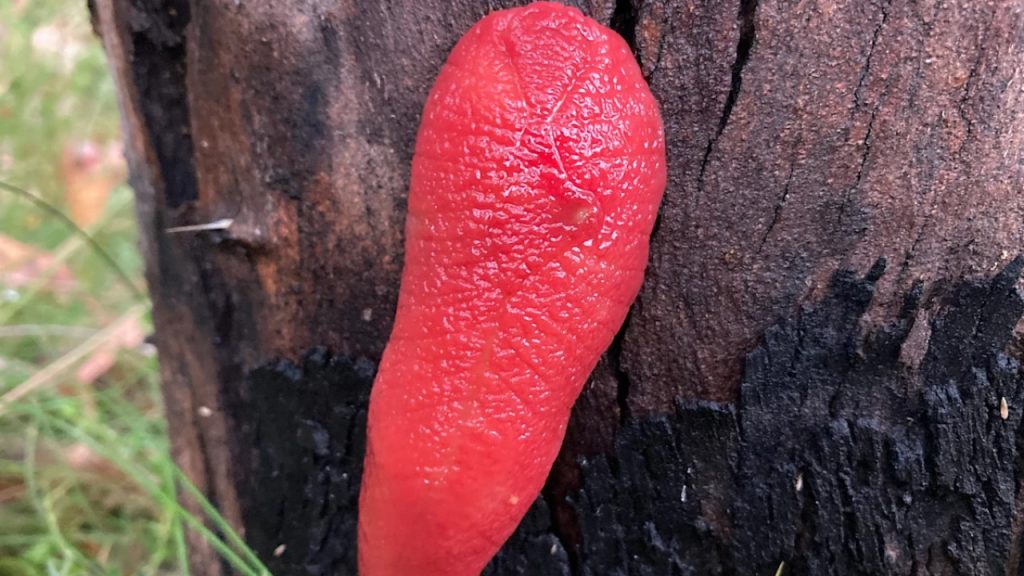
Giant pink slugs of Mount Kaputar, NSW
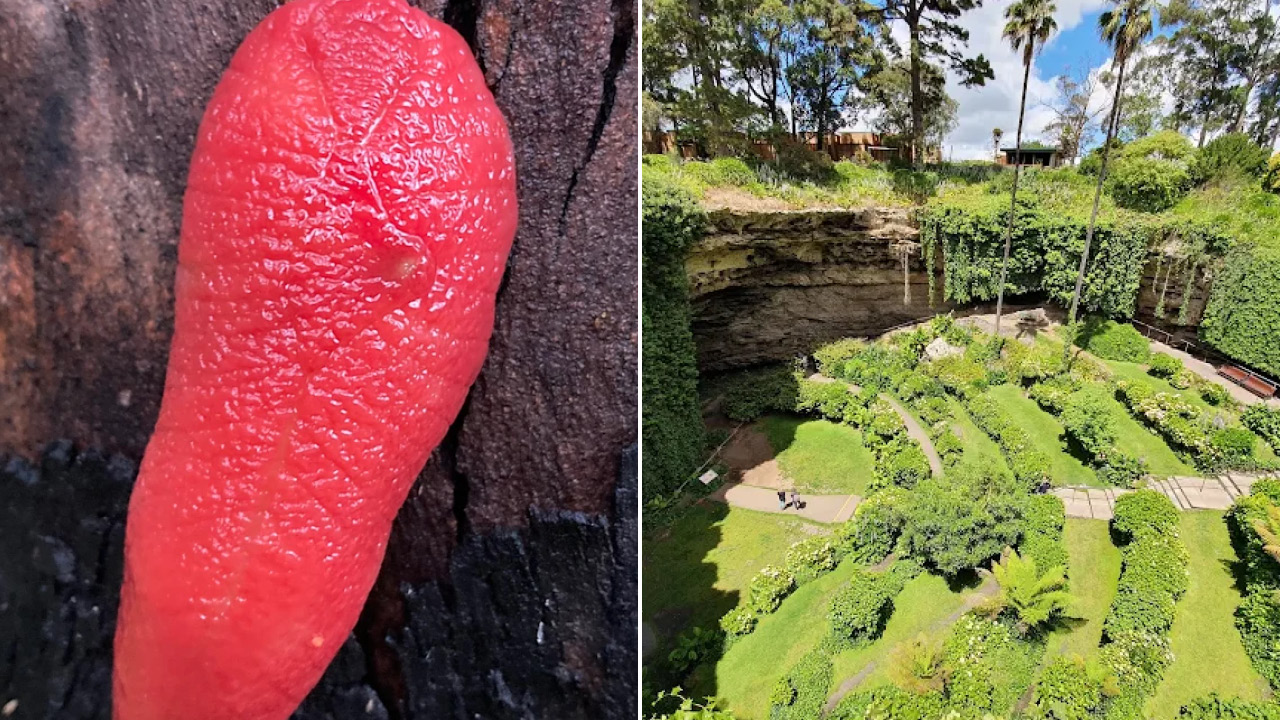
In NSW’s Mount Kaputar National Park, stormy nights can bring out one of Australia’s strangest creatures: a giant fluorescent-pink slug. The species, Triboniophorus aff. graeffei, is found only on remote Mount Kaputar in the Nandewar Range. Usually underground, it emerges after rain to feed on lichen and tree moss. Scientists say the mountain’s isolated habitat, also home to creatures such as red triangle slugs and cannibal land snails, offers an unusual glimpse into Australia’s geological past. The park is 30 kilometres east of Narrabri.
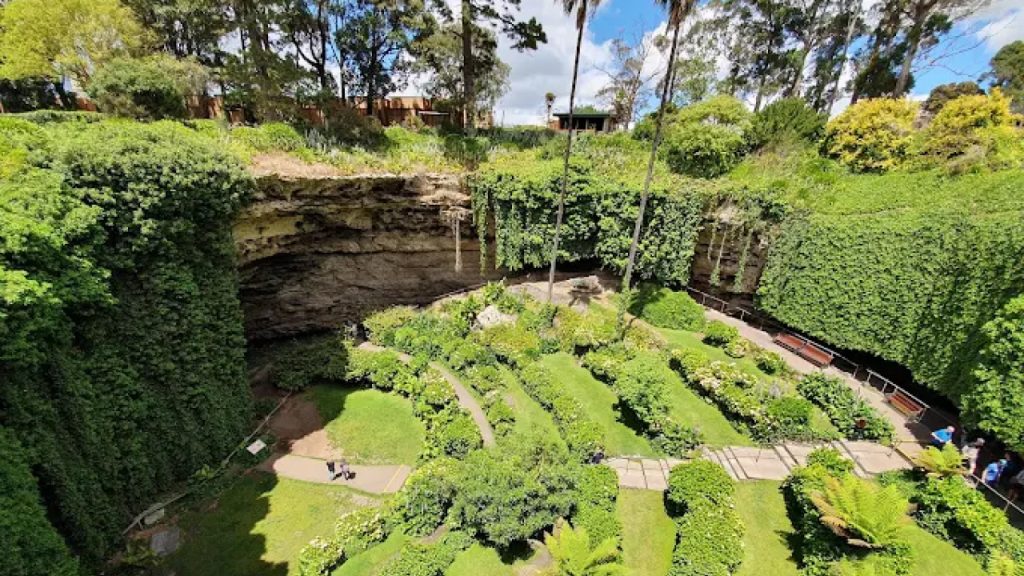
Umpherston Sinkhole (Balumbul), Mount Gambier, SA
Mount Gambier’s Umpherston Sinkhole (Balumbul) is another unlikely wonder. Formed when a cave roof collapsed, the 50-metre-wide pit was turned into a garden in 1886 by Scottish settler James Umpherston. After his death it fell into neglect and became a rubbish dump, but in the 1970s locals restored it with palms, hydrangeas and ivy-covered walls. The sinkhole is three kilometres east of Mount Gambier’s CBD and free to visit.