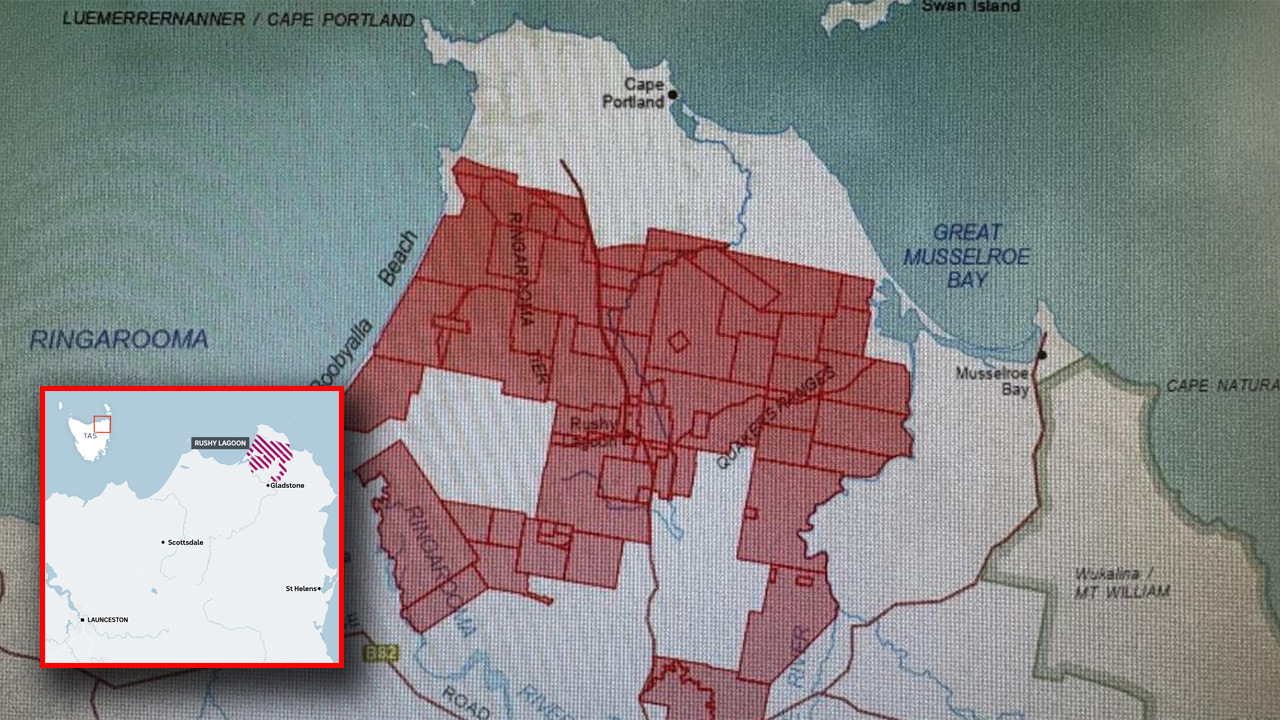
Tasmania’s largest farm is set to be sold to a British forestry company after the federal government rejected calls to intervene in the $142 million deal.
Treasurer Jim Chalmers last week approved Gresham House’s acquisition of the 21,744-hectare Rushy Lagoon property, with the sale expected to settle in early August.
The farm is bigger than some countries, including Fiji, Vanuatu and Lebanon.
The deal has been strongly opposed by the Tasmanian government and local farmers, who have urged the federal government to step in and keep the property as productive farmland, instead of a tree plantation.
Acting Premier Bridget Archer criticised Canberra for failing to act after the state government appealed to Prime Minister Anthony Albanese.
“We have heard nothing from the federal government, local federal representatives have been silent on this issue except to wash their hands of it and to say that nothing more could have been done,” Archer told The Mercury.
“We do think it is a bigger issue than that and we are still calling on the federal government and the Prime Minister to intervene and prevent the sale of productive farmland to be lost into the future and be turned into tree plantations for carbon credits.
“We want to see this land continue to remain as productive farmland and productive agriculture, to grow our agricultural capacity here in Tasmania for future generations.”
Gresham House plans to plant about 12 million radiata pine seedlings across 9000 hectares of the property over the next five years, along with a further 1000 hectares of environmental plantings.
Planting is expected to begin next autumn and will be staggered.
The timber is expected to mature in about 30 years and is earmarked for local milling to supply the building industry.
However, local farmers have questioned whether Rushy Lagoon is suitable for extensive timber plantations.
Gresham House defended the acquisition, saying the property had been “widely marketed to the agricultural sector on several occasions from 2018 onwards.”
A company spokesman said the vendor, the estate of New Zealand farmer Allan Pye, “was unable to secure a sale at independently assessed market value.”
Some agricultural operations are expected to continue under the new ownership, according to Gresham House’s Tasmanian asset manager Jono Craven.
The company estimates the project will create 190 jobs over its lifespan, including in contract planting, pest and weed control and environmental surveys.
Gresham House is also exploring tourism opportunities, including converting farmhouses into accommodation and opening the property for tours and mountain biking.
Image: Service Tasmania