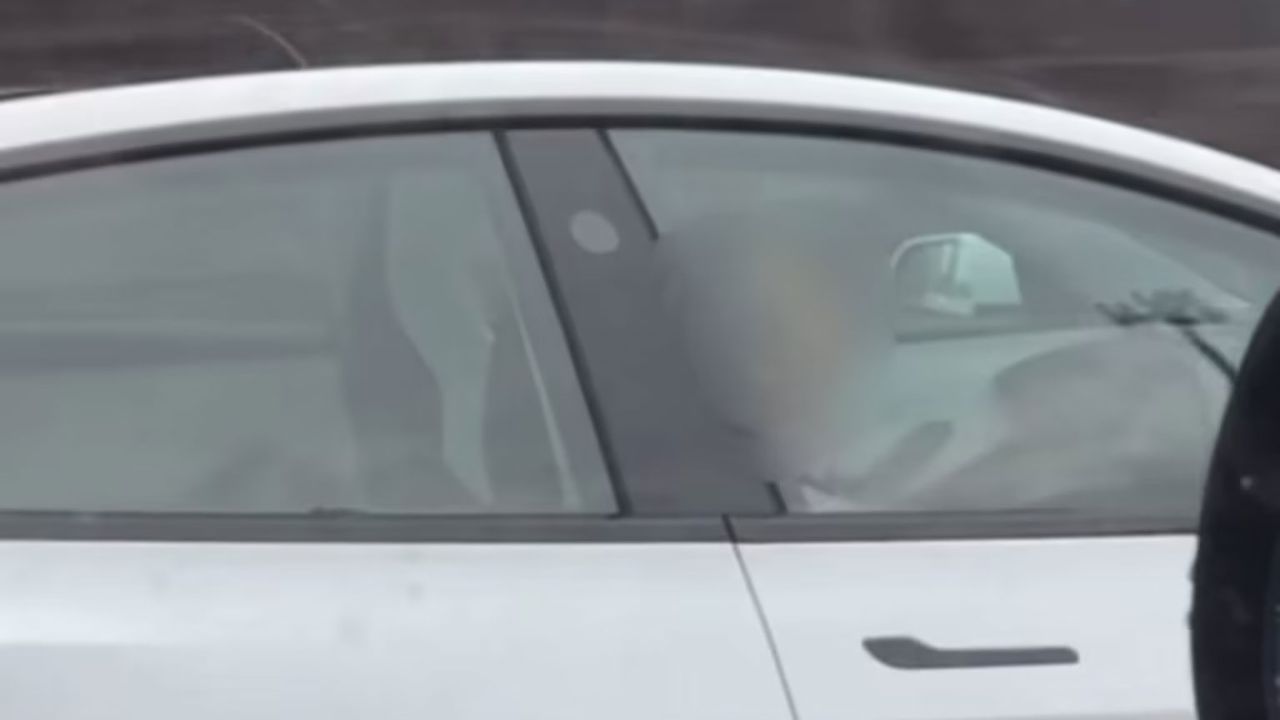
A Sydney driver has been caught on camera appearing to fall asleep behind the wheel of a moving Tesla on the M2 motorway, in a moment that has renewed concern about how self-driving technology is being used on Australian roads.
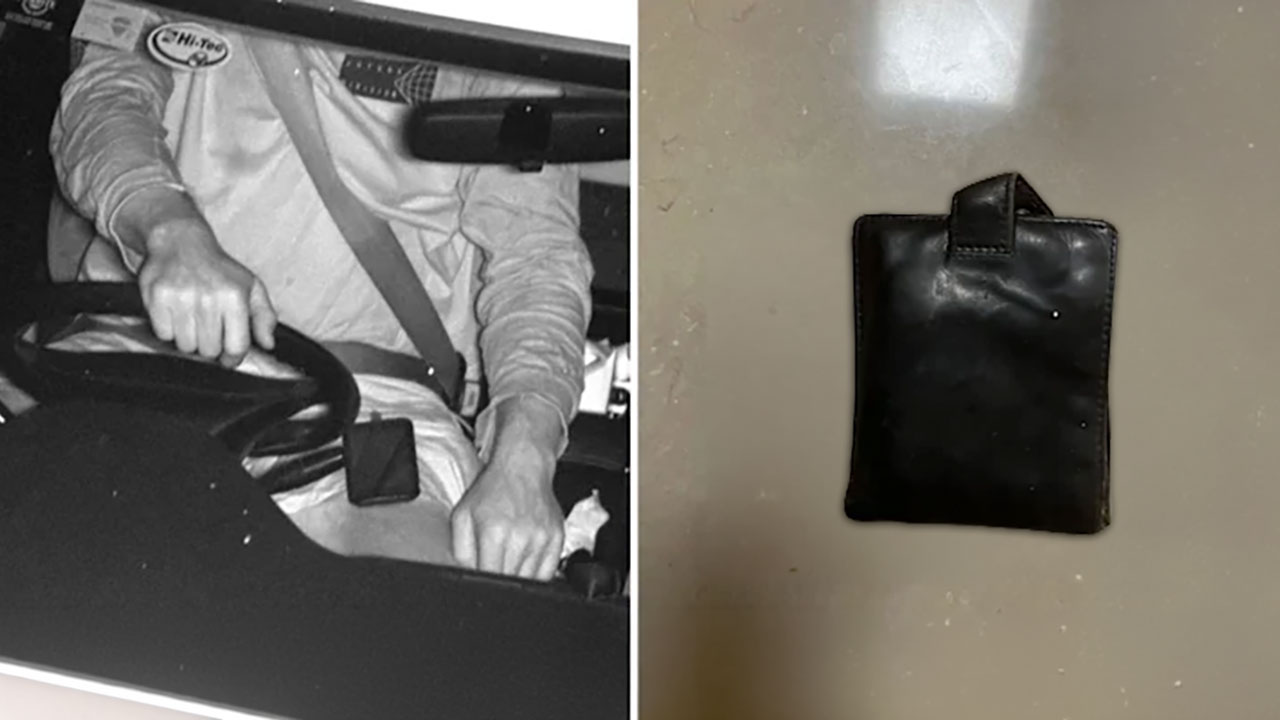
The footage, shared on Facebook, shows a man in a dress shirt seemingly getting some sleep as his white Tesla continued down the motorway. The person filming the incident blasted the horn and shouted, “Hey! F***ing wake up!”
The Tesla driver then appeared to jolt awake and repeatedly waved toward the camera, seemingly in apology.
The video has offered a troubling snapshot of the future big tech companies are pushing toward. While the technology behind automated driving is improving quickly, Australia is still a long way from allowing people to switch off completely while a car takes over.
Tesla activated its Full Self-Driving (Supervised) software in Australia in September 2025 for eligible Model 3 and Model Y vehicles equipped with the newer Hardware 4 system. Despite the name, the technology is not recognised in Australia as fully autonomous.
Tesla says the feature is a supervised system, and Australian transport authorities classify this kind of technology as advanced driver assistance. In practical terms, that means the person in the driver’s seat remains responsible for the vehicle at all times.
Fully driverless cars are not permitted for commercial operation or general use on public roads in Australia. The National Transport Commission says existing road rules apply to vehicles using advanced driver assistance systems “with a human driver remaining in control”, and that new legislation will be required before vehicles can legally drive themselves without human input.
Tesla’s system falls short of that standard. It can steer, accelerate, brake, navigate intersections and change lanes in certain situations, but it is still classed as Level 2 automation. That places it in the same broad category as systems that combine adaptive cruise control with lane-keeping assistance. Under Level 2 rules, the driver must remain alert, watch the road and be ready to take over immediately.
Tesla’s Australian support material makes that clear, stating Full Self-Driving (Supervised) operates “under your supervision”.
Reviews from independent testers and local motoring outlets have repeatedly underlined the same point. No matter how much of the driving the vehicle appears to be handling, the person in the driver’s seat is still legally and practically the driver.
Tesla’s wording has long attracted criticism because “Full Self-Driving” suggests a level of capability beyond what the system actually delivers. In Australia, the addition of “Supervised” carries significant legal weight. It signals that the technology is not a robotaxi, not a private chauffeur and not permission for drivers to mentally check out while the car manages traffic.
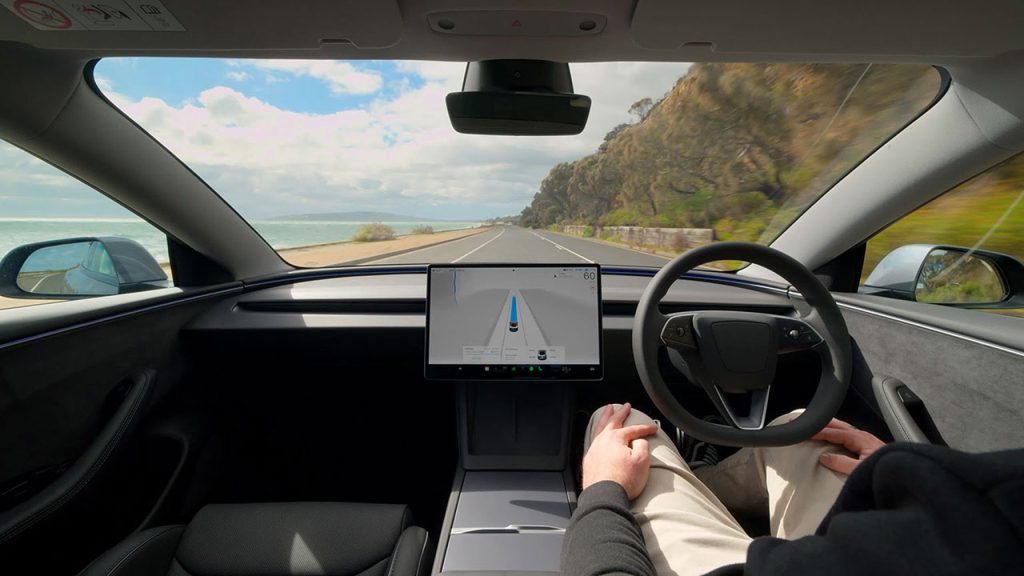
Tesla vehicles also use driver-monitoring systems, including steering-wheel prompts and, in some models, cabin cameras to detect inattention. The company can also issue warnings and suspend access to FSD for drivers who repeatedly fail to supervise it properly.
Even so, the technology continues to draw criticism. Overseas safety experts have warned that these systems can create a dangerous grey area, where the car seems capable enough to encourage drivers to relax, even though it may still need immediate human intervention if something goes wrong.
Critics argue there is still no clear proof that robotic driving systems are a genuine safety backstop, and that the need to stay constantly attentive in a supposedly autonomous vehicle may undermine much of the promised benefit.
Crashes involving AI-assisted vehicles remain a major concern. Still, some users say Tesla’s system is already highly capable, especially on long highway drives and in tricky situations involving roadworks, pedestrians and erratic motorists.
Others say it still needs close supervision and frequent human intervention, and is nowhere near reliable enough for anyone to leave it to drive on its own.
“I’ve had it for three months, my best way to describe it is that its incredible just how well it works, especially how it deals with weird edge cases such as construction, people doing dumb things, and around pedestrians,” one EV owner wrote on the AustralianEV Reddit.
“It also makes a road trip a breeze. Would I be comfortable sitting in the back seat while it drove for me? It’s absolutely not there yet. That’s the easiest way I can describe it.”
Tesla says use of Full Self-Driving (Supervised) must comply with local laws, including keeping hands on the steering wheel. However, a promotional video on Tesla’s own website shows an occupant travelling on the M1 at Southbank through Melbourne without hands on the wheel. That contradiction has added to calls from safety experts for stronger, more specific laws covering automated vehicles in Australia.
The issue is already the subject of intense regulatory debate overseas.
In the United States, Tesla’s driver-assistance technology has repeatedly come under the microscope from the National Highway Traffic Safety Administration. The agency has warned that Tesla’s public messaging may give the impression its vehicles can drive themselves, even though they still require human supervision, and it has investigated crashes involving Tesla automation features.
Europe has also moved further ahead than Australia on regulation. Tesla is seeking approval for FSD Supervised across the European Union through the Dutch vehicle authority RDW using a “new technology” exemption pathway.
Reuters reported earlier this year that Dutch regulators granted provisional approval in April 2026 after extensive testing, though approval across the EU still requires further consideration by member states.