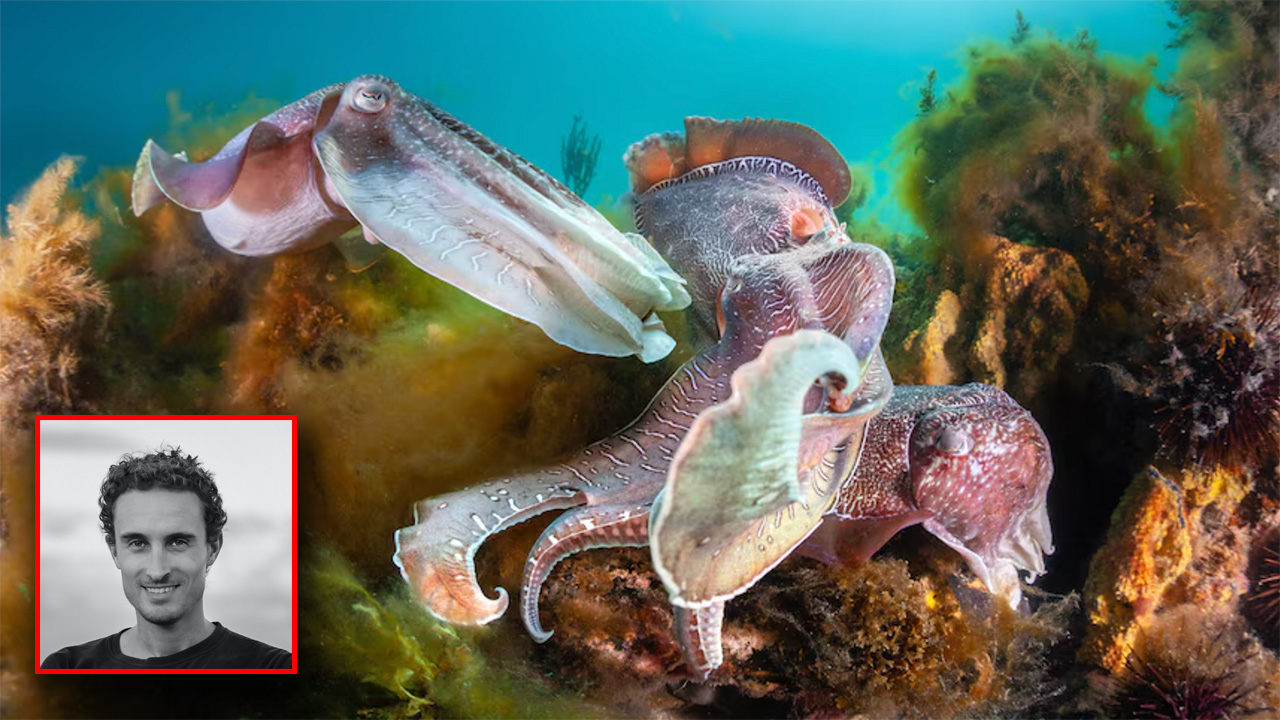
A marine biologist at an Australian university has turned a spectacular underwater love triangle into an award-winning photograph – although his subjects were apparently far too preoccupied to notice the camera.
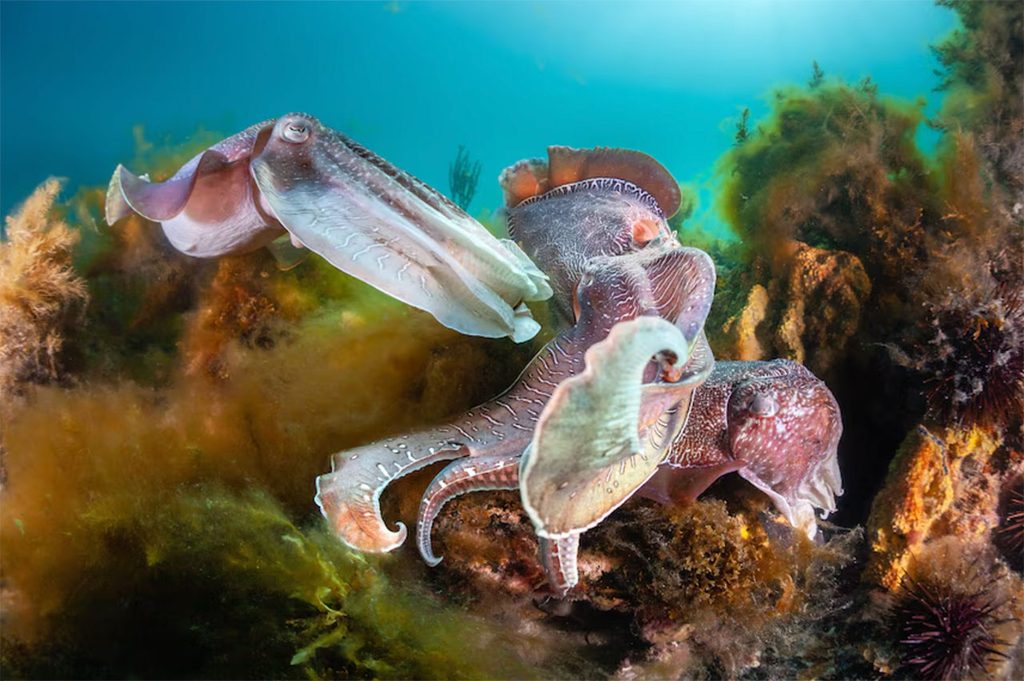
Victor Huertas Martin, a marine biologist and adjunct research fellow at James Cook University, has won the “Relationships in Nature” category of the 2026 BMC Ecology and Evolution and BMC Zoology photography competition for his extraordinary image of giant Australian cuttlefish battling for a mate.
The photograph, titled Giant Cuttlefish in Breeding Battle, captures two male giant cuttlefish in the waters of South Australia’s Spencer Gulf, with one blocking his rival’s attempts to approach a nearby female.
In other words, it’s a romantic dispute – just with more tentacles.
Huertas Martin captured the remarkable scene near Whyalla in 2023 during the giant cuttlefish’s famous annual spawning season, when tens of thousands of the colour-changing creatures traditionally gather in shallow waters to find a mate.
While the marine biologist normally studies tropical reef fish, curiosity drew him south to see the spectacle for himself.
“I was absolutely blown away by what I saw there,” he told the ABC. “The only thing that got me out of the water was the temperature.”
Perhaps helping his chances of capturing such an intimate moment was the fact the cuttlefish appeared to have absolutely no interest in the visiting photographer.
“They didn’t seem to be bothered with my presence at all,” Huertas Martin said. “When they’re busy mating, there’s only one thing in mind, and they don’t care about anything else.”
The annual international photography competition is open to researchers working in fields including ecology, evolutionary biology, palaeontology and zoology, and aims to showcase not only the remarkable diversity of life on Earth, but the scientists working to understand and protect it.
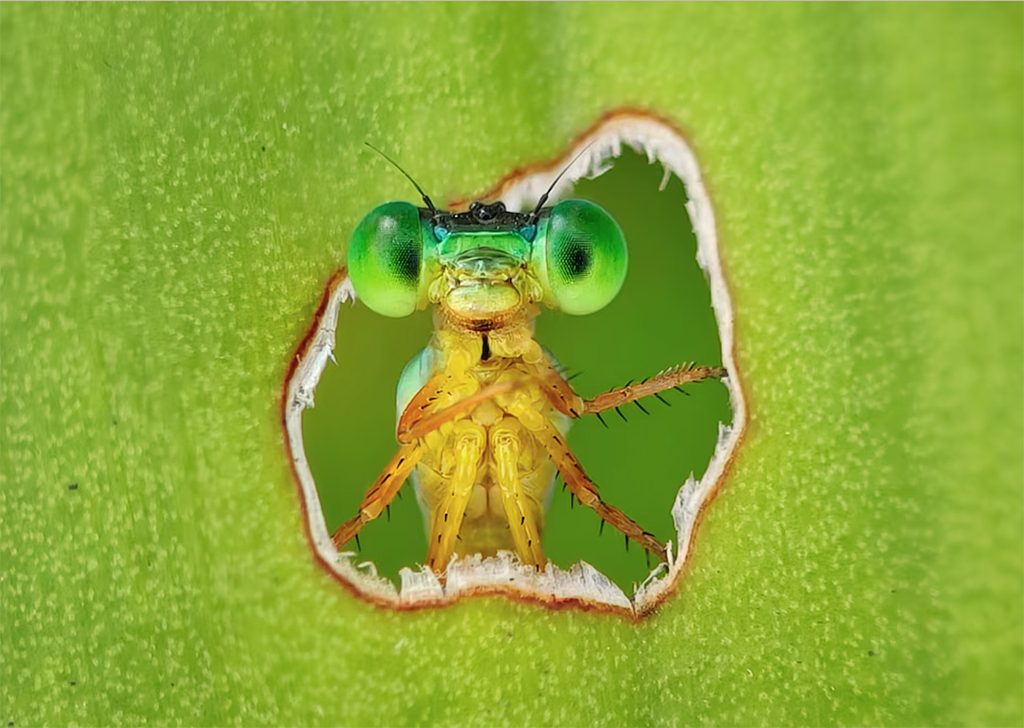
This year’s overall winner was Indian university student Sritam Kumar Sethy, whose beautifully composed image Windows to the Wetlands shows an orange-tailed marsh dart damselfly peering through a hole in a leaf in Odisha, India.
Australia also featured elsewhere among the winners and runners-up.
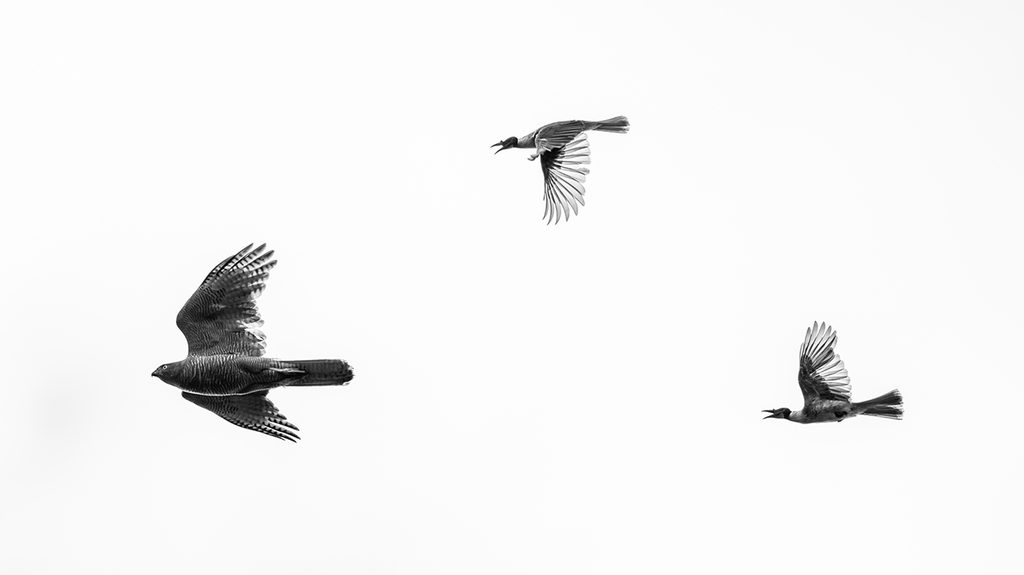
A striking photograph taken at Mulligans Flat Woodland Sanctuary in the ACT by Finland-based researcher Alwin Hardenbol was runner-up in Huertas Martin’s category. It shows two noisy friarbirds mobbing a much larger brown goshawk – photographic evidence that, in the bird world at least, picking on someone several sizes bigger than you can occasionally be a sound strategy.
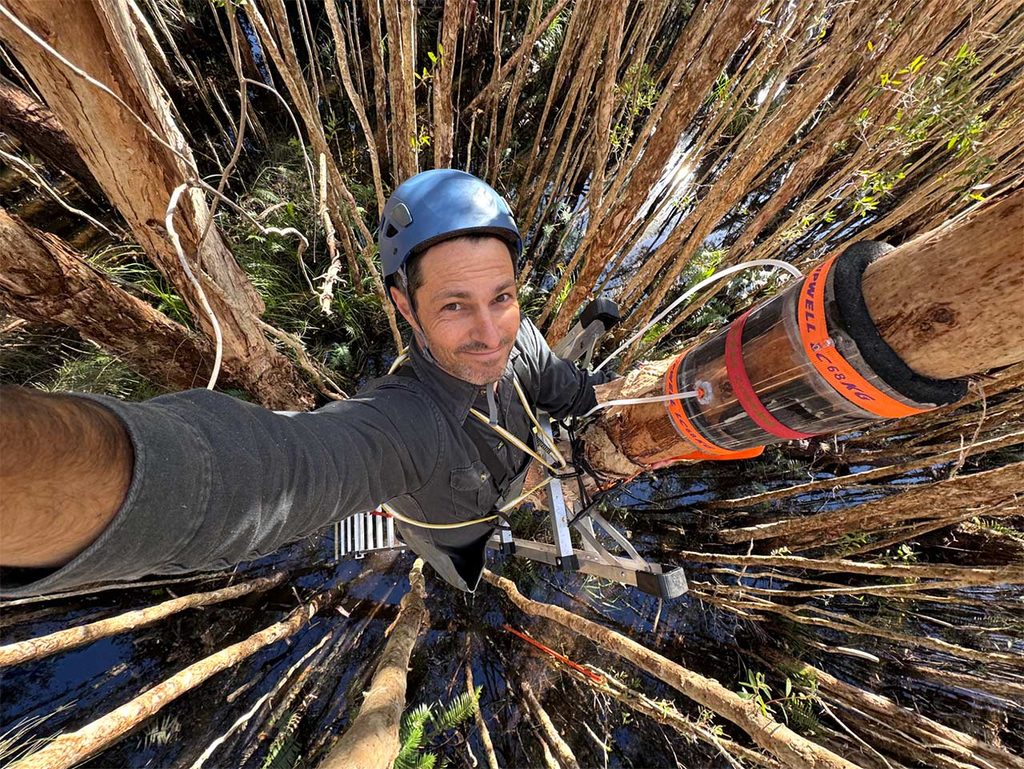
Other recognised images included researchers working with frogs and fish after dark, an olive ridley sea turtle hatchling making its way towards the ocean, manatees drinking fresh water in Florida’s Everglades and researcher Luke Jeffrey climbing a tree in the Northern Territory.
But Huertas Martin’s winning photograph has taken on a more poignant significance since it was captured.
South Australia’s devastating algal bloom has raised fears about the health of the giant cuttlefish population around Whyalla, with waters that were once alive with spawning animals reportedly much quieter this year.
Huertas Martin said the full impact on the population was not yet known, nor whether it would recover in coming years.
“We’re all holding our breath and hoping for the best,” he said.
It’s a sobering reminder of the ethos behind a competition filled with spectacular images: these photographs aren’t simply beautiful pictures. They are snapshots of extraordinary ecosystems, behaviours and species that scientists around the world are working to better understand – and, increasingly, to protect.
Hero Image: Victor Huertas Martin