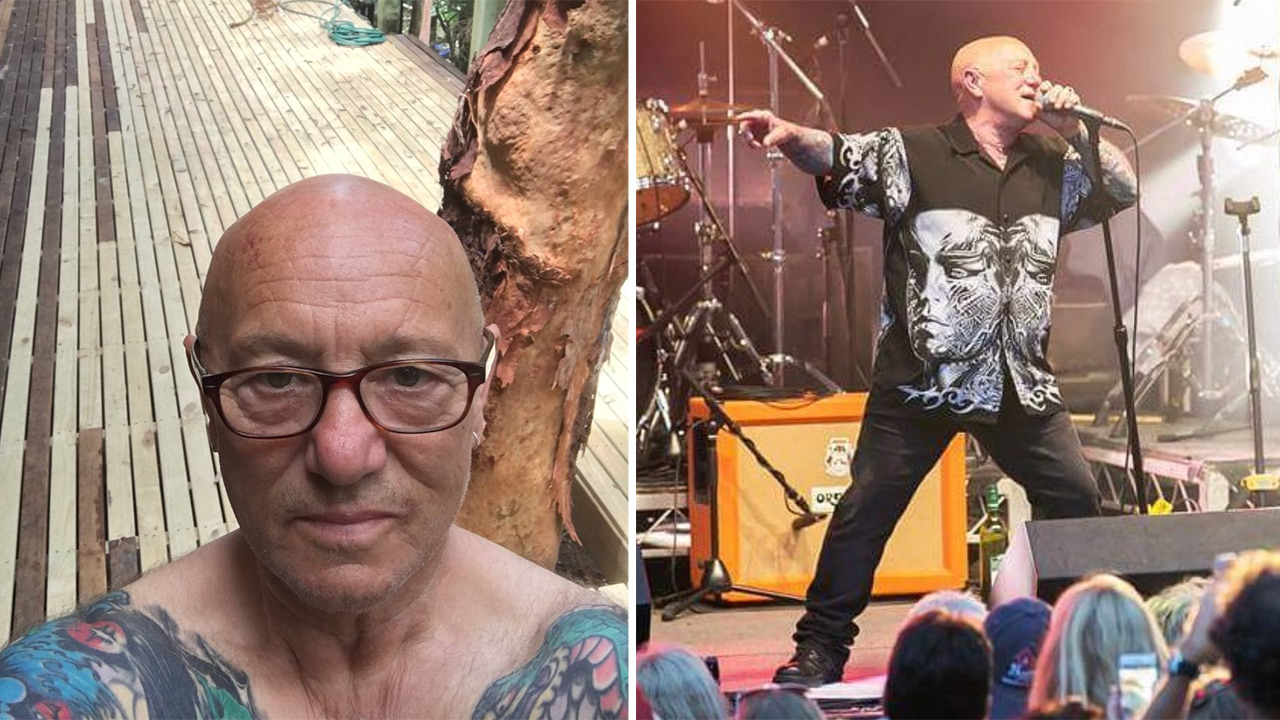
Australian rock legend Angry Anderson, the unmistakable voice and tattooed face of Rose Tattoo, has died aged 79.
The singer, actor and passionate youth advocate died on Monday evening surrounded by loved ones in Australia, his family and bandmates confirmed in a statement on Wednesday.
“It is with great sadness we announce the passing of Gary ‘Angry’ Anderson on the eve of Monday 21 September 2026, surrounded by his loved ones here in Australia,” the statement read.
“Angry was a devoted father, and much-loved bandmate, friend, and member of the wider music and entertainment community. His loss will be deeply felt by all those who knew and loved him both here in Australia and overseas.”
His death comes just weeks after a serious health emergency brought Rose Tattoo’s farewell tour to an abrupt halt.
Anderson suffered a cardiac arrest while the band was touring Europe in August and was admitted to hospital in Germany. The remaining European dates were cancelled, with Rose Tattoo due to return home for the Australian leg of its 50th anniversary One Last Ride tour.
For generations of Australians, Anderson was one of those figures who seemed almost indestructible.
Born Gary Anderson in Melbourne in 1947, the diminutive singer with the shaved head, heavily tattooed arms and extraordinary gravel-edged voice became one of the most recognisable figures of Australian rock.
Rose Tattoo emerged from Sydney’s pub-rock scene in 1976 and built a reputation for music every bit as uncompromising as its frontman. Songs including Bad Boy for Love, Rock ’n’ Roll Outlaw, Nice Boys and We Can’t Be Beaten became Australian hard-rock standards, while the band developed a significant following overseas.
But Anderson’s public life would eventually reveal a man far more complicated – and far more tender – than the snarling “Angry” persona suggested.
In 1987, he scored an unlikely solo smash with the soaring ballad Suddenly, which became forever associated with Scott and Charlene’s wedding on Neighbours. The song reached No.2 in Australia and No.3 in Britain, introducing Anderson to an audience far removed from Rose Tattoo’s beer-soaked pub-rock faithful.
He also turned his hand to acting, memorably appearing as Ironbar Bassey alongside Tina Turner and Mel Gibson in Mad Max Beyond Thunderdome.
Yet some of Anderson’s most important work happened away from the stage.
Having spoken publicly about the abuse and violence he experienced as a child, Anderson became a prominent advocate for young people and lent his name and energy to numerous charities and community causes.
His TV work with Ray Martin on Midday and later A Current Affair saw the seemingly fearsome rocker tackle deeply human stories, including child abuse, homelessness and hardship.
He worked with organisations supporting sick children, young people with cancer, people experiencing homelessness and families affected by drought, and was appointed a Member of the Order of Australia for his work as a youth advocate.
Fatherhood also transformed him.
Anderson once recalled how meeting his newborn daughter changed him almost instantly. “The first time I actually looked into those eyes, that was it,” he said. “I went from being this wild, out-of-control rock dog to being a sort of ‘I want to paint the front fence’.”
His later years were marked by devastating personal tragedy.
In 2018, his son Liam died after being attacked by a friend during a drug-induced psychotic episode. Anderson later told the court that losing his son had left him “condemned to a life of sadness”.
Through it all, however, he kept performing.
Rose Tattoo was inducted into the ARIA Hall of Fame in 2006, cementing the band’s place in Australian music history, and Anderson remained its voice and driving presence across five decades.
Tributes have begun flowing from the music world, including from Skid Row singer Sebastian Bach, who had seen Anderson in Sydney only months ago.
“They don’t make them like Angry Anderson anymore,” Bach wrote.
“You’re not gonna see the likes of Angry anymore.”
For all the noise, leather, tattoos and rock ’n’ roll mythology, Anderson’s family chose to remember something simpler. A father. A bandmate. A friend.
They have asked for privacy as they grieve and thanked fans for the messages of love and support that have arrived during his illness and following his death.
Their farewell ended with words that feel particularly fitting for a man who spent half a century refusing to quietly fade away:
“Stay young, grow strong.”