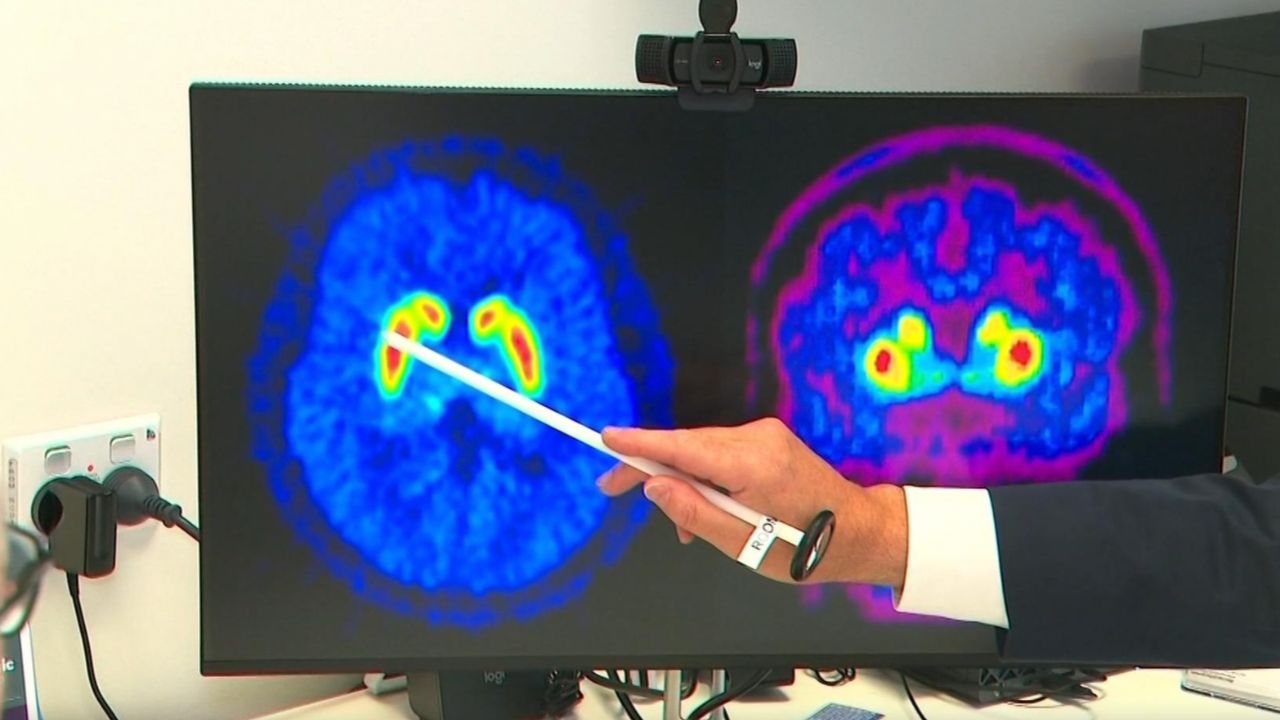
Australian researchers have taken a promising step towards slowing down the disease, with a simple pill reducing brain inflammation in high-risk patients.
Parkinson’s affects simple movements, with more than 150,000 Australians living with the disease, a number that is expected to triple by 2050.
“There hasn’t been many breakthroughs for the Parkinson’s community to stay positive and feel hopeful,” Parkinson’s Australia CEO Olivia Nassaris said.
But a new study into slowing down the effects of the disease offers hope, after scientists in Sydney found that the experimental drug they are working on showed a reduction in brain inflammation in the part that controls movement.
The experimental drug, a daily pill, was given to 41 people with early warning signs like movement during sleep, and the changes were noticeable after several weeks.
“It’s really exciting because at the moment we only have treatments that deal with symptoms in Parkinson’s, nothing that slows the disease,” Professor Simon Lewis from Macquarie University said.
“Maybe if we can stop those cells dying, it might be that we could stop you ever getting Parkinson’s disease.”
For 69-year-old Seamus Fagan, who already feels the effects of the disease on his mobility, the new drug offers hope for an early diagnosis.
“I wish it was there 10 years ago so I could have known earlier that I had it,” Fagan said.
While reducing inflammation is a promising first step, longer trials are needed to show whether the drug can actually prevent Parkinson’s.
“I think it is a breakthrough, but I want to be cautious. So I don’t want to get people’s hopes up too high,” Lewis said.
“It costs $6 million. Now to do the trials we need to do, we need a lot more money.”
Image: 7News