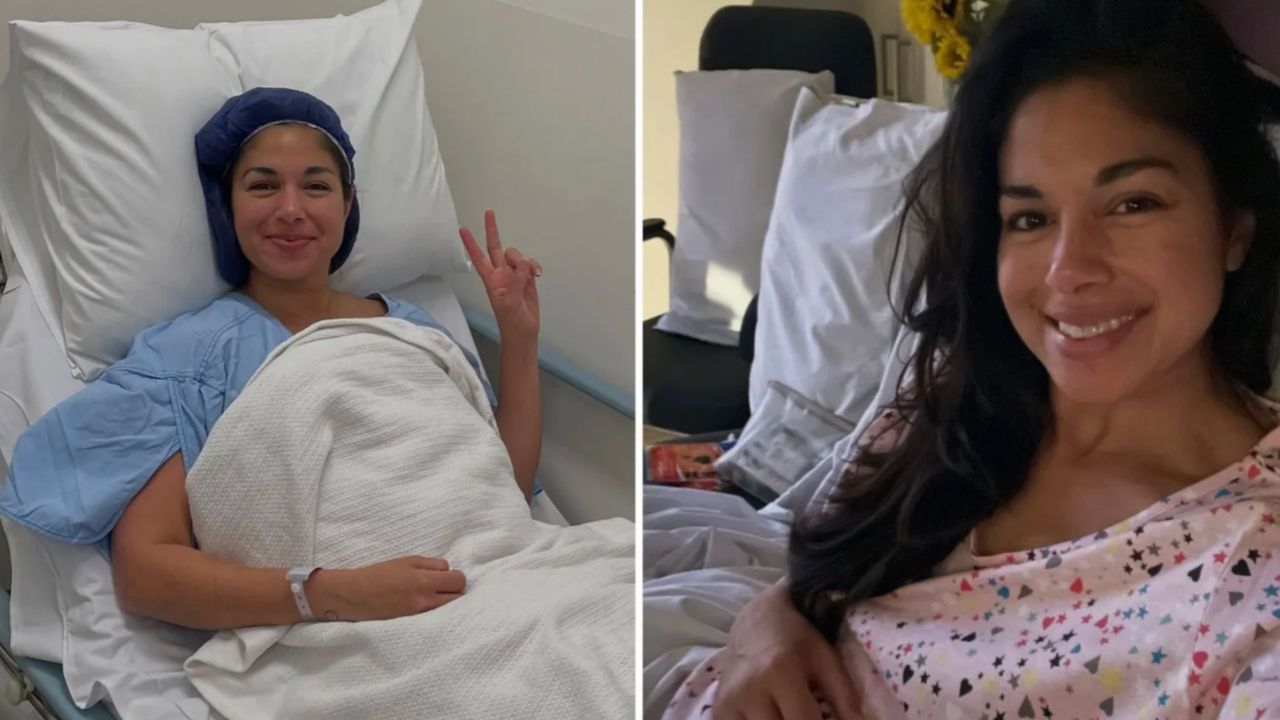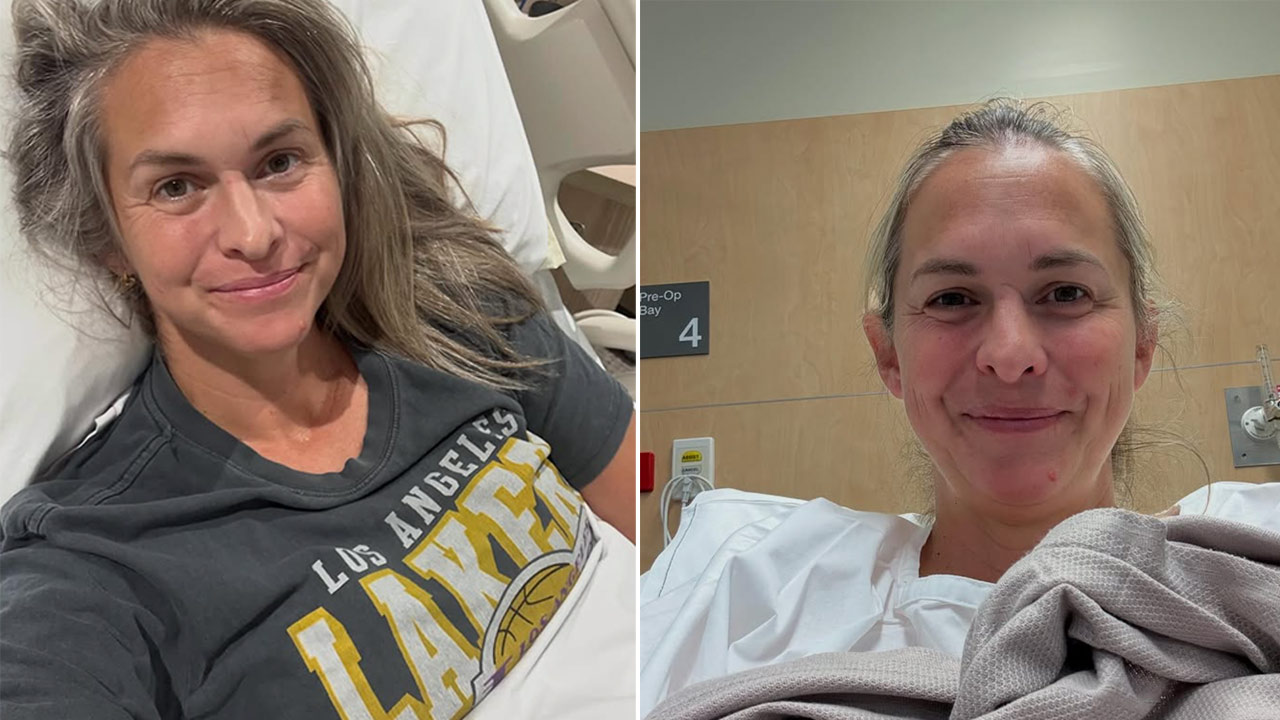
For years, Libby Trickett was the picture of elite health, an Olympic superstar who conquered the world’s biggest swimming stages with four gold medals, multiple world records and a reputation as one of Australia’s most accomplished athletes.
But behind closed doors last year, the mother of five was fighting a terrifying battle that almost no one saw coming.
At just 40 years old and only two months after giving birth, Trickett suddenly found herself gripped by alarming symptoms while taking her daughters to swimming lessons.
“I remember this tightness in my chest,” she recalled. “I wouldn’t describe it as pain – it was pressure. It felt really scary. Then there was this overwhelming sense of unease… almost a sense of impending doom.”
She felt dizzy, disoriented and deeply unwell. When she sought medical help from a trusted doctor, she was told she had experienced a panic attack. But it wasn’t anxiety.
Eight months later, Trickett finally received a devastating diagnosis: she had suffered a SCAD – a spontaneous coronary artery dissection – a dangerous tear in the wall of a coronary artery that can trigger heart attacks and is sometimes fatal.
The condition disproportionately affects women, particularly during and after pregnancy, yet remains poorly understood and under-researched.
Now, Trickett says she lives with the ongoing fear that it could happen again. “I obviously want to be around to watch my kids grow up and thrive and have adventures,” she said through tears. “The thought that I might not get to experience that with them makes me really sad.”
Her ordeal has become part of a much larger conversation about the longstanding gaps in women’s healthcare and medical research.
“The amount of families destroyed because a woman has this catastrophic event is more than I can bear,” Trickett said. “As a society – scientists, researchers, governments – we need to put far more funding into research for women and the conditions that affect women.”
Experts say the issue stretches far beyond heart disease. Professor Bronwyn Graham from The George Institute for Global Health says modern medicine has historically been built around male bodies and male-focused clinical trials.
“Health and medical research has been designed for and tested on males, and then rolled out to the broader population,” she explained. “And that broader population is far more diverse than that. That’s where the great experiment begins.”
The consequences can be severe. Women are more likely to suffer adverse reactions to medications and vaccines, partly because female biology has often been overlooked in drug testing.
“Eight out of 10 drugs removed from the market were withdrawn because women experienced greater adverse effects than men,” Professor Graham said.
She says the gaps are especially stark in mental health treatment.
“Mental health – particularly anxiety disorders – is actually one of the greatest burdens across a woman’s lifespan, even greater than cardiovascular disease,” she said. “Yet we continue to deliver psychiatric and psychological treatment through a gender-neutral lens.”
Professor Graham says women and men can present trauma differently, but research has often failed to reflect those differences.
“When men discuss trauma symptoms, they are more likely to receive a PTSD diagnosis,” she said. “Women discussing the same symptoms are more likely to be diagnosed with a personality disorder.”
Despite the troubling history, many researchers believe change is finally beginning to happen.
One of the loudest advocates for reform is Stacy Sims, a New Zealand-based scientist whose message has resonated with millions of women around the world. Her central argument is simple: women’s health advice has spent decades being shaped by research conducted primarily on men. “Women are not small men,” Dr Sims said. “If women had had a seat at the table when scientific design first started, we wouldn’t have this gap.”
Dr Sims is encouraging women to rethink traditional ideas around health and fitness, particularly the obsession with weight loss and endless cardio workouts. Instead, she says strength training is critical for long-term health. “Use the muscle by lifting loads, pushing loads, being active however you can,” she said. “It’s so important to maintain muscle, muscle function and muscle quality – especially as we age.”
She also advocates balanced nutrition over fad diets and warns against extreme fasting trends, saying women’s bodies benefit from consistent nourishment and recovery.
For Trickett, speaking publicly is about helping ensure future generations of women are heard, diagnosed earlier and treated more effectively. Researchers say the goal is not special treatment – but better science that finally reflects the realities of women’s bodies and health experiences.
Images: Instagram