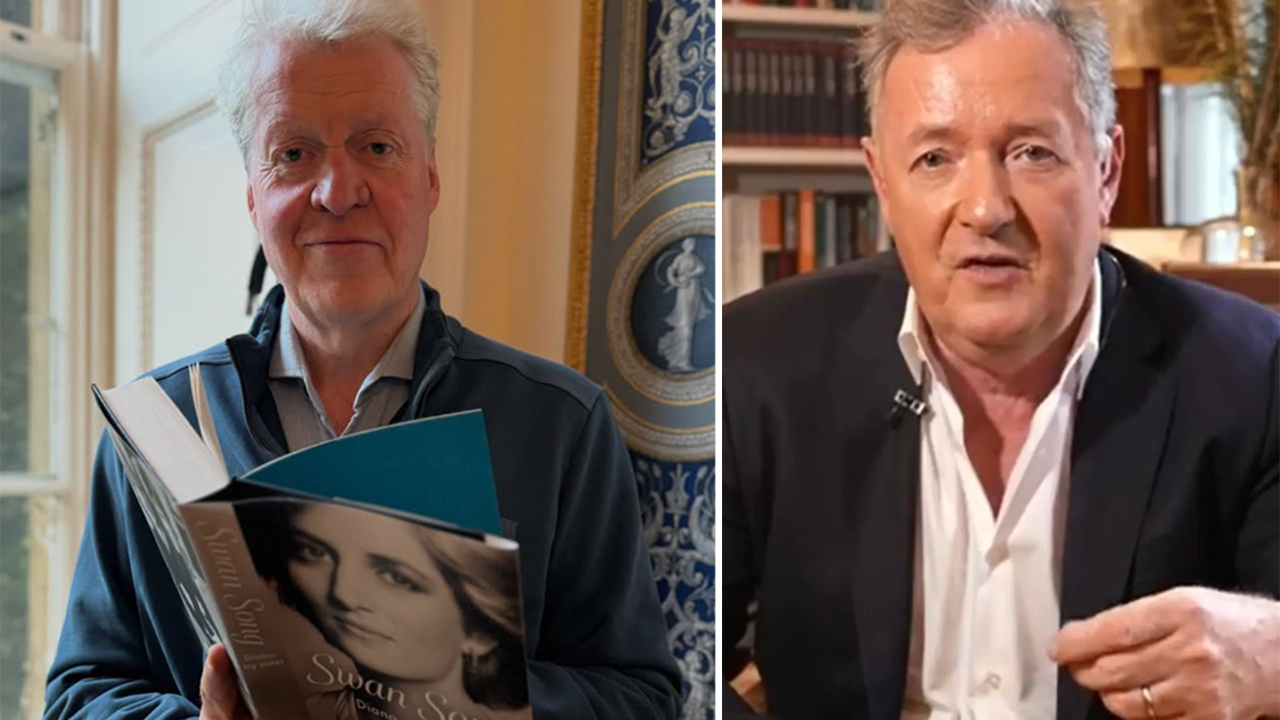
Princess Diana’s brother Charles Spencer has been forced to apologise for a significant factual error in his new book about his late sister – but Piers Morgan says sorry is not enough, with the broadcaster pressing ahead with legal action against both Spencer and his publisher.
The dispute erupted as Spencer’s much-anticipated memoir, Swan Song: Diana, My Sister, went on sale this week, already surrounded by controversy over its claims about Diana’s life, death and relationship with the Royal Family.
Among the stories recounted by Spencer is a telephone call he says he made to Morgan in the days before Diana’s funeral in September 1997.
Spencer writes that he personally contacted newspaper editors to tell them they were no longer welcome at the funeral, claiming Morgan was the only one who sounded “surly” and that he “snarled with annoyance” before hanging up.
Spencer then offered an explanation for Morgan’s supposed reaction, saying he assumed the journalist felt guilty because he and his Sunday Mirror counterpart had published intrusive photographs of Diana exercising in a gym four years earlier.
There was one major problem with that account: Morgan was not working for the Mirror at the time.
The controversial photographs were published by the Sunday Mirror on November 7, 1993. Morgan did not join the Daily Mirror as editor until October 1995 and was working for rival newspaper The Sun when the photographs appeared.
After Morgan publicly challenged the claim and threatened legal action, Spencer issued a formal apology.
“As an historian, accuracy is important to Earl Spencer,” a statement issued on his behalf said.
“He therefore wishes to clarify that his assumption was incorrect. Earl Spencer apologises to Mr Morgan for this error.”
Spencer has not, however, withdrawn his description of the 1997 phone conversation itself. His statement maintained that Morgan was “surly and annoyed” when told he was not welcome at Diana’s funeral.
Morgan disputes that version too, insisting he had been respectful during the conversation.
And despite receiving the apology, the former newspaper editor says he has no intention of dropping the matter.
Morgan said he had instructed lawyers to write to Spencer and publisher Penguin demanding the admitted false claims be removed from the book. He is also seeking damages, which he says should be paid to the King’s Trust.
“This book is out there now,” Morgan told ITV News, arguing that an apology alone did not undo the damage caused by the published allegation.
He said his lawyers were demanding the claims be withdrawn and argued the book should not remain on sale while containing what Spencer had now acknowledged was an error.
The clash adds another layer of controversy to a book that had already reopened some of the most painful arguments surrounding Diana’s death.
In Swan Song, Spencer makes a series of striking claims about the aftermath of the Paris car crash that killed his sister in August 1997, including his account of conversations with the then-Prince Charles and disagreements over the funeral arrangements.
Buckingham Palace has taken the unusual step of responding to some of Spencer’s claims, saying the King was mindful that profound grief could “cloud reason, affect judgment and colour memory”. Spencer, meanwhile, has defended his account and described himself as an eyewitness to events surrounding his sister’s life and death.
Morgan argues that the demonstrable mistake involving him raises broader questions about the book’s accuracy.
Spencer’s apology has at least settled one part of the dispute: Morgan could not have been responsible for the Mirror Group’s publication of the 1993 gym photographs because he did not work there at the time.
Whether that admission will be enough to prevent the argument moving from the pages of a royal memoir to the courts is another matter entirely.