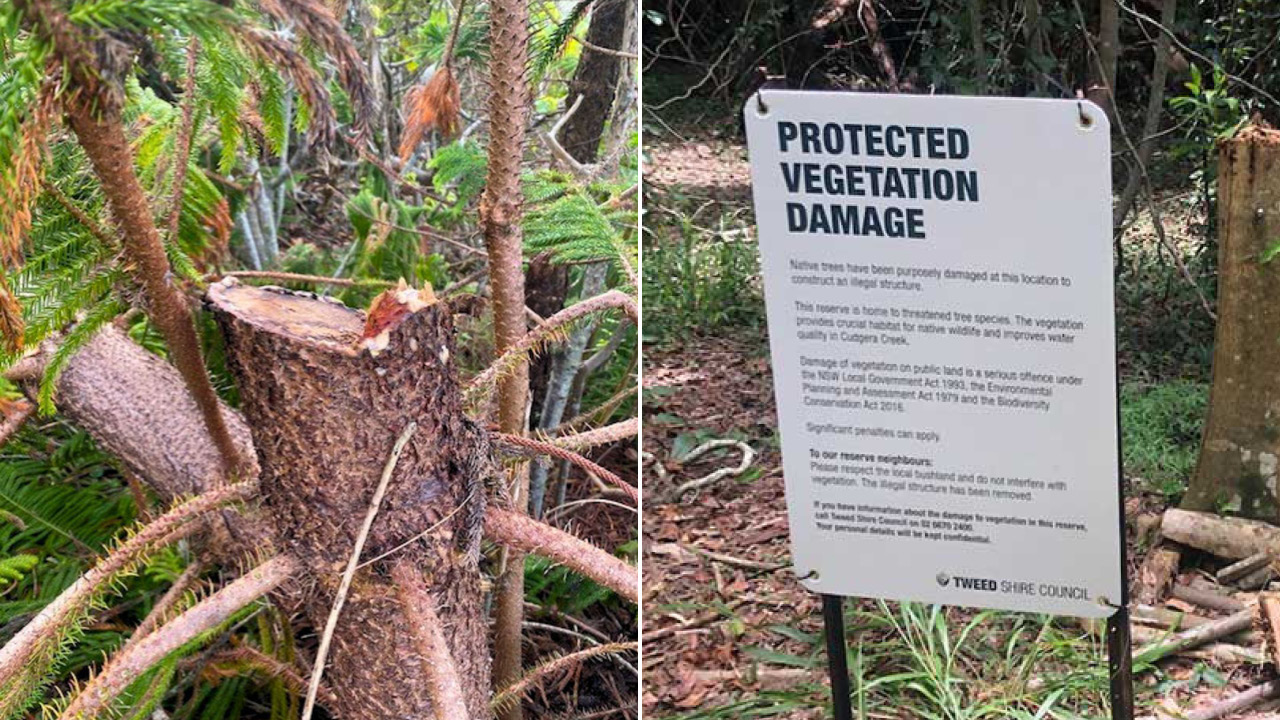
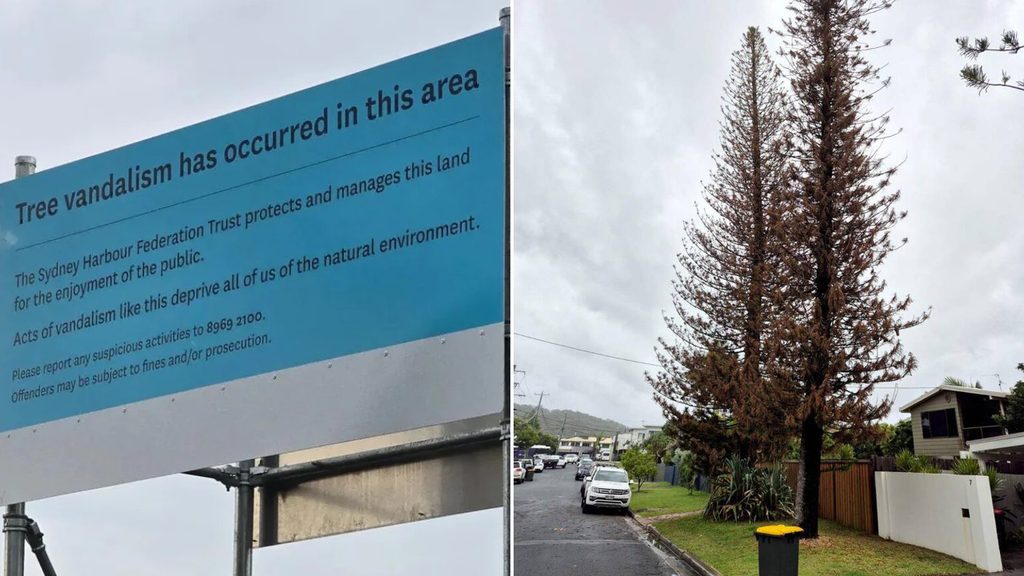
Homeowners in New South Wales could be hit with penalties as high as $500,000 under new laws passed this week aimed at stopping illegal tree poisoning and clearing, a practice used to open up waterfront views and lift property values. The move comes after a run of incidents in some of Sydney’s wealthiest suburbs, where councils have even turned to huge banners and shipping containers fitted with CCTV to block views gained through suspected vandalism.
Legislation passed by the NSW Parliament on Tuesday night will, for the first time, let councils chase alleged tree vandals through civil court. Under the new framework, individuals can face civil penalties of up to $500,000, while businesses could be penalised up to $2.5 million, with any money recovered through civil proceedings going directly to councils. The reforms cover both public and private land, meaning homeowners could also face major penalties for removing protected trees in their own backyards without approval.
NSW Planning Minister Paul Scully said residents had been forced to watch trees vanish for “someone else’s convenience or profit without consequence”. “Today we’ve given vandals 2.5 million reasons to cut out this illegal and selfish behaviour,” he said. He has previously argued that existing on-the-spot fines did not match the financial upside some offenders chase. “When it increases property value by tens of thousands of dollars for a water view, a $3,000 fine is not an appropriate deterrent or penalty,” he told Parliament last month.
Although current criminal penalties can be up to twice as high, prosecutions have been uncommon because councils must prove offences beyond reasonable doubt and face significant legal costs. The new laws shift that hurdle, requiring councils to prove allegations on the balance of probabilities instead, making it easier to pursue accountability. The civil penalties are expected to begin in April 2027, following regulatory changes last month that lifted on-the-spot fines for illegally clearing significant vegetation to $6,000 for individuals and $18,000 for businesses.
Councils have also been granted stronger powers to stop illegal clearing and order replacement plantings, while tighter rules around removing dead or dying trees are intended to reduce deliberate poisoning. Courts will be able to weigh up the financial benefit gained by offenders when considering cases.
Sydney property valuer Belinda Botzolis told Yahoo News she supported the tougher stance, but said identifying and proving who did the damage would still be difficult. “If they can catch them and prove it, by all means, throw the book at them,” she said.
Botzolis, who grew up in Sydney’s St George area, said she was tired of seeing Norfolk Island pines destroyed along Botany Bay’s foreshore. She said the trees help make the area attractive, provide food for native wildlife and protect the foreshore from erosion. While she accepted that views can influence sale prices, she had no sympathy for those who target vegetation. “Obviously the better the view, the better the value,” she told Yahoo News Australia. “But, you’re buying the property knowing there’s vegetation or the plants in front of the water. “If you don’t like it, buy something else, it’s as simple as that – or buy an apartment in a higher floor.”
She said she often notices missing trees along The Grand Parade during walks, pointing out replacement plantings can take decades to reach the size of those lost.
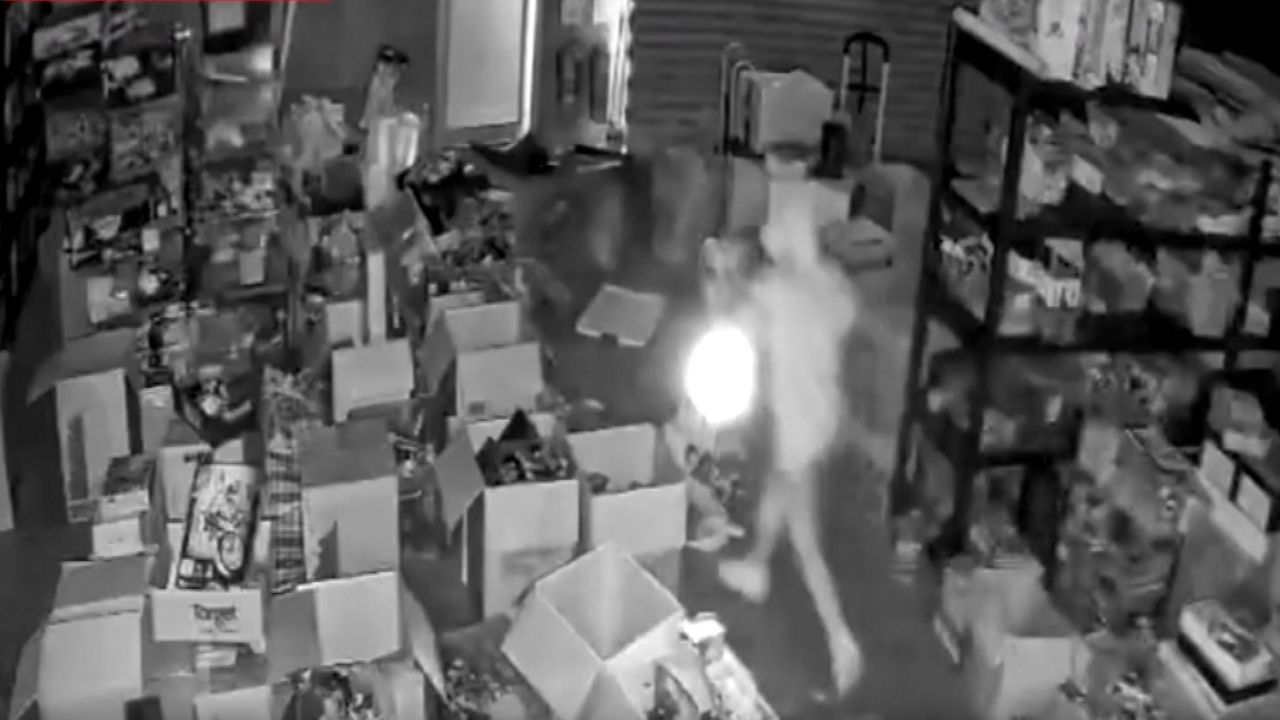
Some councils have tried to strip away the incentive behind the damage by physically obstructing the view that offenders may have been seeking. Botzolis shared footage of shipping containers placed along Botany Bay’s foreshore and praised Bayside Council’s unconventional tactic. Bayside Council first put three containers at Brighton-Le-Sands in 2021 after several large trees were cut down with chainsaws. Last month, it redeployed a container after several mature coastal banksias were illegally cut down at The Little Grand Parade. “As a buyer, developer or builder, if you see a big ugly sign or shipping container blocking your view, hopefully you think twice,” Botzolis said. The council is investigating the latest incident and is using CCTV to discourage further vandalism, with the container set to stay until replacement trees become established.
Elsewhere, large-scale destruction has already left a trail. In 2023, 265 trees were cut down or poisoned at a waterfront reserve in Castle Cove on Sydney’s north shore. Willoughby City Council offered a $10,000 reward but still could not collect enough evidence to prosecute. That same year, hundreds more trees were illegally cleared at Woodford Bay in Longueville, leading Lane Cove Council to put up an enormous banner to block water views.
In August this year, a Sydney contractor pleaded guilty to illegally clearing over 280 trees on council-owned foreshore bushland and was fined $187,500.