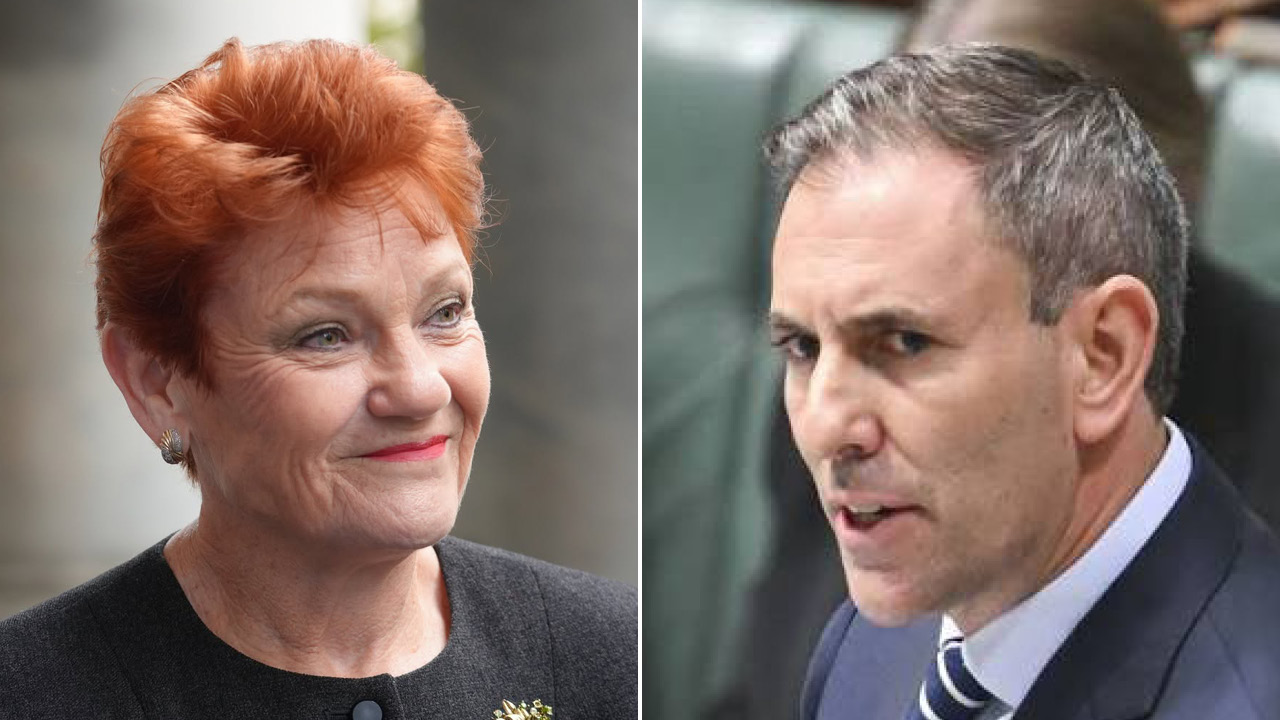
A political fight over superannuation has intensified, with Treasurer Jim Chalmers on Monday indicating the issue could become a major battleground at the next federal election.
“The stakes are high at the next election for a whole range of reasons, and one of them now is the future of Australia’s world-leading compulsory superannuation system,” Chalmers told reporters as he arrived at Parliament House.
He said Labor believed the opposition parties and One Nation posed a threat to the current model. “The Liberals, the Nationals, and One Nation would end compulsory superannuation as we know it. Their policy and their ideology on super would absolutely decimate the economic security and retirement incomes of millions of Australian workers.
“They share a dangerous and divisive anti-worker, anti-super ideology, and if this plays out after the next election, Australian workers will be much worse off.”
Later, senior Liberal senator and deputy opposition leader Jane Hume rejected that claim, saying the Coalition had no intention of changing compulsory super and accusing the treasurer of fabricating the issue.
“I think the treasurer has taken a leaf out of the Mad Men Don Draper book; if you don’t like what they’re saying about you, change the conversation. Can I make it very clear: the super guarantee is here to stay,” she told reporters in Canberra.
Even so, Hume said the Coalition was open to again pursuing early access to super for housing. She told News24 that retirement security depended more on owning a home than on the size of a person’s super balance. The Coalition previously took a “super for housing” proposal to the last two elections, under which first-home buyers would be able to withdraw as much as $50,000 to purchase a property.
The argument was sparked last week after Liberal senator Andrew Bragg described superannuation as an “illiberal experiment”.
“It’s one of the biggest public policy failures since federation, in the sense that it hasn’t helped the budget, and it has not really helped many people get off the pension,” he told ABC radio on Thursday.
“What it has done is it has created a huge viper’s nest for banks and financiers and unions to pilfer, which is why what you saw at the Labor Party conference was now you’re going to have super for under 18s.”
The Association of Superannuation Funds Australia pushed back, citing lower age pension spending since the scheme began in 1992. Under the current arrangements, employers across Australia must contribute at least 12 per cent of an employee’s salary into a nominated super fund, and that money cannot be accessed until the person turns 60.
“Super has meant that even as our population ages, the government’s Age Pension bill is going down instead of up. OECD projections have Australia at the lowest public pension spending in the OECD by the mid-2030s,” ASFA CEO Mary Delahunty said.
“Super has also meant that reliance on the Age Pension has fallen, with 12 per cent fewer over-65s receiving a part or full Age Pension today than in 2012. This will keep falling as we see the effects of higher super guarantees coming in.
“A lower reliance on the Age Pension is a massive public policy success.”
One Nation leader Pauline Hanson also entered the dispute on Sunday, calling the superannuation system “broken” and floating the idea that Australians under financial pressure should be allowed to get at their super sooner. She said many people were battling mortgage stress.
“A lot of Australians are doing it tough now and struggling to pay off their mortgages,” she told News24 on Sunday, adding the policy proposal was yet to be finalised.
“In some ways, I feel that you should give them their money now, and let them help them with the cost of living.”
Her deputy, Barnaby Joyce, supported that position and said on Monday that current rules permit early access only in very restricted situations, including medical treatment.
“I think one of the hardships people have is if they can’t feed themselves. And another hardship is if they don’t have a house and they’re put out on the street and they’re living in a car,” he said on Monday.
“Surely it’s their money and we should give a little more respect about what they can do with their own money.”
Labor’s assistant minister for housing, Julian Hill, dismissed the idea of using early super access to cover housing costs, saying it deserves “a gold medal for the stupidest policy”.