Pope Leo XIV has urged governments to limit the development of AI systems, calling for stronger oversight and caution.
In the Pope’s first encyclical, he warned the technology could spread misinformation, fuel conflict and even contribute to future wars.
“What is needed is a more active political involvement that is capable of slowing things down when everything is accelerating,” Leo wrote in the document, titled Magnifica Humanitas (Magnificent Humanity).
The Pope called for “robust legal frameworks, independent oversight, informed users and a political system that does not abdicate its responsibility.”
The 43,000-word text is one of the highest forms of teaching within the Catholic Church and addresses a wide range of issues including artificial intelligence, war, global leadership and workers’ rights.
Leo said ownership of AI data should not remain solely in private hands and urged governments to protect workers and children from potential harms linked to the technology.
He also warned against growing competition between AI companies and rejected the “just war” theory, historically used by the Church to assess armed conflict.
“The ‘just war’ theory which has all too often been used to justify any kind of war, is now outdated,” he wrote.
“The use of force, violence and weapons reflects a relational poverty that always has disastrous consequences for civilian populations,” he wrote.
The Pope declared it was “not permissible” to allow AI systems to make lethal decisions during war.
He also criticised what he described as a global culture increasingly shaped by violence and conflict.
“The past 60 years have been marked by conflicts of astonishing brutality, often affecting civilian populations on a massive scale,” Leo stated.
“Humanity is slipping into a violent culture of power, where peace no longer appears as a responsibility to be taken on, but as a fragile interval between conflicts.”
The Pope also warned leaders could use military conflict to distract from domestic problems.
“We cannot rule out the possibility that some leaders may consider armed conflict as an effective way of diverting attention from domestic problems and a cynical tool for managing difficulties,” he said.
Drawing comparisons between today’s AI revolution and the Industrial Revolution, Leo referenced his predecessor Pope Leo XIII, who advocated for workers’ rights in the late 19th century.
He criticised what he called “new forms of slavery” linked to modern technology supply chains, including unsafe working conditions faced by people extracting rare earth minerals used in electronic devices.
“In some regions of the world, children and adolescents work in dangerous conditions, crushing the materials from which rare earth elements are extracted,” he wrote.
“The bodies of these people are scarred, injured and worn down so that computational flow may continue uninterruptedly.”
“This reality deeply challenges the moral conscience of our time.”
The Pope also acknowledged the Catholic Church’s historical failures over slavery and issued an apology.
“This constitutes a wound in Christian memory,” he wrote. “For this, in the name of the Church, I sincerely ask for pardon.”
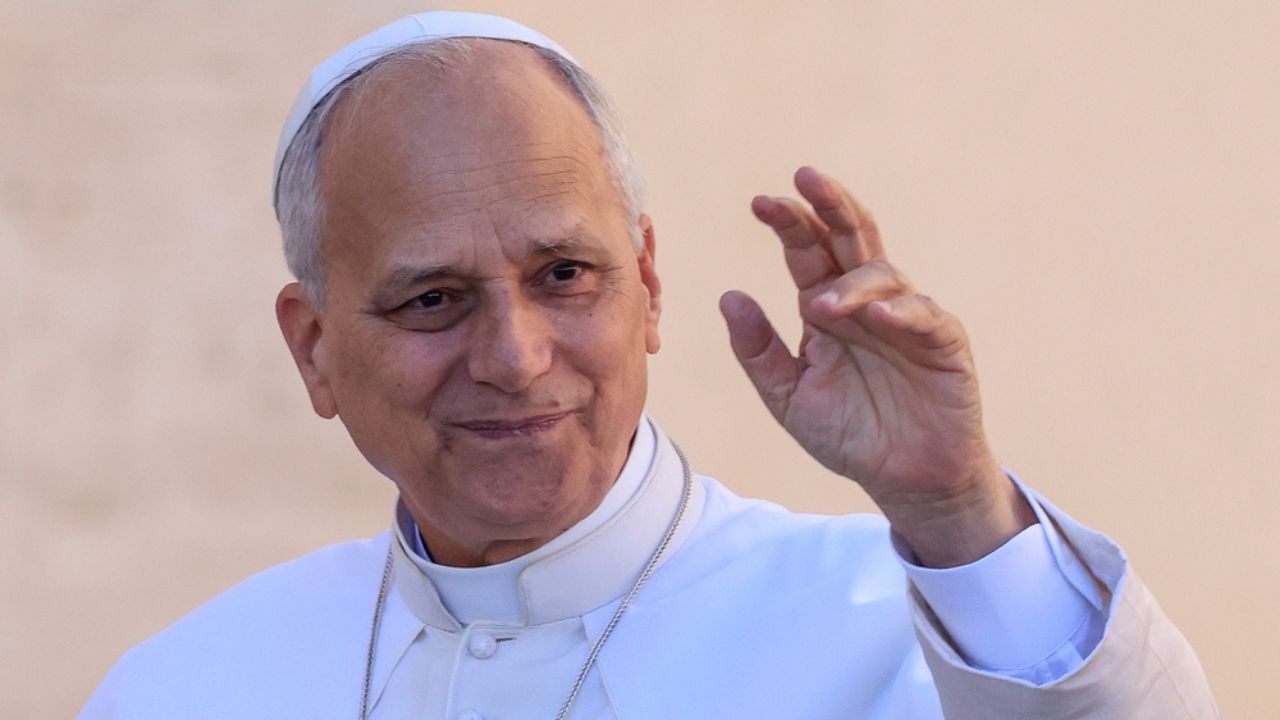
Image: Riccardo De Luca – Update / Shutterstock.com