Even in her final months, Dolly Parton had one more beautiful gift to give the world.
The beloved country music legend, who died in August aged 80, has made a poignant posthumous appearance on U2’s new album, Carnaval De Luz, in a tender duet with frontman Bono that has left fans reaching for the tissues.
The song, Torn, was recorded in Nashville in June, less than three months before Parton’s death from cancer.
And while the world knew Dolly as a woman of extraordinary talent, generosity and determination, the story behind her final recording reveals just how remarkable she remained until the very end.
According to Bono, the singer was already seriously ill when she agreed to record the song.
“When she got ill, she got out of her bed to sing this song,” he told Rolling Stone.
“And you can hear that. And I can’t even listen to it now.”
The collaboration came about in a rather charming way.
Bono had sent Dolly a set of bagpipes as a birthday present and subsequently played her some Irish folk-inspired songs he had been working on.
But Dolly, never one to mince words, wasn’t entirely convinced.
“That’s a little too Irish for me,” she reportedly told him.
Instead, she offered a song of her own, called Torn, inviting Bono to see what he could make of it.
Originally written about a woman struggling to choose between two men, the song was transformed by Bono and Snow Patrol’s Johnny McDaid into something with a much broader emotional reach.
The finished version tells the story of a family divided by political differences, exploring the pain of watching loved ones drift apart despite the bonds that unite them.
It’s a theme that feels particularly poignant in today’s increasingly divided world.
And at the heart of it all is Dolly’s unmistakable voice, gentle and vulnerable one moment, soaring with emotion the next.
The song closes U2’s 16th studio album, released on November 13, and represents the final vocal performance of Parton’s extraordinary seven-decade career.
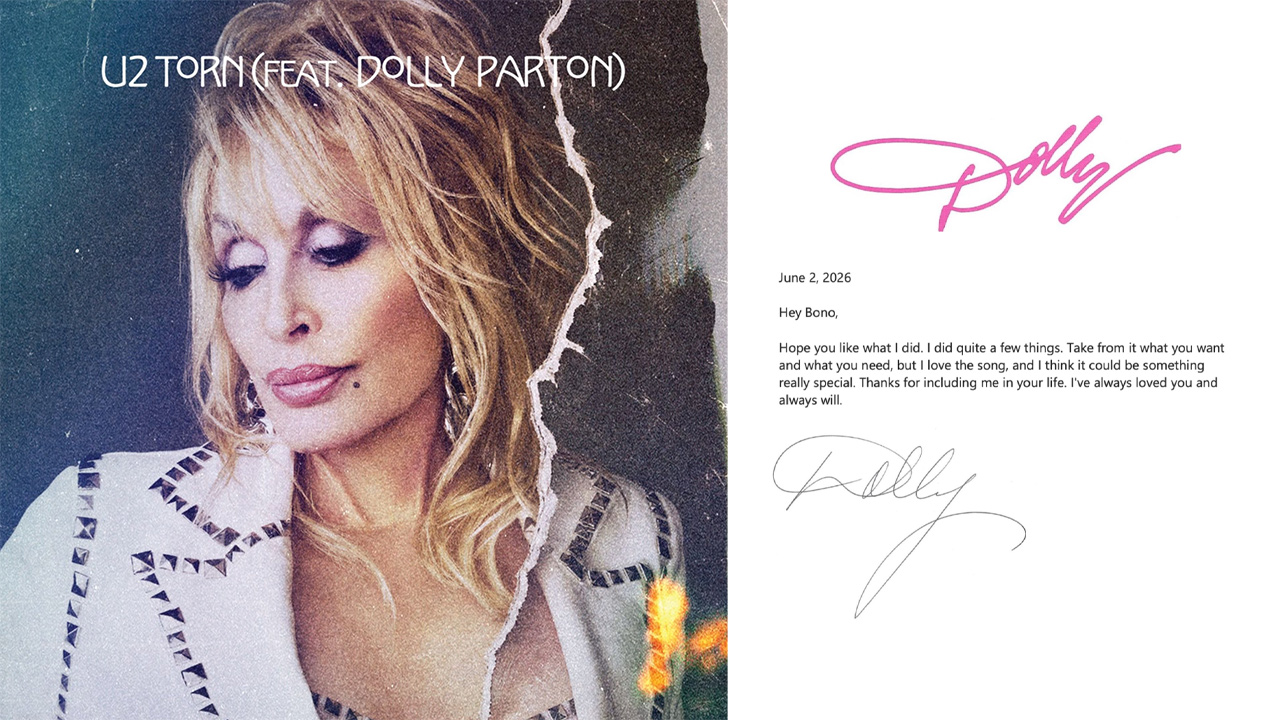
But perhaps the most touching part of the story is a handwritten message Dolly sent to Bono on June 2, after recording her contribution.
“Hope you like what I did. I did quite a few things. Take from it what you want and what you need, but I love the song, and I think it could be something really special,” she wrote.
Then came a beautiful farewell, although neither artist could have known just how final those words would become.
“Thanks for including me in your life. I’ve always loved you and always will. Dolly”
For Bono, the loss of his friend and collaborator was devastating.
“We knew she was ill, but we had no idea that it’d be her last vocal,” he told the BBC.
“That was a real shock. A shock for us because we’d been working with her, but a shock for anyone who loves music.”
The U2 frontman also recalled being with R.E.M. singer Michael Stipe when news of Dolly’s death broke.
Stipe was so overwhelmed that he collapsed in tears.
“He actually fell down and started sobbing. He just could not believe it,” Bono said.
It was a reaction shared by millions around the world who had grown up with Dolly’s music, admired her kindness and marvelled at her ability to bring people together.
Bono reflected on that rare gift, describing Dolly as someone who seemed capable of transcending almost every social and political divide.
“Probably the only thing that people can agree on in the entire world right now is Dolly Parton,” he said.
“Whether you’re gay or straight or conservative or liberal, she was ready for you to fly at her show.”
Despite her declining health, Dolly was reportedly delighted with the finished recording.
Album producer Jacknife Lee revealed that she had listened to and approved the final mix, and was enormously proud of her performance.
“Dolly loved it,” he said. “She was so proud of her vocal and the recording.”
Alongside the album version, two additional interpretations of Torn have been released, including a country arrangement by Dolly’s longtime producer and collaborator Kent Wells, featuring the mournful sound of pedal steel guitar.
For fans who have spent decades loving classics such as Jolene, Coat of Many Colors and I Will Always Love You, hearing Dolly sing something new is both a joy and a heartbreak.
Here was a woman who rose from a childhood of poverty in Tennessee to become one of the most celebrated entertainers in history, yet never lost the warmth, humour and humanity that made her so universally adored.
Through her music, philanthropy and extraordinary Imagination Library literacy program, she touched countless lives far beyond the concert stage.
And even as her own life was drawing to a close, she was still creating, still collaborating and still finding ways to reach people’s hearts.
There is something wonderfully fitting about the fact that her final recording wasn’t a grand farewell or a celebration of her own remarkable achievements.
Instead, it was a song about love, family and the pain of division, recorded with a friend who adored her.
Dolly Parton may have sung her final note, but thanks to this beautiful collaboration, her voice has found one more way to remind us of what matters most.
And what a lovely final gift it is.