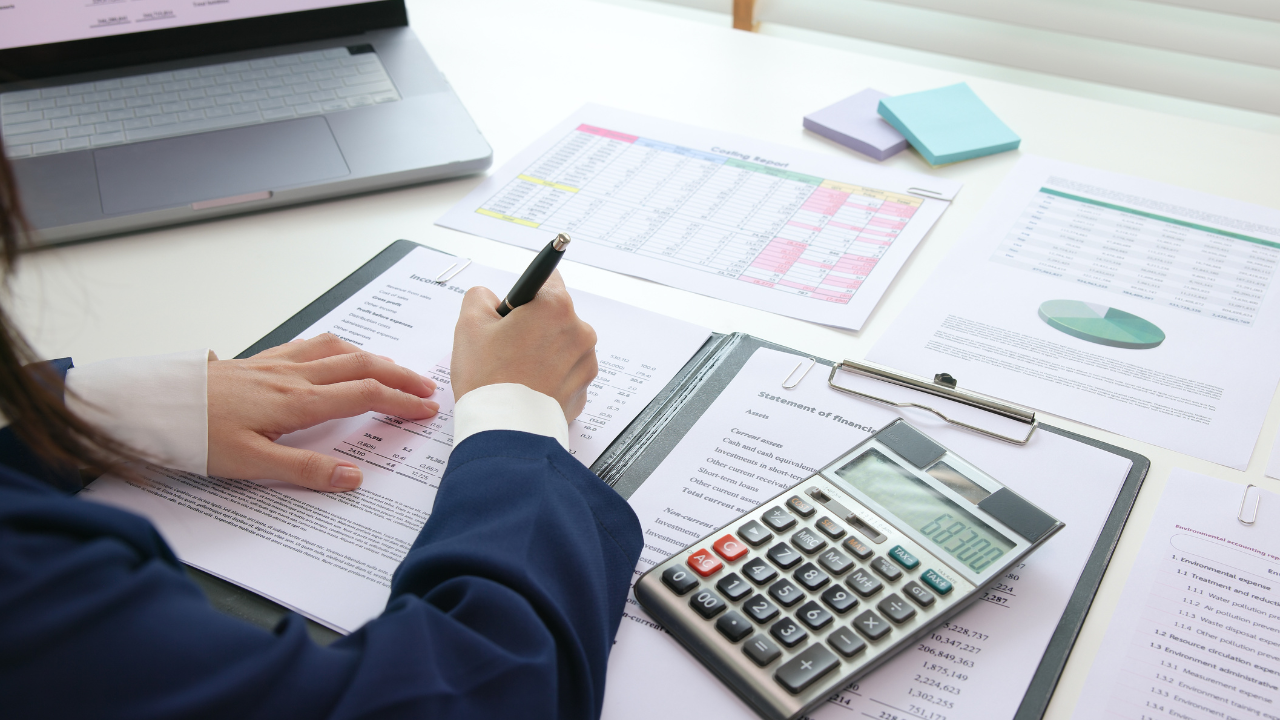
Millions of Australian renters working from home could be eligible to claim thousands of dollars in tax deductions following a landmark ruling in favour of an ABC presenter.
Ned Hall, a sports radio host and producer with the national broadcaster, worked from a spare bedroom inside his inner-eastern Melbourne home during the 2020/21 financial year, at the height of the Covid pandemic.
At the time, Victoria was under some of the strictest public health rules in the world, with shut borders, repeated lockdowns and residents instructed to work from home wherever possible.
Hall sought to claim rental deductions after converting his second bedroom into an office. He also claimed car expenses for trips to the ABC’s Southbank studios when required.
However, the Australian Taxation Office (ATO) rejected both claims, prompting Mr Hall to lodge an objection. That was dismissed by the Commissioner in September 2022.
He then escalated the matter to the Administrative Appeals Tribunal – now the Administrative Review Tribunal (ART) – the same month.
After nearly three years, ART ruled in Mr Hall’s favour, awarding him $5,878.87 for occupation expenses relating to the bedroom home office and $1,148 in vehicle-related costs.
The ATO is now challenging the decision in the Federal Court, with a ruling due in coming weeks.
It has urged caution among taxpayers considering similar deductions, warning anyone who receives a rental deduction may face higher tax if the decision is overturned.
Experts say the case could have significant implications for renters who work from home if the Federal Court upholds the ruling.
“It’s a straight-out matter of getting a deduction for basically part of your home,” University of New South Wales Associate Professor, Dale Boccabella, told the Herald Sun.
“But you’ve really got to set aside the place, and no one else in the family really uses it in a substantial way.”
The tax office fears an increase in similar claims could create a substantial hit to the federal budget.
According to the 2021 Census, around three million Australian households – about 31 per cent – are renters.
The case comes as Victoria prepares to introduce a two-day-a-week legal right to work from home for eligible workers under a proposal by Premier Jacinta Allan.
The plan, covering both public and private sectors, would apply to anyone who can “reasonably” perform their role remotely.
“Working from home works for families and it’s good for the economy,” she said in August.
“Day after day, unions are being contacted by workers who have been denied reasonable requests to work from home, and across the country, Liberals are drawing up plans to abolish work-from-home and force workers back to the office and back to the past.
“Enshrining work from home in law means this life-changing practice isn’t something you or your loved ones have to politely ask for. It’s a right you’ll be entitled to.”
In terms of the ruling – ART Deputy President Clare Thompson SC cited several reasons for ruling in Hall’s favour.
She determined his work circumstances were “beyond his control” and that he had “no choice” due to Covid restrictions, which first took hold in Victoria in January 2020.
“Throughout the 2021 year there were restrictions imposed on Mr Hall which prevented him attending his usual workplace at the Southbank Studios,” the judgement stated.
“These restrictions were variously imposed by the Victorian Government, and by Mr Hall’s employer, the ABC.
“The only period in the 2021 year where there were no Victorian Government imposed restrictions on Mr Hall working from the Southbank Studios was the period from 26 March 2021 to 27 May 2021.”
She found his digital-based role was “undertaken exclusively from the spare or second bedroom of the apartment”.
“As to his choice of where in the apartment he worked, I do not accept this was a matter of mere convenience for him to work in the spare bedroom; rather it was the only feasible place available to him to earn the majority of his assessable income in the 2021 income year,” she said.
“Whilst he could theoretically have worked in another part of his apartment, that was not a realistic proposition given the combination of his work needs, his wife’s work needs, and of course the vagaries of the Melbourne weather that would have made any possibility of setting up his workplace on the outdoor balcony unrealistic.
“In his evidence Mr Hall was clear that he only ever worked in the spare bedroom and that it was the only space appropriate for him to work in.”
The ATO argued the home-based arrangements were temporary. While Ms Thompson agreed they would have eventually passed, she found Mr Hall spent the entire financial year working from home due to ongoing extensions of restrictions.
“This decision has no impact on what can be claimed by Mr Hall in any later year of income, which would need to be assessed based on the facts which prevailed at that later time,” she said.
“For the reasons above, I allow the deduction for rent for Mr Hall’s home office for $5,878.87.”
Images: Shutterstock