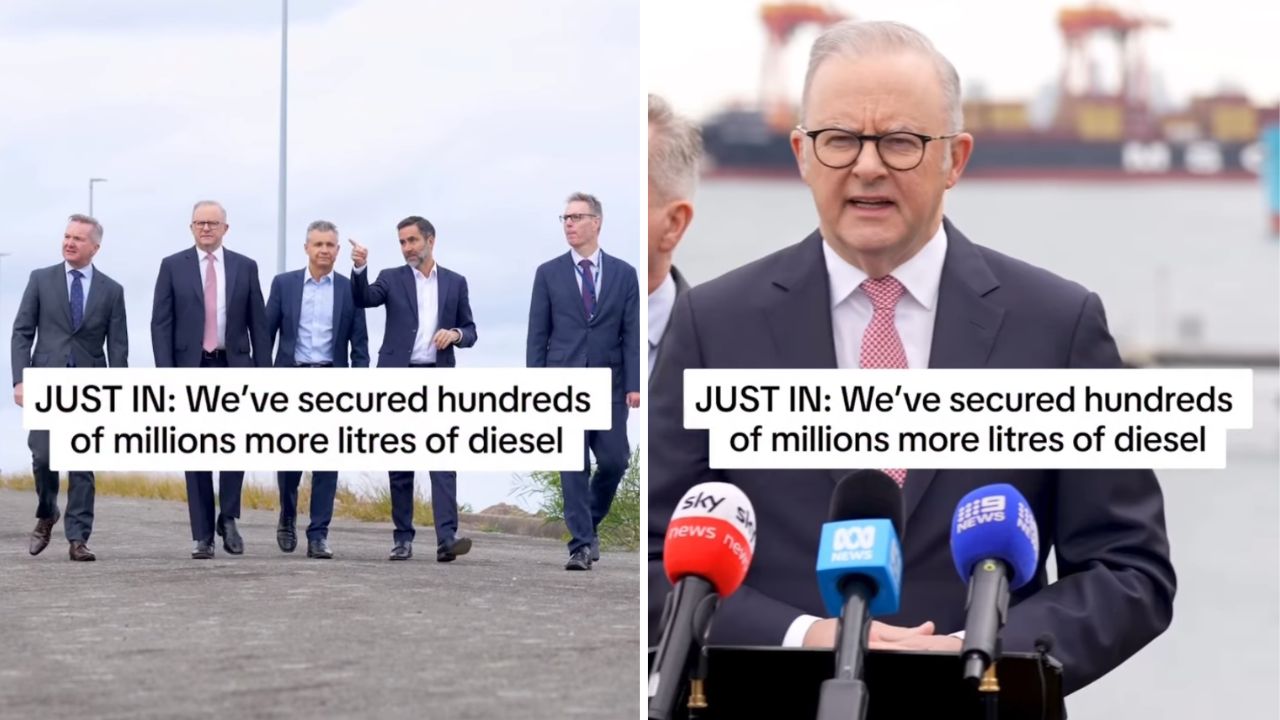
An extra 200 million litres of diesel will be sent to Australia in the coming months, as the federal government moves to strengthen fuel supply amid global uncertainty.
Prime Minister Anthony Albanese said the shipments have been secured through the government’s export finance scheme, with cargoes coming from South Korea, Brunei and Malaysia.
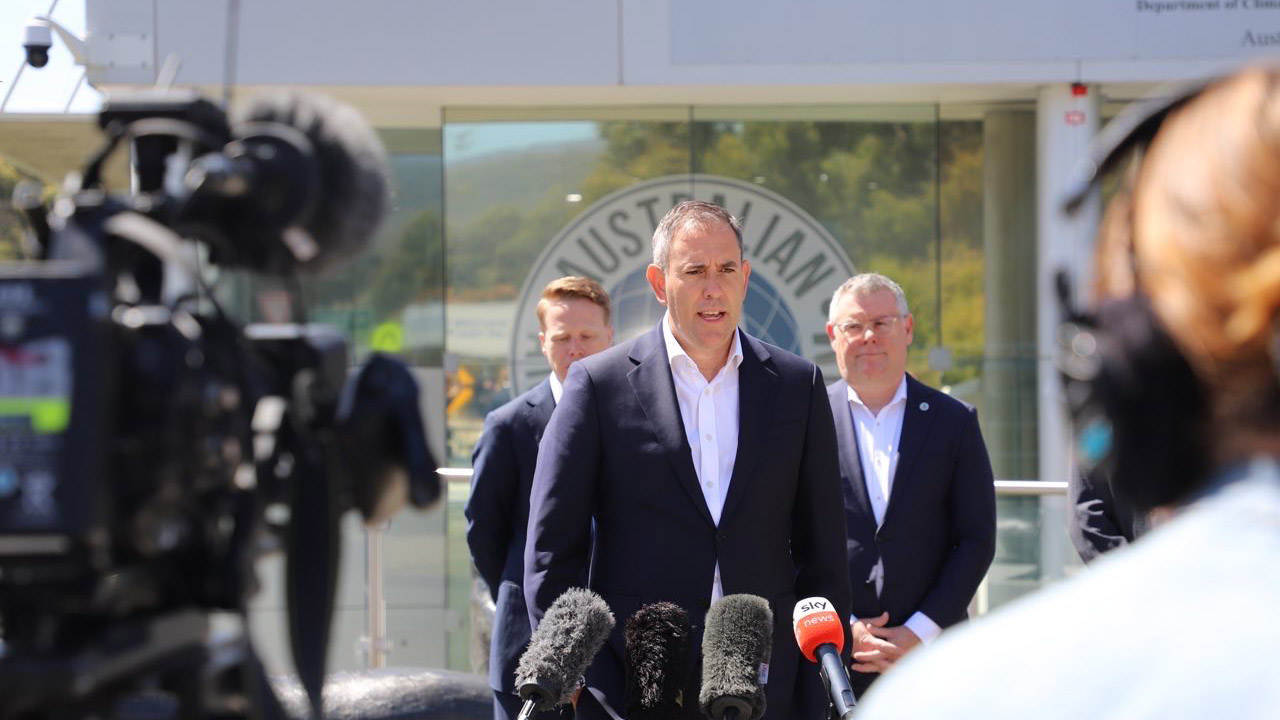
Energy Minister Chris Bowen said the additional supply would help provide a “buffer” in the system.
“A total of just over 200 million litres going to Brisbane, to Geelong, to here in Sydney, and importantly, to Kwinana in Perth,” Bowen said.
He said the shipments were expected to arrive between the last week of May and the first week of June, secured through contracts with Viva Energy and BP Australia via Export Finance Australia.
Albanese said the decision came during a period of global instability affecting energy markets.
“We’ve been very clear about the consequences of this volatility. What we can do here in Australia is to do everything we can to secure supply,” he said.
“That’s precisely what we are doing. We’re also diplomatically have continued to call for a de-escalation. We’ve continued to work with partners as well as participate in discussions.”
He pointed to recent talks with Indonesian President Prabowo Subianto, where both leaders expressed concern about instability in the Middle East and its impact on the Indo-Pacific region.
“I have other calls scheduled over coming days, including today. This is an extremely volatile period for the entire world,” he said.
“There is no getting away from that, and Australia is not immune from the consequences, but what we are doing is working hard each and every day in the interests of Australians.”
The announcement comes as other state governments also move to strengthen long-term fuel security.
Queensland Premier David Crisafulli has confirmed a $25 million investment in Ampol’s Lytton Refinery in Brisbane to support production of renewable diesel.
The project is expected to begin construction by mid-2027, with an initial production of around 20 million litres per year from 2028.
Longer term, the refinery could produce up to 750 million litres of renewable diesel and sustainable aviation fuel annually by the early 2030s, supporting both fuel security and cleaner energy targets.
Image: Instagram