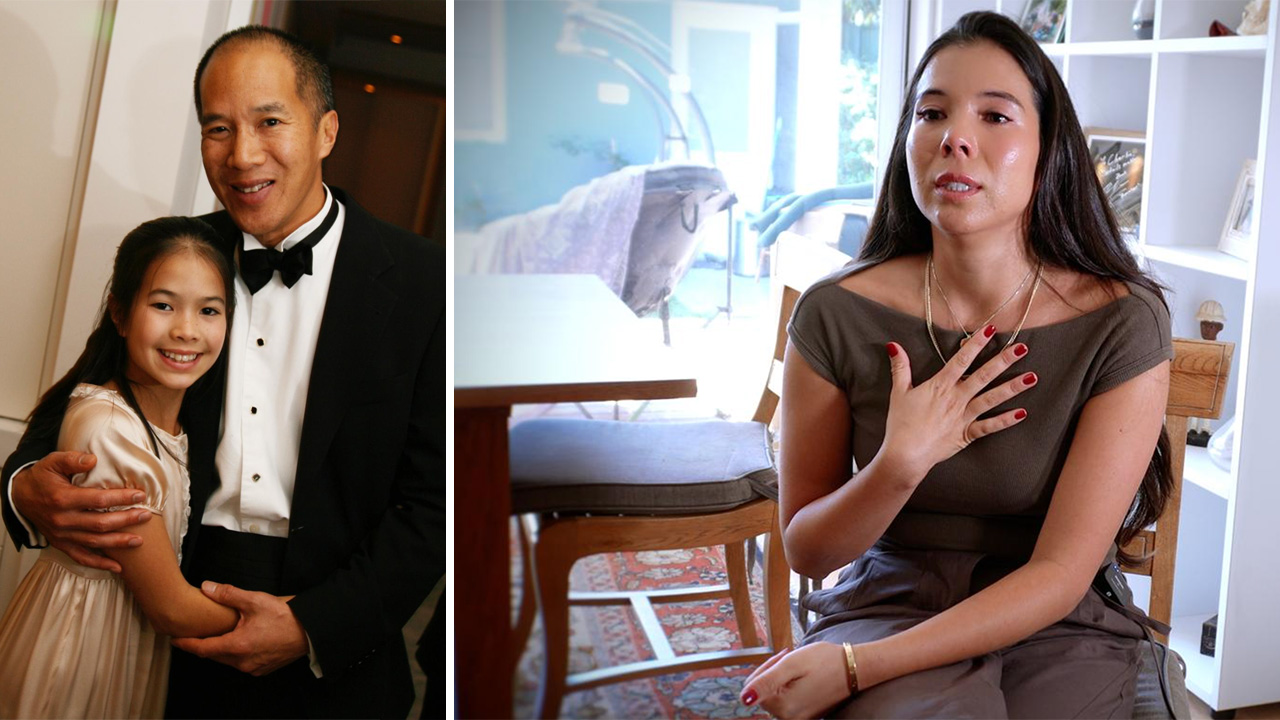
The daughters of controversial neurosurgeon Charlie Teo have launched an emotional defence of their father, condemning what they describe as a “witch hunt” against the high-profile brain surgeon and warning that vulnerable Australians are being denied life-saving hope.
In a rare and deeply personal interview, Nikki and Alex Teo – two of Professor Teo’s four daughters – spoke publicly for the first time about the mounting scrutiny surrounding their father, who faces the possibility of a permanent ban on performing surgery in Australia.
Their message was blunt: while critics debate paperwork, regulation and professional boundaries, patients with terminal diagnoses are running out of time.
“It just frustrates me that we are sitting here having to defend him,” Nikki said. “Forget the hype and just pay attention to the people that are suffering now. It’s time to wake up a little bit and realise there’s something so much bigger at stake.”
Professor Teo, once celebrated as a miracle worker for taking on some of the world’s most complex and inoperable brain tumours, has become one of Australian medicine’s most polarising figures. Supporters hail him as a pioneer willing to attempt what others will not; detractors argue his methods have long pushed ethical and professional boundaries.
But his daughters say the public narrative has become dangerously detached from the patients at the heart of the debate.
“People are trying to see my dad, not being able to, trying to see other doctors, being turned away, and everyone knows it, but no one wants to speak about it,” Nikki said.
“People will die. People have been dying. Patients are dying now.”
For the Teo family, medicine was never simply their father’s profession; it was woven into family life.
The sisters described a childhood spent accompanying their father on hospital rounds, attending neurosurgical conferences across the world, and joining humanitarian missions through South America, Southeast Asia and Africa, where they helped distribute toys and aid to sick children.
Patients, they said, were never kept at arm’s length.
“They became family,” Nikki said. “We’d spend time at their homes, travel with them, have lunch with them. Very rarely did it feel like they were just patients.”
That closeness also meant confronting grief from an early age.
The daughters spoke of attending funerals, saying goodbye to families they had grown close to, and witnessing firsthand the brutal toll of brain cancer.
“It gave us a completely unique perspective on life,” Alex said. “You can’t understand that suffering unless you’ve lived alongside it.”
The sisters also pushed back strongly on claims that their father is motivated by money or ego, criticisms frequently levelled at the outspoken surgeon.
“The money-hungry thing is laughable,” Nikki said, describing her father as a man who has “always flown economy”, drove a Suzuki Vitara for decades, and cared little for status or appearance.
“He wears the same clothes every day and doesn’t even really drive a car,” she said. “That narrative is just nonsense.”
Alex acknowledged her father’s bluntness and refusal to conform has often made him difficult for colleagues and administrators to handle.
“He has not a diplomatic bone in his body,” she said. “He says exactly what he thinks, and if that offends people or doesn’t toe the party line, he couldn’t care less, because in his mind, the only thing that matters is what’s best for the patient.”
That fiercely independent streak, his daughters believe, lies at the heart of the conflict now engulfing him.
They argue Professor Teo’s unconventional style – from wearing shorts and singlets through hospital corridors to maintaining deeply personal friendships with patients – jars with a bureaucratic health system built on process, hierarchy and strict professional boundaries.
“He’s never separated who he is from his work,” Nikki said. “He’s just a friend who happens to possess a skill set people desperately need.”
Alex warned the broader implications stretch beyond her father’s case, saying doctors everywhere are becoming increasingly fearful of recommending treatments outside rigid guidelines, even when they believe those options may help patients.
“That’s what concerns me most,” she said. “This is bigger than dad. If doctors are scared to recommend what they genuinely believe is best because they fear regulators or peer backlash, that’s a very grim road to go down.”
As debate over Professor Teo’s future continues, public support remains strong. Thousands of Australians have signed petitions calling for restrictions on the surgeon to be lifted.
For his daughters, however, the issue is not legacy or reputation. It is about the desperate patients they say have nowhere else to turn.
“He’s had an extraordinary career,” Nikki said. “But he’ll be okay. It’s the patients who will suffer – and that’s the heartbreaking part.”
Images: Courtesy of the Teo Family