The old saying ‘You are what you eat’ is proving more and more true. Scientific research increasingly supports the notion that what we ingest has value far beyond satisfying hunger.
The evidence is mounting that certain foods affect our bodies and directly influence our health.
A number of foods are so packed with vitamins, antioxidants and other beneficial substances that they have been dubbed superfoods.
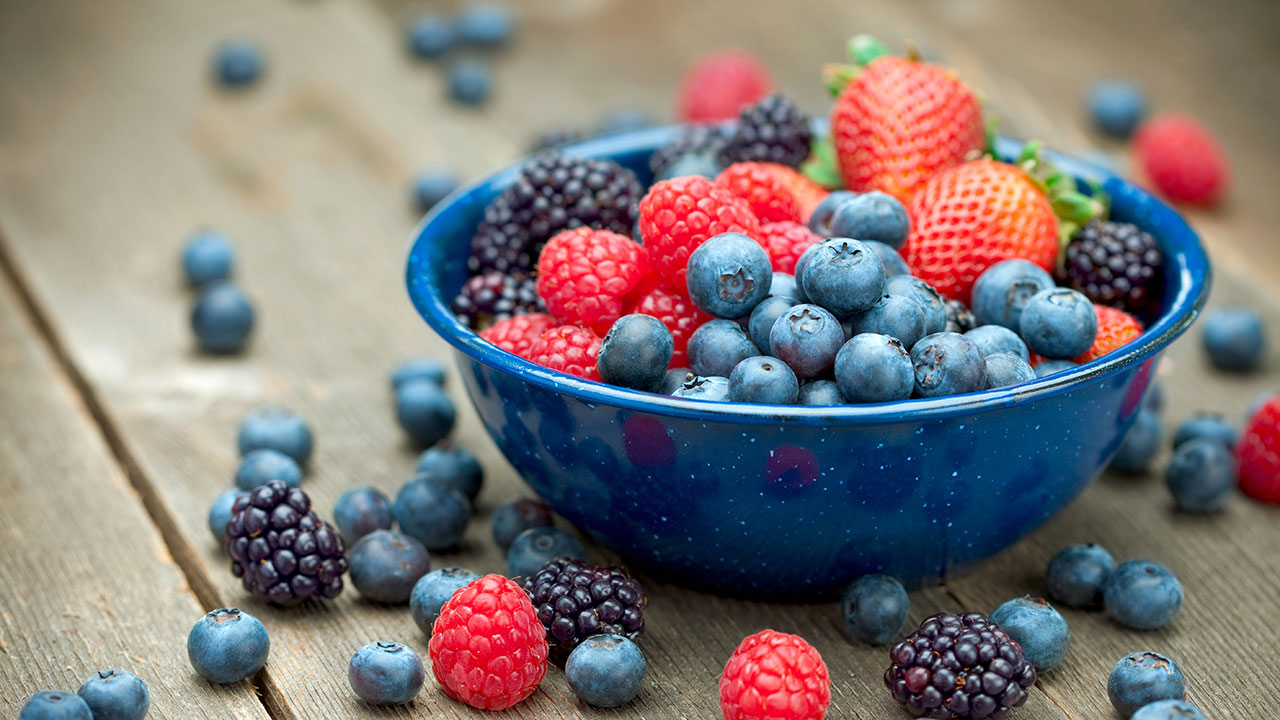
The powerful antioxidant anthocyanin, a red pigment, is found in all red, purple and blue fruit. This is why black grapes,blueberries, raspberries and strawberries are among the most antioxidant-rich superfoods.
Blueberries actually contain so much anthocyanin that it turns the berries a deep blue.
Antioxidants block the formation of the cell-damaging free radicals that accelerate ageing, harm arteries and induce cancerous cell changes.
And some nutritionists go so far as to say that superfoods can even help you live longer.
Not only do black grapes, blueberries, raspberries and strawberries pack a powerful nutritional punch, they are also easy to grow at home.
June is a good month to get strawberry runners, blueberry plants, raspberry canes and grapevines into the ground for a spring and summer harvest.
There are varieties available for growing in pots, which are ideal for compact gardens or small households that only need a few plants.
Blueberries
Often referred to as brain or youth berries, blueberries are among the top superfoods. Studies show they could even slow cognitive decline.
They contain very few kilojoules, so they’re great for people watching their weight, and they are also said to help replenish collagen in the skin.
Native to America, blueberries were picked in the wild for centuries by Native Americans, who ate them fresh, then dried them for winter use.
Blueberries are related to azaleas and rhododendrons and like similar growing conditions.
The light aroma of their delicate bell-shaped, pinkish-white flowers attracts bees for pollination.
POSITION in a spot that receives at least half to a full day of sun to ensure the fruit ripens well. They can also be grown in pots.
SOIL needs to be rich in organic matter, so dig in some well-rotted compost before planting. Blueberries like an acidic soilwith a pH of 4.5 to 5.5. This can easily be checked with a pH testing kit and adding a product such as Yates Acitone helps increase soil acidity.
WATER regularly, as shallow-rooted blueberries don’t like to dry out. To prevent fungal disease and the fruit rotting, water at ground level.
FEED with a plant food formulated for azaleas or rhododendrons.
MULCH with lucerne hay or straw to keep the soil moist.
PRUNE out weak and diseased wood to keep the centre of the bush open, then remove flowers in the first year to encourage growth.
Raspberries
A freshly picked raspberry from a homegrown bush tastes so much better than most shop-bought fruit.
Raspberries are easy to grow and are best planted in a bed of their own. Unlike other bramble fruit, they pull free of the core when picked.
If you have enough space in your backyard, plant raspberries in rows that run from north to south, which will ensure that both sides of the plant get sunlight.
POSITION in a sunny spot protected from strong winds.
Raspberries prefer cool climates, but certain varieties, such as ‘Heritage’, will grow in warmer areas, provided they are planted in a position that is protected from the hot afternoon sun.
SOIL must be well drained and raised garden beds are ideal.
WATER the plants regularly, especially when the fruit is forming.
FEED with compost or old manure in spring and summer.
MULCH around the roots with lucerne hay to keep weeds at bay.
PRUNE in winter to encourage an abundance of fruit.
Remove all the canes that held fruit during the previous season. The new canes produced are left to crop in the following season and can be tied
to a wire or trellis support.
Select only strong, healthy canes and remove any weak, spindly ones.
It is not difficult to tell which canes to prune because you simply remove the canes that were tied the previous season.
Grapes
We’ve all been told that a glass or two of red wine a day can be good for our health. That’s because black grapes, which are used to make red
wine, are the highest in antioxidants and most of the compounds are found in the skin.
You still get the same health benefits from non-alcoholic red wine.
Research has shown that if you have a stroke you could survive with more brain cells intact, if black grapes are a regular part of your diet.
When planting grapes, the vine needs to be supported on a pergola, trellis or along a post and wire frame.
POSITION in a sunny spot. Grapes will tolerate a wide range of climatic conditions but prefer climates with cold winters and hot, dry summers.
SOIL needs to be well drained, and dig in organic matter like compost or manure before planting.
WATER newly planted vines regularly.
Grapevines are deep rooted, so once established, they will look after themselves. In very dry areas, extra water may be needed during the summer months.
FEED vines in sandy soils with a complete plant food in spring. They don’t need much fertiliser, as the best wine grapes actually grow in poor soils. In rich soils, if growth is vigorous and fruit is produced, don’t feed grapevines.
MULCH with lucerne hay or straw, as they dislike competition from weeds.
PRUNE back to the main branches in winter, leaving two bud stubs at regular intervals to produce next year’s crop.
Strawberries
Long known to be healthy, European researchers have found that eating strawberries can reduce harm caused by alcohol to the stomach membrane. So now there’s a scientific reason to have strawberries with champagne!
Plant strawberries in rows in the garden, in pots or hanging baskets, or use as a groundcover in flowerbeds.
POSITION strawberries in a sunny spot.
SOIL must be well drained with manure, well-rotted compost or blood and bone added before planting out.
In pots, use an organic potting mix with a controlled-release fertiliser such as Miracle Gro Organic Choice Vegetable & Herb MIx.
WATER strawberry plants regularly, especially when the fruit is ripening.
FEED when the fruit starts forming with Yates Dynamic Lifter Plus Fruit Food.
MULCH with straw or sugar cane so the fruit doesn’t touch the ground. This will prevent rot, keep the fruit clean, retain moisture in the soil and prevent weeds.
Written by Cheryl Maddocks. Republished with permission of Handyman Australia.