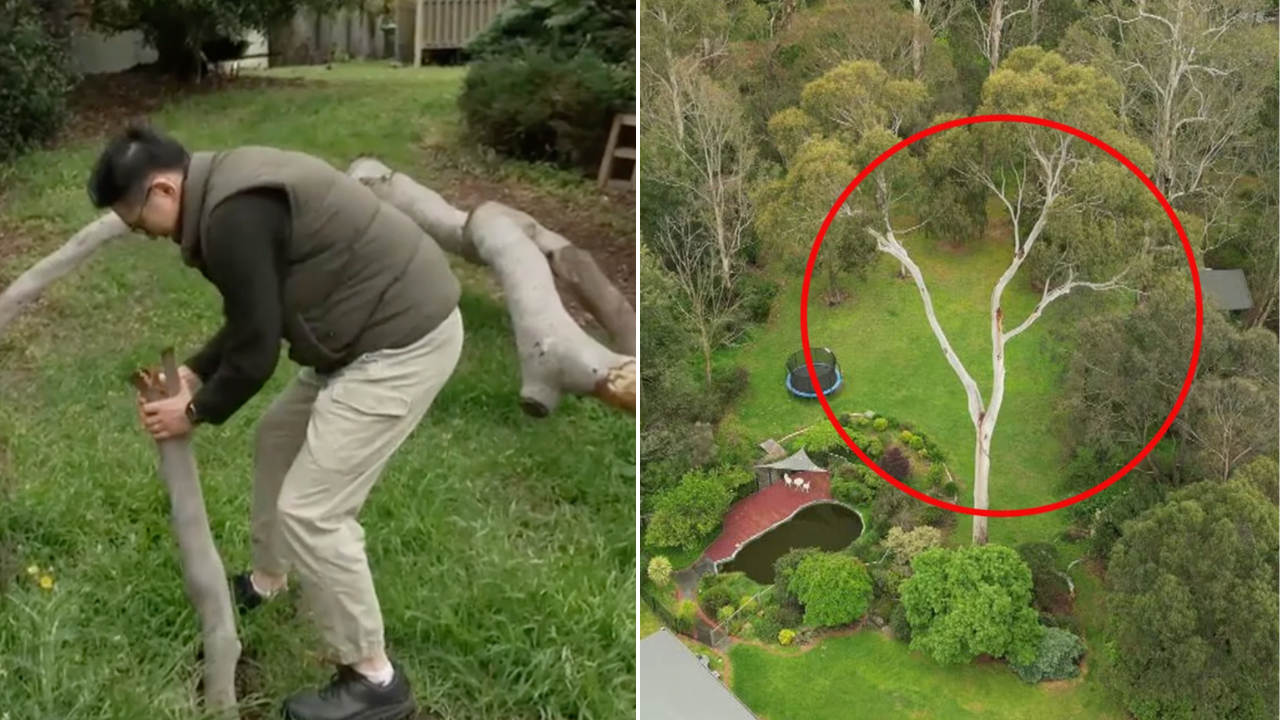
A Melbourne homeowner says he’s been left frustrated and thousands of dollars out of pocket after being forced to pay multiple council fees to remove a dangerous tree from his property.
John, who lives in Nillumbik Shire in the city’s northeast, said a 30-metre-tall gum tree in his backyard has become a serious safety concern, with large branches frequently falling to the ground.
The father of two said he worries for the safety of his young children, who often play in the garden. Seeking to remove the tree, John applied to the Nillumbik Shire Council for permission, but was told there were several steps – and several fees – involved.
The first requirement was obtaining a “tree offset credit,” a fee of $5,000. The payment, used by some councils when a tree is removed rather than replaced, is intended to help maintain or increase the region’s tree canopy.
The City of Sydney and City of Melbourne both operate similar offset or replacement tree programs. While John said he understands the reasoning behind the initiative, he believes there should be more leniency when a tree clearly poses a safety risk.
“That was a surprise to us,” he told A Current Affair.
He added that the fee “doesn’t even cover the cost of cutting down the tree itself.”
The removal itself was quoted at around $2,700, with an additional biodiversity assessment report bringing the total cost to nearly $10,000.
“It is a lot of money; we could have used it to do maintenance on the house,” John said.
“I felt, for me, it’s a dangerous tree. I have to pay that much money to make my family safe.”
Nillumbik Shire Council confirmed to A Current Affair that it is reviewing a planning application to remove a tree from John’s property, noting that removing native vegetation can affect local habitat and biodiversity.
“Native vegetation offsets are compensatory measures that aim to balance the ecological impact of vegetation removal by protecting native vegetation with similar habitat and biodiversity value elsewhere in the local area,” a spokesperson said.
“As part of the native vegetation offset program, the applicant needs to provide a Native Vegetation Removal Report to assess the biodiversity value of the tree and its offset value. Only then will we know the cost to the property owner.”
Images: ACA