Australian drivers are being urged to slow down and stay alert when approaching 40km/h areas as a trial of new three-dimensional road markings expands to more locations.
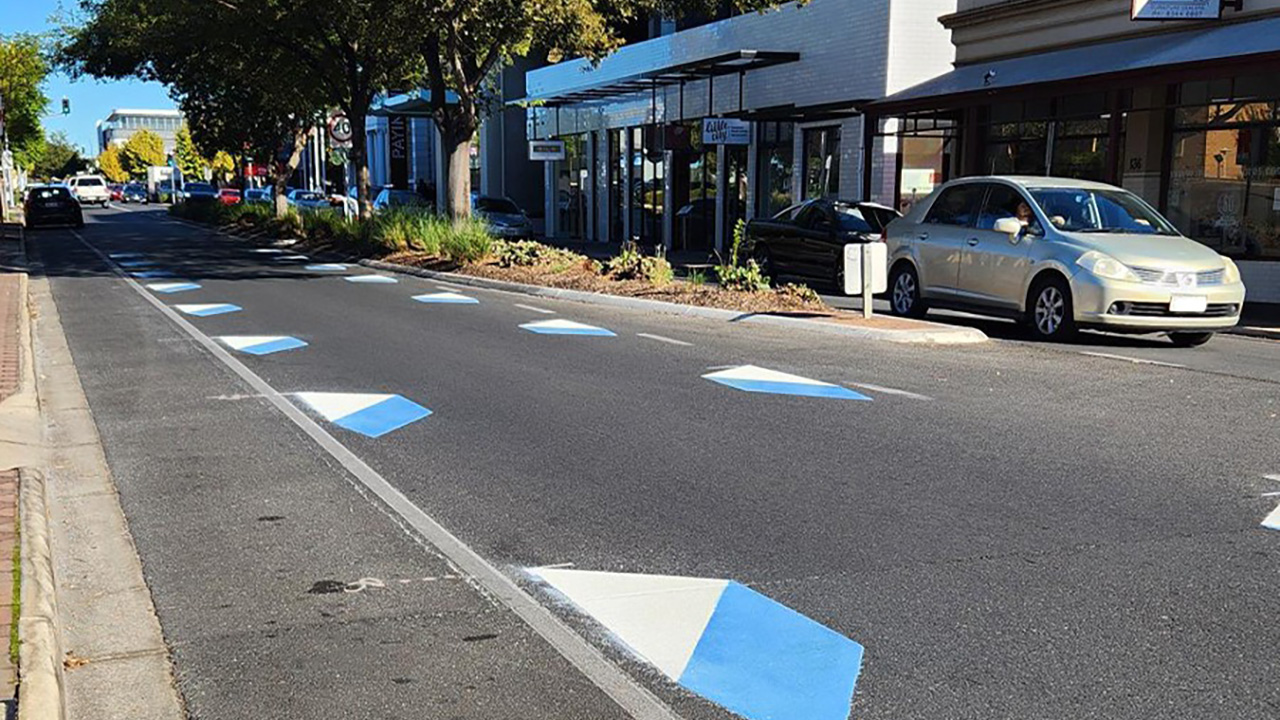
The markings, nicknamed “dragon’s teeth”, are blue and white triangles designed to look 3D and signal a change in road conditions, including a lower speed limit. They are being trialled in Adelaide as part of a University of Adelaide Automotive Safety Research study in partnership with the Department of Transport.
The Royal Automobile Association of South Australia recently reminded motorists about the trial on social media, explaining the thermoplastic markings are intended “to calm traffic as motorists transition into a 40km/h zone with higher pedestrian activity”.
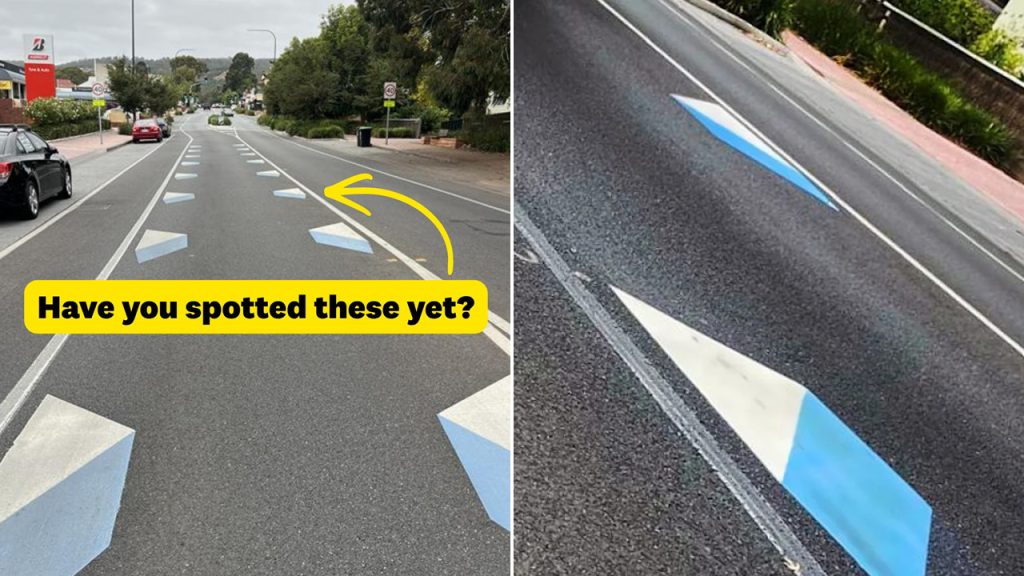
More of the markings have been installed on Magill Rd, Seaview Rd, Prospect Rd and Beach Rd at Christies Beach, and similar treatments are also being used in parts of New South Wales and Victoria.
University of Adelaide road safety scientist Mario Mongiardini said the 3D effect may “attract more attention” from drivers and encourage them to slow down as they enter lower-speed areas. He has also emphasised the treatment “is not meant to be installed everywhere”, but used in places where pedestrian risk is higher. “The idea is to use them only in specific situations, like on a straight road where a speed limit changes, but drivers don’t realise that the environment ahead is changing,” he explained, describing it as a “heads up”. If the trial is successful, researchers believe the markings could be rolled out more widely because they can be implemented “cheaply and quickly”.
Not everyone is convinced. Some residents have described the markings as “dangerous” and “distracting”. One person said, “I find they distract my eyes and make me think I’m about to hit something,” while another asked, “Is that so that your eyes are looking at the ground instead of where you’re heading in the vehicle?” A third warned, “encountering these on a wet, rainy night is definitely going to freak some drivers out.”
Researchers are due to collect and analyse results later this year, with hopes the markings will reduce speeds, even slightly. “Speed is the key factor in 99 per cent of crashes,” Dr Chris Stokes said. “The faster you hit an object, the harder the impact is going to be.”
Mongiardini said even small changes would matter. “Even a reduction by four or five km is quite a lot,” he said. “It means that after the treatment has been installed, drivers start to respect the speed limit and be more aware of the environment. We don’t expect dramatic changes in speed.” If the trial proves “effective at mitigating travel speed”, the markings could soon appear in more high-pedestrian areas around the country.