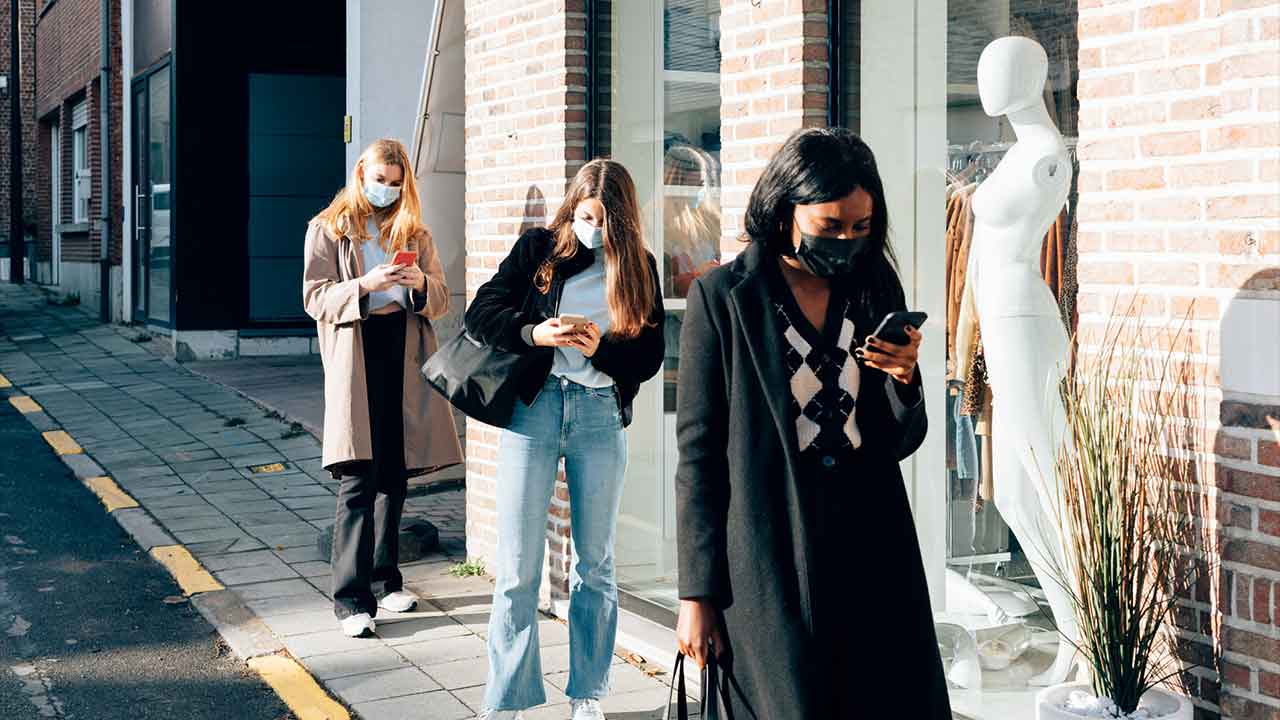
Mask mandates in most indoor settings have been dropped in New South Wales, Victoria and the ACT, with Queensland to follow later this week.
Without a mandate, mask use tends to drop, so we can expect only a minority of people to be masked in public indoor spaces.
With thousands of cases a day and just over half (57%) of Australians having received a third COVID vaccine dose and children still under-vaccinated, we may see a surge in infections.
While masks are a small inconvenience, they remain vital in preventing SARS-CoV-2, because the virus spreads through the air we breathe.
Some people will continue to wear masks to stay safe and achieve a more normal life through the pandemic. Here are five reasons to keep wearing yours.
1. Masks reduce your chance of getting COVID
Many studies have shown masks protect against COVID. While N95 respirators offer the greatest protection, even cloth masks are beneficial. N95s respirators lower the odds of testing positive to COVID by 83%, compared with 66% for surgical masks and 56% for cloth masks.
The protection when everyone wears a mask is much greater, because it reduces the likelihood of well people inhaling the virus and prevents infected people from exhaling the virus into the air. If everyone wears a mask, the viral load in the air is much lower.
When we lose the protection of universal masking, it’s a good idea to wear a high protection N95 or P2 respirator.
2. You might not know you have COVID
Transmission of the virus without symptoms is a major driver of spread, and we cannot know who around us is infected.
Infected people may be asymptomatic or may not know they’re infected. This is especially so for Omicron.
Overall, about one in four infections are asymnptomatic. But even people with symptomatic infection are contagious before the symptoms start.
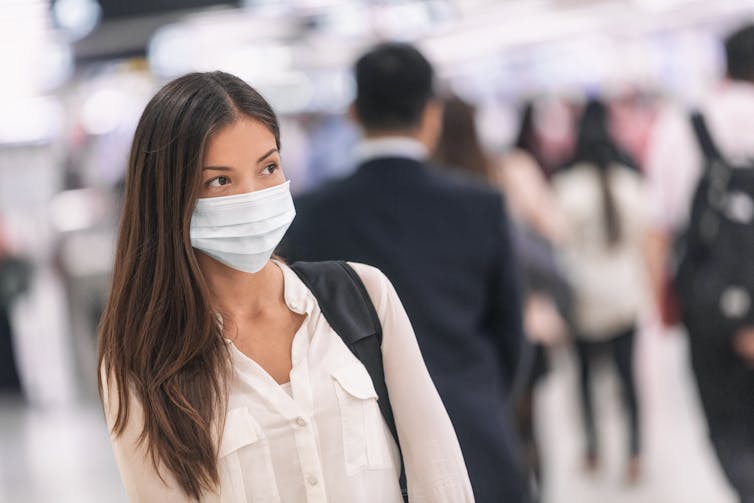
3. Wearing a mask protects others, including those at risk of severe COVID
Wearing a mask protects others, including those at greatest risk of severe COVID: people with disability, chronic illnesses and suppressed immune systems.
COVID disproportionately affects migrants and people from lower socioeconomic groups who are more likely to work in customer-service roles. If you wear a mask, you’re protecting workers, commuters and others you interact with.
Rates of vaccination also lag among Aboriginal and Torres Strait Islander people, leaving them more vulnerable to COVID in the absence of masks.
Masks also protect children who are vulnerable to COVID, with only half of five to 11 year olds partially vaccinated and under-fives not yet eligible for vaccination.
Children who wear masks can also protect their peers. In the United States, the risk of outbreaks was nearly four times higher in schools without mask mandates compared to those with mandates.
Omicron is not the flu or a cold, and has accounted for 17% more deaths than Delta in the United States. While Omicron generally causes less severe disease than Delta, it has claimed more lives because of vastly higher case numbers.
There is also growing evidence SARS-COV-2 persists in the body after infection, which may result in long-term heart, lung and brain damage.
4. Masks protect your colleagues
Many workplaces are insisting on people returning to face-to-face work, some without providing safe indoor air – and now without mask mandates.
The risk of COVID transmission is greatest when indoors for prolonged periods without adequate airflow. So sitting in an office for eight hours without a mask is a risk, especially if safe indoor air has not been addressed.
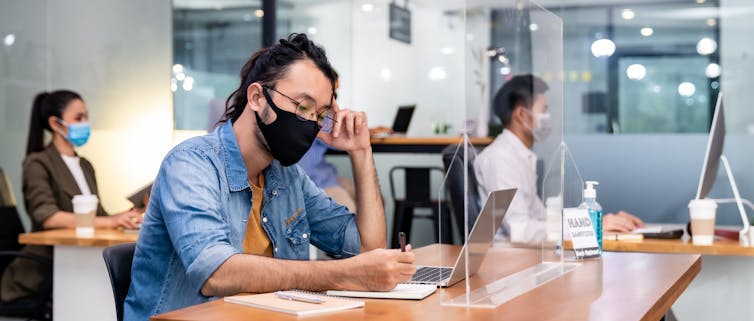
At the same time as dropping many workplace mask mandates, NSW has moved to remove automatic workers’ compensation for people who catch COVID at work.
This is a double disadvantage for workers returning to workplaces with fewer protections and facing greater obstacles to workers’ compensation should they get infected.
5. Others might follow your lead
Being one of the few people wearing a mask when others aren’t, such as in a supermarket, is a daunting prospect for those of us who wish to continue masking. There are reports of masked people being abused and bullied.
However a NSW survey showed the majority of people in that state wanted mask mandates to remain. The more we normalise masks and the more we see them, the better protected the community will be.
As much as we wish it so, the pandemic is not over and new variants will likely emerge.
A layered, multi-pronged strategy which includes vaccines, masks, ventilation, testing and tracing is the best way to protect health, the economy and a resumption of normal activities. 
C Raina MacIntyre, Professor of Global Biosecurity, NHMRC Principal Research Fellow, Head, Biosecurity Program, Kirby Institute, UNSW Sydney
This article is republished from The Conversation under a Creative Commons license. Read the original article.
Image: Getty Images