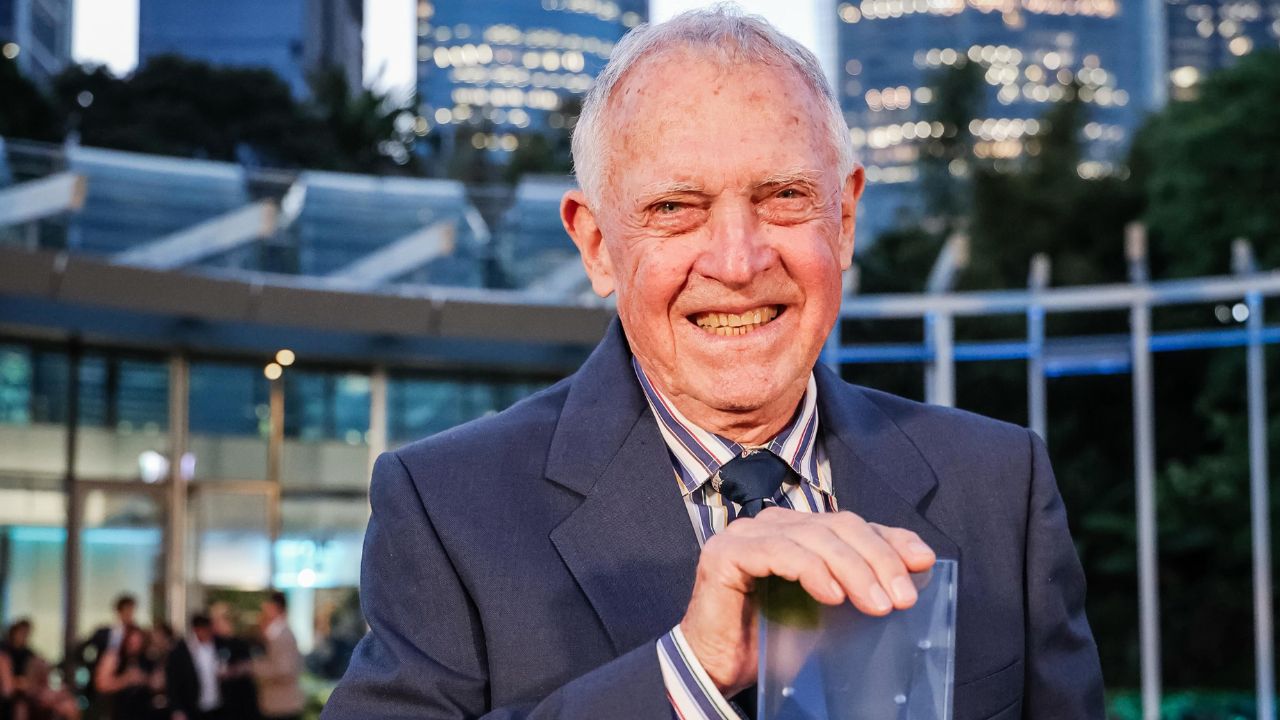
Alan Jones, the last Australian to win the Formula 1 world championship, has died just three days after his 80th birthday following a short battle with cancer.
The Australian Grand Prix Corporation, which runs the Melbourne Grand Prix, said it was with “great sadness” that it acknowledged Jones’ death and offered its deepest sympathies to his family and friends. “As a Formula 1 world champion and one of Australia’s greatest racing drivers, Alan holds a special place in the history of our sport,” the AGPC said. “His 1980 world championship inspired a generation of Australian motorsport fans, while his victory at the Australian Grand Prix that same year remains the last time an Australian driver has won their home grand prix. “He leaves an extraordinary legacy in Australian motorsport and will be deeply missed by the motorsport community around the world.”
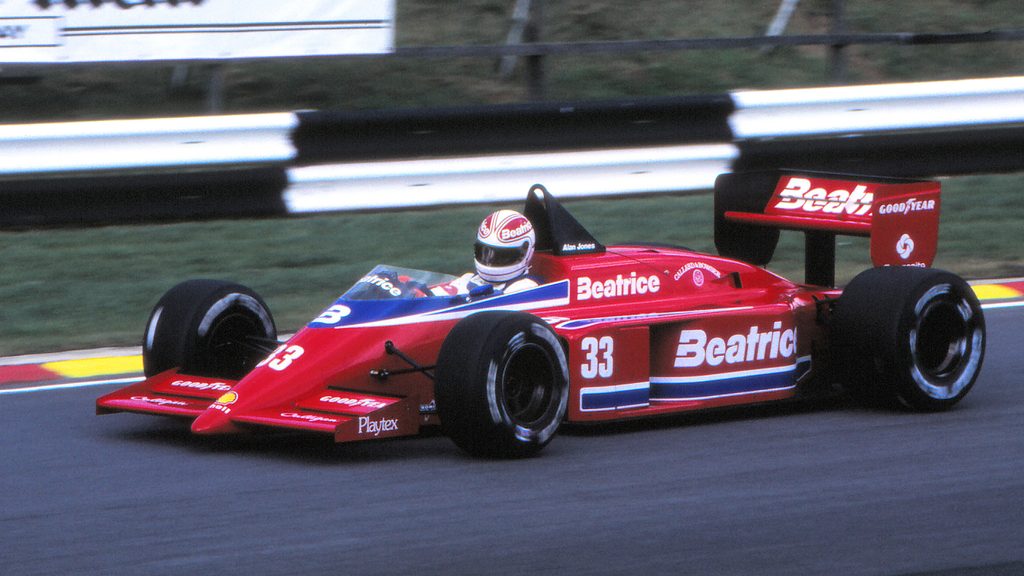
Jones is survived by his wife Amanda, with whom he shares twins Zara and Jack. He also has a daughter, Camilla, from a previous relationship, and an adopted son, Christian.
Tributes flowed from across the sport. Australian F1 great Mark Webber told the Speedcafe website: “He’s a good character gone.” Webber added: “A warrior I’d say. A warrior and a character gone. And he made his presence felt for our country.”
On Monday, Jones’ birthday, leading F1 journalist Matt Bishop wrote for Motor Sport Magazine that Jones was “the most underrated world champion in the history of Formula 1”. Bishop described his approach in stark terms: “He was a race driver in the most elemental sense: powerful, unsentimental, and fiercely competitive,” Bishop wrote. Bishop went on to compare Jones with some of his contemporaries, noting, “Villeneuve was more incandescent, (Carlos) Reutemann was more dextrous, Piquet was more calculating, and (Jacques) Laffite, (Didier) Pironi, and (John) Watson could all produce drives of extraordinary quality, too. “But Jones had the lot: the strength to fuel the effort, the stamina to maintain it, the bellicosity to impose himself, and a hefty dollop of sheer white-knuckle speed.”
That reputation was reflected by Autocourse, whose annual review of the F1 season was awaited almost as eagerly as the races themselves. Autocourse ranked Jones as the best driver in the world from 1979-1981, ahead of Niki Lauda, Nelson Piquet and Gilles Villeneuve.
Away from the cockpit, Jones also became known on television. During Nine’s Oaks Day coverage, Eddie McGuire delivered an on-air tribute. “He was a straight shooter (who) said exactly what he thought,” McGuire said. “A long-time member of the Wide World of Sports team … to me, he was one of the greatest commentators and special comments people that I’ve ever worked alongside, and he was a great bloke. “(His wife) Amanda told me this morning that on his 80th birthday on Monday he had his favourite caviar, but he stayed off the Grey Goose for once in his life. “Vale, a superstar of the track, of world sport, and of broadcasting.”
Jones’ honours spanned decades. He was inducted into the Sport Australia Hall of Fame in 1985, and later given ‘legend’ status in the Australian Motorsport Hall of Fame in 2019.
Born in Melbourne, he first found his way into racing while working for his father Stan, a former racer who owned a Holden dealership. Jones started out competing in Minis and Coopers.
After relocating to Europe in 1970, he reached Formula 1 and debuted at the tragic 1975 Spanish Grand Prix at Montjuic, where five spectators were killed when a car broke through a poorly installed barrier and struck the crowd. His full-time arrival came the next year with 1964 world champion John Surtees’ team. During the 1976 season, the BBC famously declined to broadcast several races because condom brand Durex appeared as a sponsor on the Surtees cars.
Jones’ first grand prix win came in the 1977 Austrian Grand Prix. One long-told tale from that day claims organisers were unprepared for an Australian winner and played Happy Birthday to You on the podium instead of the anthem, although that version remains disputed. Only months earlier, Australians had backed Advance Australia Fair in a referendum, but it did not become the official anthem until 1984, meaning God Save the Queen was still the national anthem at the time.
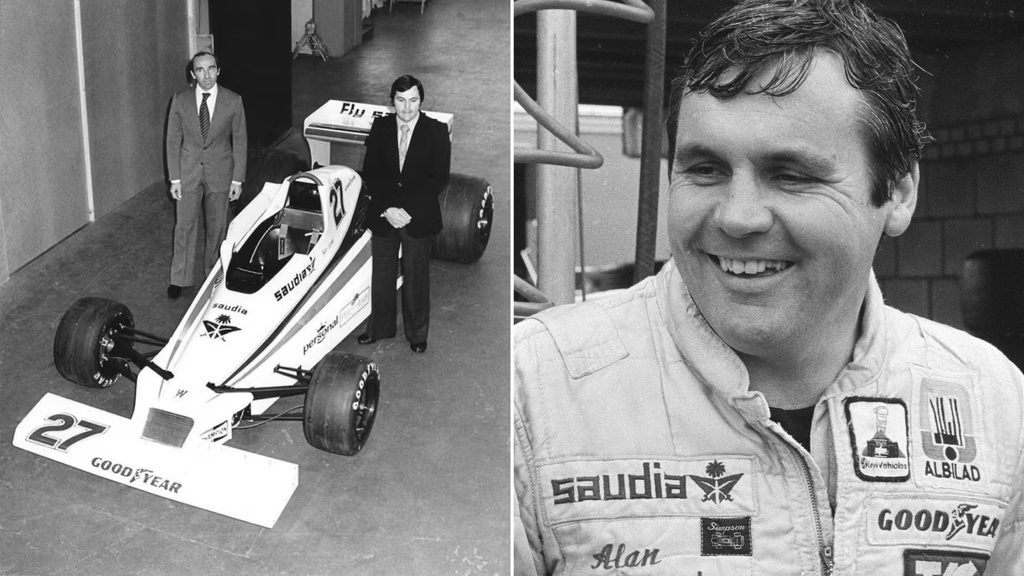
In 1980, Jones became just the second Australian, after Sir Jack Brabham, to win the Formula 1 title, taking the championship with Williams. He sealed it at the 1980 Canadian Grand Prix.
His 1980 season also included a win at the Australian Grand Prix, and it still stands as the most recent victory by an Australian driver on home soil at their own grand prix.